Eli Lilly and Company has announced a $3.5 billion investment to build a new injectable medicine and device manufacturing facility in Lehigh Valley, Pennsylvania. The site will focus on producing next-generation weight-loss medicines, including the investigational triple hormone receptor agonist retatrutide. Set to become operational by 2031, this is Lilly’s fourth new U.S. manufacturing site since early 2025 and part of a broader $50 billion capital expansion effort launched in 2020.
Why this signals a shift in U.S. biologics and device manufacturing strategy
The decision by Eli Lilly and Company to locate a major injectable and device facility in Fogelsville, Pennsylvania, signals a long-term structural pivot in its supply chain strategy. While previous manufacturing investments emphasized high-capacity biologics plants and active pharmaceutical ingredient (API) expansions, this facility marks a clear commitment to domestic device-enabled drug delivery at scale.
At the core of this move is retatrutide, a first-in-class GIP, GLP-1, and glucagon receptor agonist. Though still investigational, retatrutide is widely viewed as a potential successor to the company’s blockbuster tirzepatide franchise. By proactively building injectable capacity aligned with this future portfolio, Eli Lilly and Company is hedging against post-approval demand bottlenecks and potential global supply chain volatility.
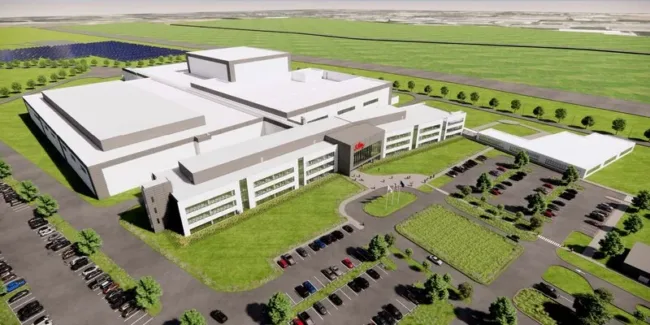
What distinguishes the Pennsylvania site is not just its scale or price tag, but the integrated approach to both medicine and device manufacturing. Unlike some facilities that separate formulation from autoinjector assembly or final packaging, this site is designed to accommodate an end-to-end injectable workflow. That includes embedded AI, data analytics, and automated monitoring, which will be essential for compliance, scalability, and process consistency across therapy classes.
What this reveals about Eli Lilly’s evolving obesity drug strategy
With demand for GLP-1 based obesity therapies continuing to accelerate, analysts have questioned whether supply or regulatory ceilings will define the next growth wave. The Lehigh Valley facility suggests that Eli Lilly and Company is betting on capacity as a differentiator.
In 2023 and 2024, shortages of tirzepatide and semaglutide formulations revealed the vulnerability of even well-capitalized drugmakers when faced with overwhelming uptake. Eli Lilly and Company is now attempting to preempt that narrative by ensuring physical infrastructure is not the limiting factor for retatrutide’s launch trajectory.
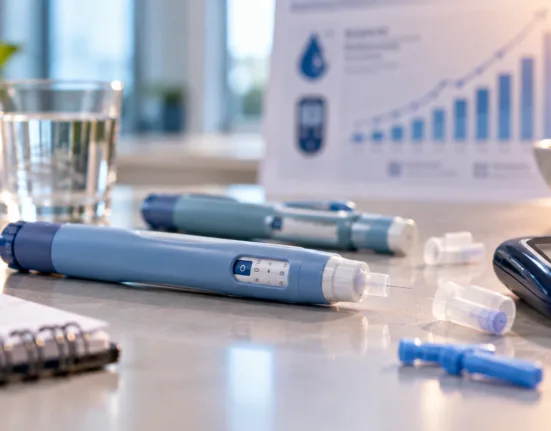
Critically, this site will also support device production. In the context of weight-loss therapies, autoinjectors and delivery platforms are not just packaging solutions but integral to patient adherence and market differentiation. The ability to design, test, and scale proprietary devices on-site enhances the company’s ability to manage intellectual property, adapt to regulatory feedback, and tailor product design to specific markets.
Why Pennsylvania’s site selection reflects deeper biomanufacturing trends
The selection of Pennsylvania from over 300 competing sites points to an emerging recalibration in U.S. pharma manufacturing location strategy. Historically, expansion footprints favored biologics clusters like North Carolina’s Research Triangle, or proximity to legacy hubs in Indiana or Puerto Rico.
However, several factors made Lehigh Valley compelling. Access to STEM talent from nearby academic institutions, pre-zoned industrial land, and robust logistics infrastructure created an ecosystem conducive to rapid scale-up.
Just as important are the policy dynamics. State-level initiatives to reduce regulatory friction, invest in site readiness, and align incentives with life sciences targets played a material role. The support voiced by both Governor Josh Shapiro and U.S. Senators John Fetterman and Dave McCormick reflects a rare bipartisan consensus on the value of domestic pharmaceutical manufacturing.
For Eli Lilly and Company, Pennsylvania’s public-private alignment mitigates risk across permitting, workforce development, and future site expansion. For the region, it elevates the Lehigh Valley as a serious node in the national biomanufacturing network.
What this enables for injectable device innovation and operational resilience
Manufacturing biologics and injectable therapies at commercial scale demands not just real estate, but integrated infrastructure capable of sustaining cold chain logistics, high-precision fill-finish operations, and rigorous quality control. The addition of advanced technologies such as machine learning and integrated monitoring systems suggests the facility is being built not just for today’s drugs, but for tomorrow’s operational complexity.
Injectable combination products, such as those requiring dual-chamber pens or temperature-sensitive formulations, often create friction in traditional plants that were designed around simpler molecule types. By baking in device manufacturing at the outset, Eli Lilly and Company gains a platform that can support multiple pipeline candidates and delivery configurations without significant retrofitting.
For clinicians and hospital systems, this could translate into greater product reliability, faster availability of new SKUs, and potentially improved patient support programs tied to specific delivery mechanisms. For regulators, integrated sites with high visibility into manufacturing parameters may streamline inspection and post-market surveillance, particularly under complex programs such as the U.S. FDA’s Quality Management Maturity initiative.
Where unresolved risks remain around scale, labor, and regulatory timelines
While the announcement reflects a forward-leaning capital allocation move, industry observers have flagged several areas of latent risk.
First is the operational timeline. With construction beginning in 2026 and first commercial output expected by 2031, the lag between investment and throughput creates a visibility gap. Changes in regulatory standards, device safety expectations, or patient preferences could require design adaptations mid-construction.
Second is workforce readiness. Although the site will generate 850 long-term jobs and 2,000 construction jobs, scaling a skilled labor pool for biopharma device manufacturing is non-trivial. Collaborations with academic institutions and vocational training programs are promising, but insufficient pipeline talent remains a known bottleneck industry-wide.
Third, the clinical trajectory of retatrutide itself remains a wildcard. As an investigational molecule, it still faces efficacy, safety, and regulatory hurdles. Should its development stall or its competitive positioning weaken, the facility’s purpose may require strategic reconfiguration. However, Eli Lilly and Company appears to be positioning the site to serve a broader platform, not a single molecule.
There is also capital discipline to consider. With more than $50 billion committed across 10 U.S. manufacturing investments since 2020, the company’s cumulative execution risk rises with each additional megasite. Cost overruns, integration misfires, or post-launch demand fluctuations could compress margins or force prioritization tradeoffs in future expansion decisions.
What the life sciences sector will watch next as the site scales up
Industry stakeholders will be watching several dimensions of this project closely.
Regulators will likely scrutinize how the integration of AI and machine learning into Good Manufacturing Practice (GMP) environments is handled. Questions around algorithmic validation, real-time quality controls, and cybersecurity in smart manufacturing environments remain evolving frontiers.
Competitors may also reassess their domestic manufacturing footprints. If Eli Lilly and Company’s Pennsylvania model proves scalable and cost-effective, it could trigger a second wave of onshore device-biologic combination manufacturing as other GLP-1 class entrants prepare their own injectable platforms.
For supply chain specialists, the integration of device and drug manufacturing in a single site offers an opportunity to study new models for vertical integration. If successful, it could shape future capital allocation across injectable therapeutics, especially in areas like autoimmune disorders, oncology, and hormone replacement, where delivery form factor is commercially critical.
The site’s workforce partnerships and STEM training initiatives may also serve as a testbed for industry-education collaborations, especially if labor shortages continue to pressure biomanufacturing productivity.