Airiver Medical announced that the United States Food and Drug Administration has granted Breakthrough Device Designation to the Airiver Pulmonary Drug Coated Balloon for the treatment of central airway stenosis. The designation coincides with the enrollment and treatment of the first patient in the device’s United States pivotal clinical trial, which is designed to evaluate the safety and efficacy of the paclitaxel-coated balloon therapy against standard balloon dilation.
The announcement places Airiver Medical’s technology into a regulatory pathway intended to accelerate the development and review of medical devices that may offer meaningful advantages over existing therapies for serious or debilitating conditions. Industry observers note that while the designation does not guarantee approval, it signals that regulators believe the underlying concept has the potential to address an unmet clinical need.
Why the Breakthrough Device designation could accelerate development of airway drug coated balloon technologies
The United States Food and Drug Administration’s Breakthrough Device program has increasingly become a strategic pathway for emerging medical device companies seeking to move novel technologies toward commercialization more rapidly. For Airiver Medical, the designation could provide earlier and more frequent interaction with regulators, priority review of submissions, and potential alignment on trial design requirements.
Regulatory watchers note that this support can be particularly valuable for clinical stage companies developing entirely new treatment approaches. Central airway stenosis is a condition that can significantly impair breathing and quality of life, yet therapeutic innovation in this space has historically lagged behind other respiratory interventions.
The designation also reflects a broader trend within medical technology in which device manufacturers are adapting concepts that first gained traction in cardiovascular medicine. Drug coated balloons, widely used in peripheral and coronary artery disease, are now being explored in several nonvascular applications where restenosis or tissue regrowth remains a challenge.
Airiver Medical’s device applies that principle to airway dilation, pairing a mechanical intervention with localized drug delivery intended to suppress tissue proliferation that can lead to recurrent narrowing.
Why central airway stenosis remains a challenging condition despite multiple procedural options
Central airway stenosis refers to narrowing of the trachea or major bronchi, which can occur following prolonged intubation, tracheostomy, infections such as tuberculosis, or complications after lung transplantation. The condition often leads to shortness of breath, chronic cough, and recurrent respiratory distress.
Current management strategies generally rely on mechanical dilation procedures or airway stenting. While these interventions can restore airway patency temporarily, recurrence remains common, and repeated procedures are frequently required.
Clinicians tracking the field suggest that the lack of durable minimally invasive treatments has long been a gap in interventional pulmonology. Balloon dilation, the most widely used approach, can provide immediate relief but does not prevent scar tissue formation that drives restenosis.
Stents can offer longer lasting airway support but introduce additional risks such as migration, infection, and granulation tissue formation. Surgical reconstruction may be an option in some cases, but it is invasive and not suitable for every patient.
Within this therapeutic landscape, technologies capable of extending the durability of minimally invasive dilation procedures could significantly alter clinical decision making.
How the drug coated balloon concept attempts to address restenosis after airway dilation
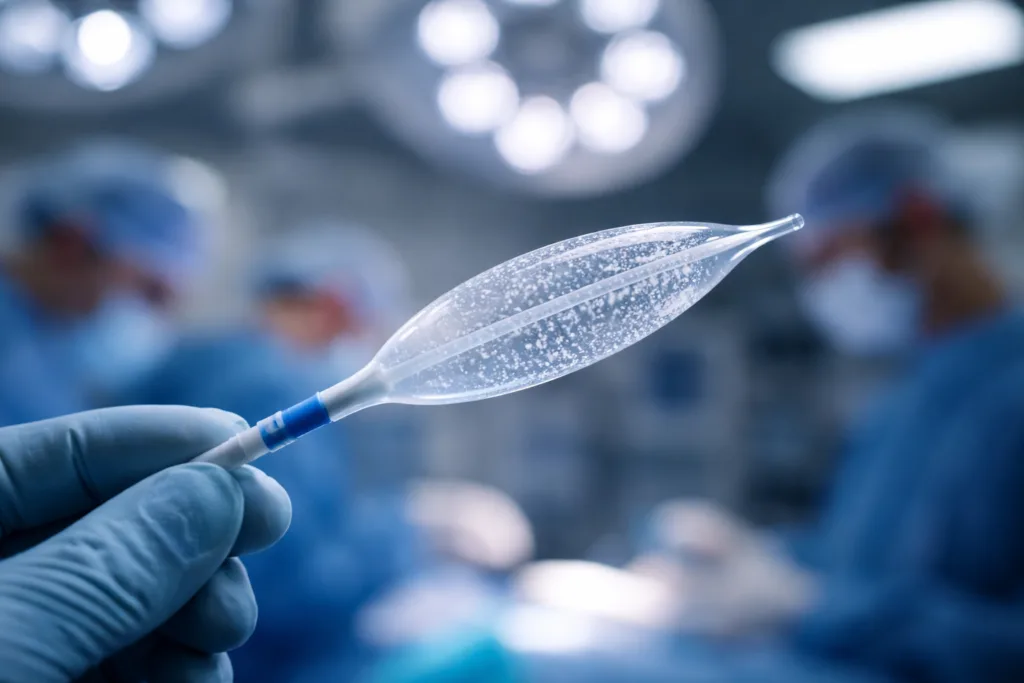
The Airiver Pulmonary Drug Coated Balloon combines a standard dilation balloon with a proprietary coating designed to deliver paclitaxel locally to the stenotic airway segment. Paclitaxel is widely used in vascular drug coated balloons due to its ability to inhibit cellular proliferation.
The device is intended to open the airway mechanically while simultaneously delivering a localized dose of drug that may reduce the biological processes responsible for restenosis.
Medical device analysts point out that the concept mirrors a strategy that has already transformed parts of interventional cardiology and peripheral vascular medicine. Drug coated balloons and drug eluting stents have become standard tools for managing restenosis in arterial disease.
However, translating the same concept into airway interventions introduces new complexities. The airway environment differs significantly from vascular tissue in terms of mucosal structure, airflow dynamics, and exposure to respiratory secretions.
These differences raise important questions about drug retention, distribution, and long term safety. As a result, robust clinical data will be critical to determining whether the approach can deliver the same durable outcomes seen in vascular applications.
Why the pivotal trial design will be closely watched by clinicians and regulators
Airiver Medical’s pivotal study is expected to enroll up to 200 patients with central airway stenosis in the United States. The trial is designed to compare outcomes using the drug coated balloon against standard bare balloon dilation, which represents the current procedural benchmark.
Clinical trial observers note that the comparative design will be important in determining whether the technology provides a measurable advantage over existing practice.
Endpoints in these studies typically focus on airway patency, symptom relief, and the need for repeat interventions. A reduction in restenosis rates or a longer interval before repeat procedures would represent meaningful improvements for patients and clinicians alike.
The study also aims to assess safety outcomes related to localized paclitaxel delivery. Although paclitaxel has a long history of use in vascular drug coated balloons, regulatory scrutiny increased in recent years following debates about potential mortality signals in peripheral artery disease studies.
While those concerns have largely been addressed through additional analyses, regulators remain attentive to paclitaxel exposure levels and long term safety data.
Industry observers suggest that Airiver Medical will need to demonstrate both efficacy and a clear safety profile to secure regulatory approval.
What this development reveals about the growing interest in drug delivery devices for respiratory diseases
The emergence of drug coated balloons in airway disease reflects a broader trend toward hybrid devices that combine mechanical intervention with targeted pharmacology.
Respiratory medicine has traditionally relied on inhaled medications or systemic therapies to manage disease. However, device based drug delivery strategies are gaining attention as a way to achieve higher local concentrations while minimizing systemic exposure.
For airway stenosis specifically, the ability to deliver anti proliferative drugs directly to the site of injury could offer a more precise approach to preventing recurrence.
Industry analysts believe this concept could extend beyond stenosis treatment. Similar technologies might eventually be explored for other airway conditions where localized drug delivery could improve outcomes.
However, experts caution that translating vascular device concepts into respiratory applications requires careful clinical validation.
What clinicians and industry observers will watch as Airiver Medical moves toward commercialization
With Breakthrough Device Designation in place and the first patient treated in the pivotal trial, attention will now shift to how quickly Airiver Medical can generate meaningful clinical evidence.
Clinicians following the field will likely focus on whether the technology reduces the frequency of repeat procedures, which remains one of the most burdensome aspects of current airway stenosis management.
Regulatory watchers will also examine how the United States Food and Drug Administration evaluates safety data related to paclitaxel exposure in airway tissue.
From a commercial perspective, adoption will depend on whether the device integrates easily into existing interventional pulmonology workflows. Hospitals and clinicians often weigh the benefits of new technologies against procedural complexity and cost considerations.
If the device can demonstrate durable outcomes without adding significant procedural burden, it could find a receptive audience among airway specialists.
At the same time, reimbursement pathways and clinical guideline adoption will play a critical role in determining the long term commercial trajectory.
Airiver Medical therefore enters a phase where clinical data generation will determine whether its drug coated balloon concept becomes a niche intervention or a new standard of care in airway stenosis treatment.