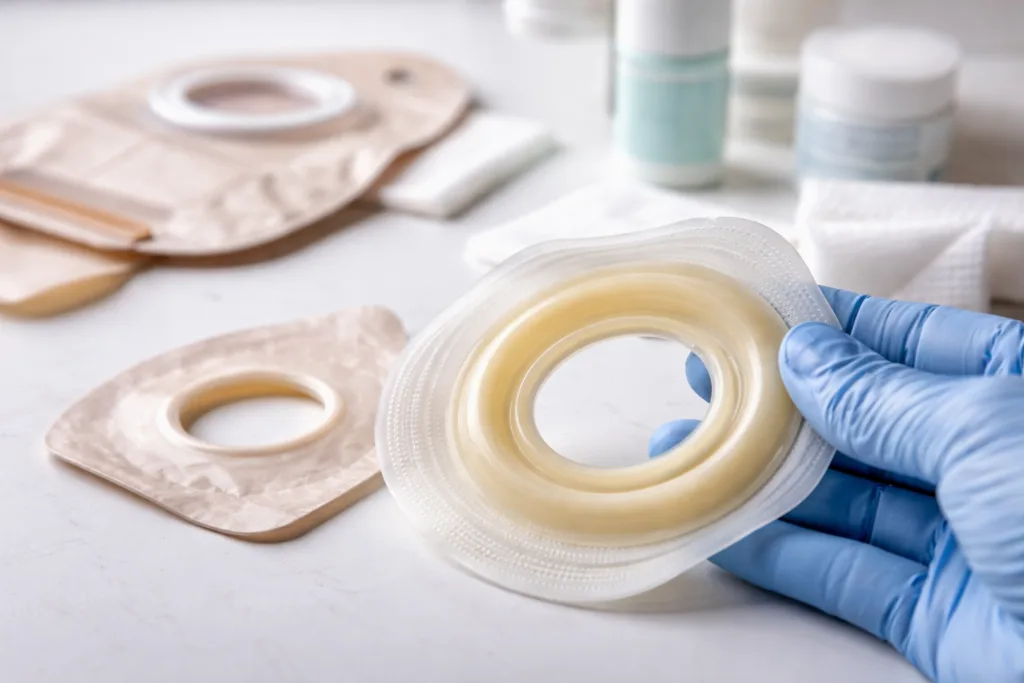
Convatec Group PLC announced the North American launch of the eakin freeseal ostomy seal, a co-branded product developed with Eakin Healthcare and incorporated into the ESENTA accessory range. The device is designed to prevent leakage and protect skin around a stoma, addressing complications associated with ostomy care in post-operative patients. The launch expands the long-standing commercial partnership between the two companies and targets the growing U.S. market for ostomy seals and barrier accessories.
Why leakage prevention remains one of the most persistent clinical challenges in ostomy care
The introduction of the eakin freeseal seal highlights how incremental device innovation continues to drive differentiation in mature chronic care markets such as ostomy management. While ostomy surgery has remained clinically established for decades, the accessory ecosystem around stoma care continues to evolve as manufacturers attempt to address persistent quality-of-life issues for patients, particularly leakage and skin irritation. These complications remain among the most commonly reported concerns among people living with a stoma, and they directly influence product selection by clinicians and patients.
In this context, the launch is less about introducing a fundamentally new treatment modality and more about refining the materials and form factors that support existing ostomy pouching systems. Convatec already markets ostomy accessories globally, including products designed to maintain skin integrity and improve device adherence. The addition of the eakin freeseal seal expands that offering within the ESENTA product family, which is positioned as a skin-friendly accessory platform supporting pouching systems used by people with ileostomies, colostomies, or urostomies.
What the eakin freeseal design reveals about the next phase of ostomy accessory innovation
Industry observers note that leakage prevention remains one of the defining challenges in ostomy care product design. A stoma creates a direct opening through the abdominal wall, requiring pouching systems that maintain a secure seal against irregular skin surfaces while accommodating patient movement, perspiration, and output variability. When leakage occurs, it can lead to peristomal skin complications such as irritation, inflammation, and infection, which may require additional clinical intervention and can significantly reduce patient confidence in ostomy management.
Against that clinical backdrop, the development of thinner, more absorbent seals represents a targeted attempt to address practical usability challenges. The eakin freeseal product line includes two variants designed to accommodate different clinical situations and pouching configurations. One variant focuses on minimal thickness to improve comfort and discretion, while the other is engineered to maximize fluid absorption without compromising structural integrity. The concept reflects an ongoing industry effort to balance three design priorities that often compete with each other: absorbency, durability, and ease of removal.
Why the Convatec and Eakin Healthcare partnership matters in the ostomy device ecosystem
The commercial logic behind the partnership also deserves attention. Convatec Group PLC, headquartered in London and Boston, operates across several chronic care segments including wound care, ostomy care, continence care, and infusion therapy. Ostomy care remains a core business line within that portfolio, supported by a global distribution network and relationships with hospitals and homecare providers. Eakin Healthcare, headquartered in Northern Ireland, has long specialized in ostomy seals and accessories and has built a reputation around moldable hydrocolloid seal technologies.
The collaboration between the two companies allows Convatec to integrate Eakin Healthcare’s seal technology into its broader accessory ecosystem while leveraging its established market presence in North America. For Eakin Healthcare, the arrangement extends access to a larger commercial platform without requiring direct expansion of its own distribution infrastructure. Industry analysts tracking device partnerships often view these arrangements as a way to accelerate product availability while reducing go-to-market risk.
What expanding U.S. ostomy populations mean for the growth of accessory device markets
Market dynamics in the United States further reinforce the strategic rationale for the launch. The U.S. ostomy accessories segment represents one of the largest product categories within chronic stoma care, driven by a combination of demographic factors and surgical practice patterns. Patients living with inflammatory bowel disease, colorectal cancer, trauma-related intestinal injuries, and other gastrointestinal conditions may require temporary or permanent ostomies. As the population ages and survival rates improve for many underlying diseases, the number of people living long-term with stomas continues to grow.
Healthcare providers increasingly recognize that accessory products such as seals, barriers, and protective films play a critical role in maintaining patient adherence to ostomy systems. Leakage events or persistent skin irritation can lead to device discontinuation, frequent pouch changes, and increased clinical visits. As a result, incremental improvements that reduce leakage frequency or improve skin tolerance can have meaningful implications for patient satisfaction and healthcare utilization.
What clinicians and procurement teams will watch as new ostomy seal products enter the market
However, the introduction of new accessory products does not guarantee immediate adoption. Device manufacturers in the ostomy sector must navigate purchasing decisions influenced by clinicians, hospital procurement departments, and insurance reimbursement structures. Hospitals and homecare providers often standardize around established product lines, and switching costs can be significant if clinicians are accustomed to particular accessories or application techniques.
Regulatory considerations are generally less complex for accessory devices than for implantable medical technologies or pharmaceuticals, but they still require careful compliance with medical device standards. Products such as ostomy seals typically fall under established regulatory pathways, focusing on safety, biocompatibility, and manufacturing quality rather than large-scale clinical trials.
Another challenge lies in distinguishing genuine clinical benefits from incremental product differentiation. The ostomy accessories market already includes multiple seal and barrier products marketed around attributes such as moldability, absorbency, and flexibility. Clinicians evaluating new options often rely on personal experience, patient feedback, and small observational studies rather than randomized clinical trials.
Why incremental device innovation can still reshape chronic care patient experience
Ultimately, the launch underscores how innovation in chronic care often unfolds through steady, incremental advances rather than disruptive breakthroughs. For patients living with a stoma, small improvements in comfort, reliability, and ease of use can significantly influence daily quality of life. For device manufacturers, the challenge is translating those incremental improvements into clear clinical value that resonates with both healthcare professionals and patients.
As the U.S. ostomy accessories market continues to expand, competition among device manufacturers is likely to focus increasingly on materials science, product ergonomics, and integrated accessory systems. The success of the eakin freeseal seal will depend not only on its technical specifications but also on how effectively Convatec and Eakin Healthcare demonstrate its practical benefits in routine clinical care.

Why Convatec is expanding its ESENTA platform with the eakin freeseal ostomy seal partnership added by Pallavi Madhiraju on
View all posts by Pallavi Madhiraju →