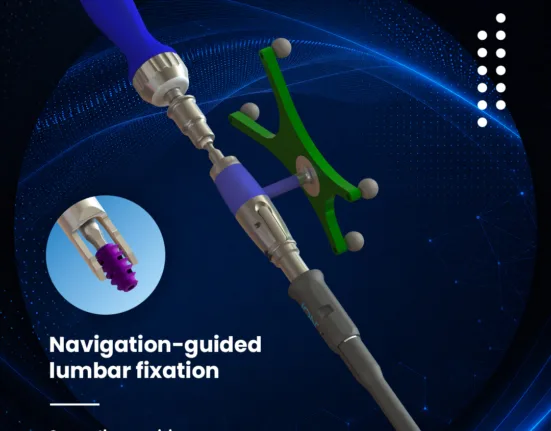
SurGenTec LLC has received United States Food and Drug Administration 510(k) clearance for its TiLink Navigation Instruments for use with the TiLink SI Joint Fusion System in sacroiliac joint procedures, adding compatibility with Medtronic plc’s StealthStation navigation platform. The clearance places the Boca Raton-based medical device manufacturer into a more workflow-aligned position within minimally invasive sacroiliac joint fusion, where surgeon demand is increasingly tied not just to implant design, but to imaging, navigation, reproducibility, and operating room efficiency.
Why navigation compatibility may matter more than the implant alone in the next phase of SI joint fusion adoption
The most meaningful part of this clearance is not simply that SurGenTec LLC now has a navigated version of its existing sacroiliac joint fusion workflow. The deeper commercial and clinical implication is that the company is moving closer to the standard expectations of modern spine and pelvic fixation procedures, where navigation is increasingly viewed as an enabling layer rather than an optional add-on. In that sense, this is less a standalone product event and more a platform relevance event.
Sacroiliac joint dysfunction remains an area of considerable clinical interest because it sits at the uncomfortable intersection of chronic lower back pain, underdiagnosis, overlapping pathology, and uneven treatment pathways. Conservative treatment often fails to fully resolve symptoms in selected patients, but procedural escalation requires convincing surgeons, payers, and health systems that the intervention is both durable and appropriately targeted. That is where navigation can change the commercial conversation. It does not automatically make a fusion system superior, but it can reduce some of the friction associated with procedural confidence, implant placement variability, and concerns around difficult pelvic anatomy.
For a smaller device manufacturer such as SurGenTec LLC, compatibility with an established navigation environment matters because hospitals and ambulatory centers often prefer products that fit into equipment and workflows they already use. A navigation-compatible instrument set can therefore improve access to accounts that may have previously viewed the TiLink SI Joint Fusion System as technically interesting but operationally incomplete. In spine and orthopedic markets, incremental compatibility can sometimes do more for adoption than a headline-grabbing material innovation.
What this FDA 510(k) decision reveals about where minimally invasive SI joint fusion is heading next
The clearance also reflects a broader industry shift. Minimally invasive SI joint fusion has matured from being a niche procedural category into a more systematized intervention space where precision claims, workflow efficiency, and surgeon ergonomics are becoming central competitive variables. Early waves of SI joint fusion commercialization focused heavily on proving the legitimacy of the indication itself. The current phase is increasingly about execution quality.
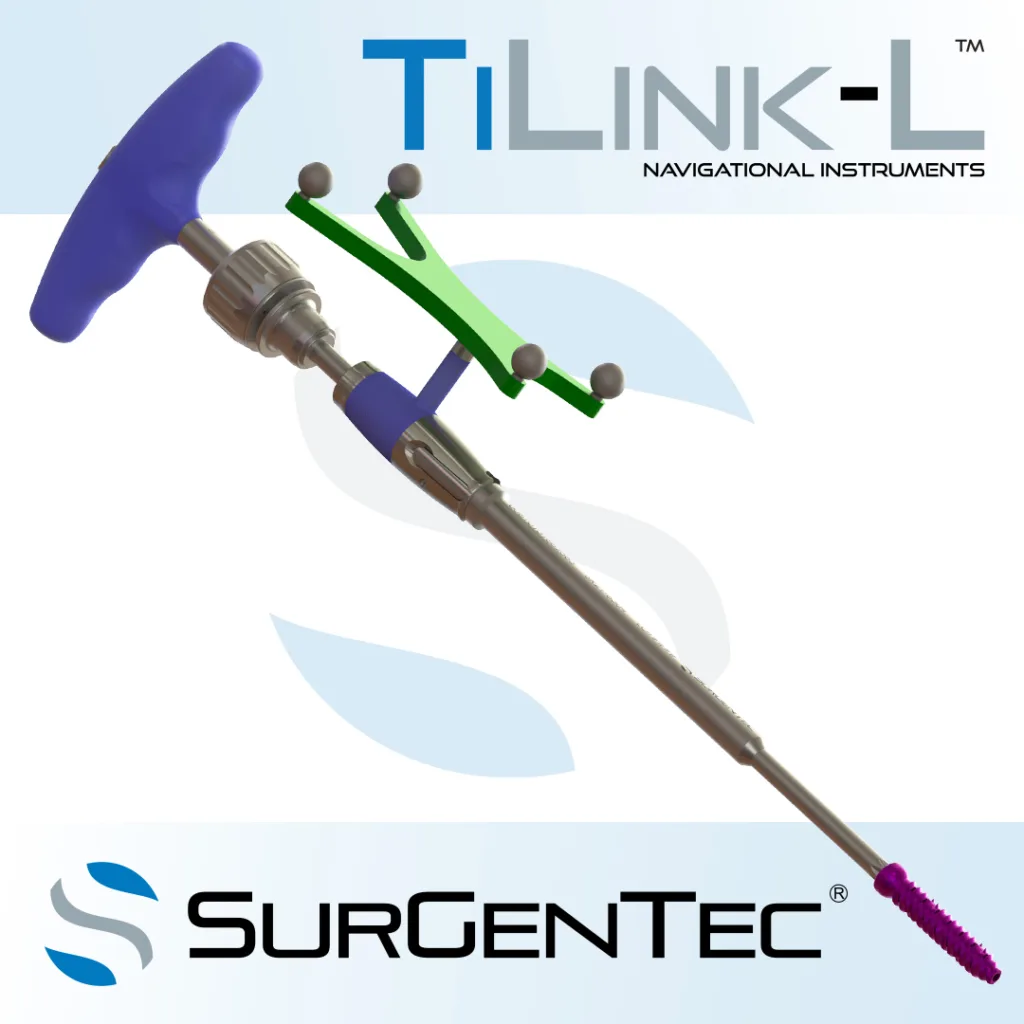
That means device manufacturers are being forced to compete on more than implant geometry or surface technology. They are also competing on how well their systems integrate with intraoperative imaging, how intuitive their instruments are for surgeons, how easily staff can support the procedure, and whether the system can fit into a minimally invasive environment without adding excessive complexity. SurGenTec LLC appears to understand this shift. By linking the TiLink SI Joint Fusion System to Medtronic plc’s StealthStation, the device maker is effectively acknowledging that procedural ecosystems now matter as much as isolated product features.
This is especially important because navigation-assisted surgery has gradually moved from being a premium differentiator to being an expected capability in certain procedure types. Industry observers note that once a technology becomes associated with better visualization and more standardized placement, surgeons begin to judge non-compatible systems more harshly, even if those systems remain clinically usable. In other words, navigation compatibility may not be enough to win the market, but lacking it can increasingly become a disadvantage.
How SurGenTec’s TiLink SI Joint Fusion System may benefit from workflow alignment, not just implant design claims
SurGenTec LLC highlighted two core technical elements in the announcement: the navigated instrumentation and the TiLink SI Joint Fusion System’s Nanotex nano-surface technology with a compression-based implant design. Those features are clearly intended to support the positioning of the system as both precision-focused and biologically supportive. But the market will likely judge the product through a more practical lens.
Surgeons evaluating SI joint fusion platforms tend to care about whether the system makes case selection clearer, implant placement more reliable, and operating room execution more efficient. Surface technology and implant compression are relevant only if they translate into easier adoption and credible outcomes over time. Pre-clinical ovine data suggesting support for bone on-growth and in-growth may strengthen the biological rationale, but it does not by itself settle questions about comparative fusion performance in human patients, long-term symptom relief, revision burden, or reproducibility across different surgeon experience levels.
That does not make the Nanotex technology unimportant. It simply means the technology must be seen as one layer in a larger value proposition. The more immediate commercial unlock may be that the TiLink SI Joint Fusion System now looks easier to insert into a navigated procedural environment that many spine surgeons are already comfortable with. Hospitals rarely buy innovation in the abstract. They buy solutions that reduce friction.
Why surgeons and health systems may welcome the precision narrative, while still demanding stronger real-world evidence
From a clinical workflow perspective, navigation offers obvious intuitive appeal. Improved visualization of pelvic anatomy, better orientation near critical structures, and greater confidence in implant trajectory are all persuasive features in minimally invasive procedures. They speak directly to surgeon comfort and procedural reproducibility. The implied promise is that navigation can reduce technical variability and make the procedure feel more controlled, especially in challenging anatomy.
Still, the medical device sector has seen many technologies positioned around precision without equally strong evidence on downstream clinical advantage. A navigated SI joint fusion procedure may improve workflow and intraoperative confidence, but the market will eventually want answers to harder questions. Does the use of TiLink Navigation Instruments reduce complication rates in a measurable way? Does it shorten operative time consistently outside of expert users? Does it materially lower fluoroscopy burden? Does it improve fusion success or patient-reported pain outcomes relative to non-navigated approaches?
Those questions matter because hospital administrators, purchasing committees, and surgeons increasingly demand evidence that goes beyond plausible benefit. Precision language is valuable, but it has become commonplace. To move beyond marketing parity, SurGenTec LLC may eventually need a stronger package of post-clearance evidence, including real-world performance data, user experience data, and possibly comparative analyses against existing sacroiliac joint fusion workflows.
What is genuinely new here versus what still looks incremental in the SI joint device landscape
The clearance is meaningful, but it should be described accurately as an important incremental advance rather than a category reset. The genuinely new element is that the TiLink SI Joint Fusion System now gains navigation-specific instrumentation cleared for use with a widely recognized navigation platform. That improves the procedural sophistication of the offering and potentially strengthens SurGenTec LLC’s sales narrative.
What remains incremental is that this is not a novel therapeutic concept, a new indication, or a breakthrough level of clinical evidence. The sacroiliac joint fusion market already includes established players, familiar procedural logic, and a growing expectation that image guidance and navigation will support implant placement. In that context, the 510(k) clearance helps SurGenTec LLC remain relevant and possibly more competitive, but it does not on its own prove differentiation at the outcome level.
That distinction matters for industry readers because the medical device market often rewards companies that can clearly separate workflow modernization from true therapeutic leap. SurGenTec LLC has achieved the former. Whether it can claim the latter will depend on data, adoption speed, and the degree to which surgeons feel the system offers measurable benefit over alternatives already in use.
How reimbursement, training, and installed-base realities could shape the commercial upside from this clearance
Even if the navigation-compatible system is well received clinically, commercialization will not be frictionless. Adoption in the SI joint space is shaped by more than product attributes. Reimbursement patterns, site-of-care economics, surgeon training requirements, and access to compatible navigation infrastructure all influence whether a new procedural refinement turns into meaningful revenue.
Compatibility with Medtronic plc’s StealthStation is strategically useful, but it also means uptake may be strongest in settings where that installed base already exists and where surgical teams are accustomed to working with navigation-assisted workflows. That can narrow the initial opportunity set. A hospital without that infrastructure may not see the same value proposition. Likewise, a surgeon who is already satisfied with another SI joint fusion platform may need more than compatibility to switch.
Training is another variable. Navigation can improve confidence, but only if the learning curve is manageable and the procedural choreography does not create new bottlenecks. Sales execution will likely depend on how effectively SurGenTec LLC can support surgeon education, account onboarding, and operating room staff familiarity. A device company can secure regulatory clearance relatively quickly compared with the slower work of changing procedural behavior.
There is also the question of whether payers and providers see navigation as sufficiently value-enhancing to justify preference. In some markets, technologies that improve workflow but do not clearly alter reimbursement or long-term outcomes struggle to command premium attention. That does not mean the opportunity is weak. It means the commercial case must be built carefully.
Why the next proof point for SurGenTec will likely be market traction and clinical follow-through, not regulatory status alone
Regulatory clearance is often the easiest milestone to overinterpret. It provides legitimacy, but it does not guarantee utilization. For SurGenTec LLC, the more revealing phase starts now. The company said the navigation platform rollout will commence immediately, which means the market will soon begin testing whether the TiLink SI Joint Fusion System can convert regulatory readiness into meaningful procedural uptake.
Clinicians tracking the field will likely watch for early surgeon testimonials, training momentum, and case-volume expansion, but they will also want to see whether the device manufacturer can build a credible evidence story around the navigated workflow. Industry observers will be looking for signals that the system is not just technically compatible, but commercially sticky. That includes whether institutions standardize around it, whether revision or complication concerns remain muted, and whether the instrument design actually improves procedural consistency across users.
This is where many smaller device companies either establish their identity or stall. A clearance tied to a respected navigation ecosystem can open doors, but sustained relevance requires execution. SurGenTec LLC now has a more complete story to tell in sacroiliac joint fusion. The next challenge is proving that the story holds up when measured against incumbent systems, real operating room conditions, and the practical economics of device adoption.
From an industry standpoint, this clearance signals that SurGenTec LLC is evolving from a product-focused implant developer into a more workflow-conscious surgical technology company. That is a smart direction in a market where clinicians increasingly want integrated, minimally invasive solutions rather than isolated components. But the sacroiliac joint fusion space is not short on aspiration. The companies that stand out are the ones that can connect precision, evidence, and operational simplicity without forcing hospitals to take a leap of faith.