Indivior PLC has released new findings from a pivotal randomized, double-blind clinical trial evaluating SUBLOCADE (extended-release buprenorphine) for patients with moderate to severe opioid use disorder (OUD). Published in JAMA Network Open, the study demonstrated that both 100 milligram and 300 milligram monthly doses rapidly reduced opioid use and sustained abstinence through 38 weeks. Notably, post-hoc analyses revealed that individuals with high-frequency fentanyl use experienced significantly higher abstinence rates when treated with the 300 milligram dose. The treatment was generally well tolerated, with no new safety signals emerging from either dose arm.
These results represent a potential inflection point in the treatment paradigm for fentanyl-dominant opioid use disorder and have already begun to shape conversations among clinicians, addiction treatment specialists, and healthcare policy stakeholders. As fentanyl continues to redefine the trajectory of the opioid crisis, this new dose-specific evidence for SUBLOCADE may alter prescribing, coverage, and programmatic approaches in 2026 and beyond.
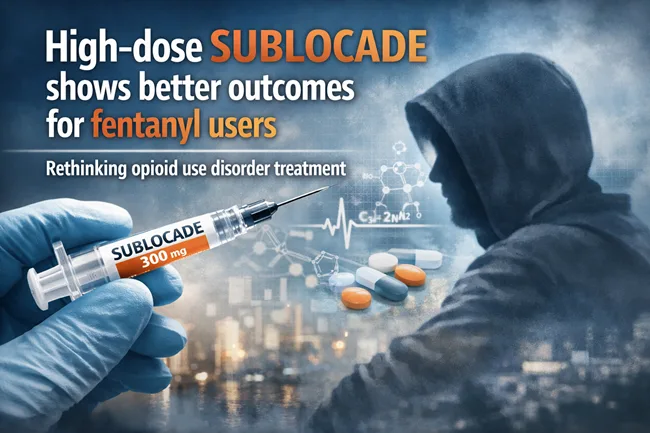
Why the 300 mg SUBLOCADE dose marks a shift for fentanyl-dominant OUD cases
Among the most important takeaways from the study is the performance differentiation between the two maintenance doses in patients with daily or near-daily fentanyl use. The 300 milligram monthly regimen led to a statistically significant improvement in abstinence rates in this subgroup, indicating that a higher-dose strategy may be necessary for effective maintenance in the most vulnerable OUD population.
In the broader OUD treatment landscape, this new analysis refines the understanding of SUBLOCADE’s dose-response curve. Until now, clinical data confirmed that both 100 milligram and 300 milligram doses could reduce opioid use and sustain abstinence, but this is the first time such a clear delineation has been shown specifically for patients with high-frequency fentanyl exposure. This differentiation could have a meaningful impact on frontline prescribing decisions and the stratification of patients based on fentanyl use patterns.
Clinicians who manage opioid use disorder are now faced with a clearer path to personalization. For patients reporting persistent cravings or previous relapse on the standard 100 milligram dose, the data suggests that intensifying the maintenance regimen may deliver better outcomes, particularly when fentanyl is confirmed as the primary agent of misuse.
What sets SUBLOCADE apart in the extended-release opioid therapy category
Extended-release buprenorphine products are designed to remove the daily compliance burden and lower the risk of diversion. Unlike sublingual formulations, which can be missed, misused, or manipulated, injectable options like SUBLOCADE offer stable plasma concentrations over time. This pharmacokinetic profile becomes even more critical in the context of fentanyl, which has a shorter half-life and higher potency than most traditional opioids.
SUBLOCADE’s monthly injection schedule supports sustained engagement with treatment programs, especially for patients who have struggled with retention on daily buprenorphine or methadone. It also provides clinicians with a longer window to monitor behavioral progress and address co-occurring conditions without the variable pharmacologic effects associated with non-injectable therapies.
From a programmatic standpoint, the use of extended-release buprenorphine may help address the resource strain in treatment centers. Fewer in-person visits are required, and each visit allows providers to focus on long-term recovery planning rather than short-term prescription management. In this way, SUBLOCADE may not only reduce opioid use on a biological level but also improve the operational sustainability of addiction treatment systems.
What the data reveals about treatment resilience in high-frequency users
The trial reported a remarkable reduction in opioid use from baseline, falling from more than 43 instances per week at screening to fewer than three instances per week by week three. These improvements were maintained through week 38, which industry analysts interpret as a positive sign for treatment resilience in patients with previously uncontrolled use.
However, the standout result lies in the subgroup analysis, where the 300 milligram dose significantly outperformed the 100 milligram dose in patients using fentanyl at least 14 times per week. These patients typically represent a harder-to-treat segment with higher relapse risk, greater overdose potential, and more complex clinical presentations. For this group, improved abstinence rates are not just a metric of efficacy—they may be the difference between treatment retention and rapid return to use.
By isolating this fentanyl-dominant cohort, the study offers a roadmap for targeted dosing. It suggests that one-size-fits-all approaches may be insufficient and that higher-dose regimens should be considered not as a last resort, but as a first-line option in specific high-risk cases. This could lead to updated clinical guidelines or treatment algorithms that flag frequency and type of opioid use as key determinants of dosing.
What healthcare systems, payers, and public health agencies may reconsider next
The economic and regulatory implications of this trial may be just as significant as the clinical ones. Although the 300 milligram dose is already available, uptake has been constrained by higher cost, concerns about injection site reactions, and limited payer support. This new evidence could change that calculus, especially for Medicaid plans and other public payers serving populations with high rates of fentanyl use.
Reimbursement tiers may be updated to allow earlier access to the 300 milligram option for high-risk individuals, particularly if further studies demonstrate cost offsets in the form of reduced hospitalizations, emergency visits, or overdose interventions. Policymakers focused on the fentanyl crisis may also consider supporting additional funding for long-acting injectable therapies in correctional settings, homeless outreach programs, and rural addiction clinics.
The study’s findings also carry potential regulatory implications. While the current label already covers use in moderate to severe opioid use disorder, the emergence of differentiated efficacy data may lead to refinement of product information, physician education materials, or even a re-evaluation of REMS requirements to ensure high-dose regimens are appropriately utilized.
Why real-world adoption still faces challenges despite the data
Despite the promising outcomes, real-world adoption of high-dose SUBLOCADE faces practical hurdles. Post-hoc analyses, while informative, are not a substitute for pre-specified endpoints. This limits the weight regulators and payers may place on the findings in their current form. Randomized controlled trials specifically designed to evaluate the 300 milligram dose in fentanyl users are needed to confirm the efficacy signal and support policy change.
Moreover, the higher dose is associated with an increased rate of injection site reactions. While these reactions were largely mild to moderate and did not lead to discontinuation in the study, they remain a concern in real-world clinical settings, especially among patients with a history of injection drug use. Education, training, and clinical protocols will need to emphasize proper administration and follow-up to minimize complications.
Logistically, adoption depends on certified administration sites under the SUBLOCADE REMS program. This restricts access to facilities with trained personnel and appropriate storage infrastructure, a factor that may disadvantage rural and resource-limited settings where OUD prevalence is often highest.
What comes next for Indivior and the treatment of fentanyl-driven opioid use disorder
Looking ahead, industry observers expect Indivior to explore prospective trials that validate and expand upon the subgroup findings. These could include studies stratified by fentanyl metabolite levels, longitudinal assessments of relapse post-treatment, and comparative effectiveness research against weekly formulations like Brixadi or implantable options.
Indivior may also explore expanded partnerships with public health agencies and addiction networks to facilitate broader access to the 300 milligram dose. As fentanyl continues to drive overdose trends, treatment strategies tailored to its pharmacological footprint will become increasingly central to national response efforts.
In the meantime, the current study provides a compelling case for dose intensification as a clinical strategy. It challenges the default to lower-dose maintenance and adds urgency to the need for dynamic, patient-specific care models in OUD. As addiction medicine continues to evolve under the pressure of synthetic opioid proliferation, SUBLOCADE’s new evidence base offers both a treatment tool and a clinical rethink.

Indivior’s SUBLOCADE shows stronger outcomes in high-frequency fentanyl users: What this changes for opioid use disorder treatment in 2026 added by Pallavi Madhiraju on
View all posts by Pallavi Madhiraju →