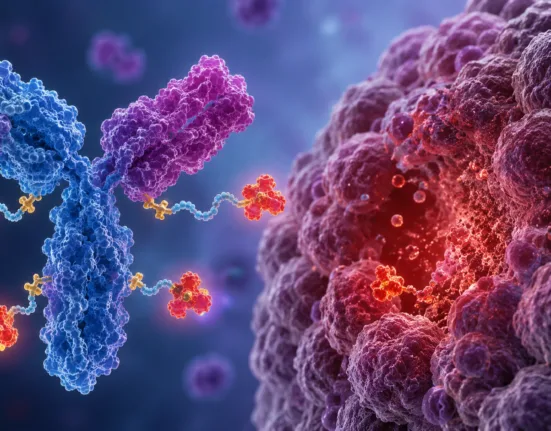
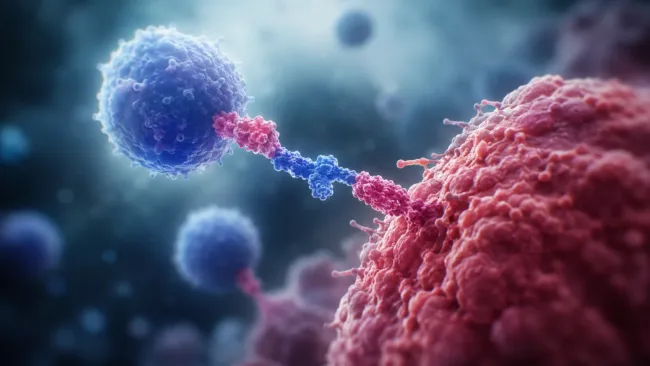
PRISM BioLab Co. Ltd. and Talus Bioscience Inc. have announced a strategic collaboration to identify novel inhibitors of transcription factor and protein–protein interaction targets using a hybrid platform that integrates PRISM’s PepMetics chemistry with Talus Bio’s AI-powered regulome screening technology. This alliance is designed to address one of the most intractable categories in drug discovery: intracellular protein interactions that have long defied conventional small-molecule approaches.
The agreement signals more than a partnership—it reflects a growing industry shift toward convergence between structural chemistry and AI-native drug discovery frameworks. By targeting transcriptional regulators and intracellular interactions, the companies are stepping into territory where even the most sophisticated biologics have struggled to gain traction.
Why transcription factor and PPI targets remain a frontier in drug discovery
Transcription factors and protein–protein interactions (PPIs) represent one of the most elusive classes of drug targets. These proteins often lack enzymatic pockets or clear ligand-binding sites, making them difficult to interrogate using standard biochemical assays. Even when target validation is possible, the complexity of intracellular signaling makes it challenging to isolate functional relevance in disease phenotypes.
Historically, pharmaceutical companies have deprioritized transcriptional regulators due to the high cost, low hit rates, and poor translation from in vitro models to in vivo systems. With that backdrop, the PRISM–Talus Bio collaboration enters a crowded but fragmented space, where academic institutions and smaller biotechs have driven most innovation, yet scalable platforms remain elusive.
What this collaboration enables that others could not
At the core of the collaboration is a complementary dual-technology stack. PRISM BioLab brings its PepMetics® platform, a proprietary class of small molecules that mimic structural motifs like alpha-helices and beta-turns, common in intracellular PPIs. These molecules are orally bioavailable and designed to reach intracellular targets that monoclonal antibodies and peptide biologics cannot access.
Talus Bio, in turn, brings an AI-driven regulome platform that generates real-time maps of transcription factor activity and regulatory dynamics directly in live human cells. This is not a simulation layer—it is functional readout data collected from complex cell systems, which the company uses to train machine learning models for structure–activity relationship (SAR) insights at scale.
The significance lies in marrying targeted chemical matter with real-time, in-cell feedback loops—something traditional high-throughput screening has failed to offer in meaningful ways for these targets. By embedding AI into an iterative loop between compound synthesis, cellular profiling, and optimization, the companies aim to bypass the one-target-at-a-time bottleneck that has historically plagued PPI drug discovery.
What makes this a step-change instead of an incremental move
Unlike many pharma-AI collaborations that apply algorithms to vast but generic compound libraries, this partnership focuses on precision-designed scaffolds already optimized for intracellular binding interfaces. PepMetics are not random small molecules; they are chemically tailored to reproduce structural topologies that naturally occur at protein–protein contact sites.
Talus Bio’s platform then validates and scores how these molecules reshape transcriptional landscapes across hundreds of targets simultaneously, using a live-cell assay environment rather than static biochemical systems. This allows compound triage based not only on binding affinity but also on real-world impact on transcription factor function, gene expression cascades, and cellular phenotypes.
This integration of structure-based design with regulome-scale functional feedback has the potential to collapse discovery cycles from years to months and opens the door to drugging multi-component regulatory systems, such as co-activator complexes or enhancer–promoter architectures.
What diseases and modalities this platform could eventually impact
While the collaboration does not specify immediate disease programs, the strategic fit points to applications in oncology, fibrosis, and autoimmune diseases—areas where intracellular regulation drives both disease initiation and resistance mechanisms. PRISM BioLab already has partnerships in these areas, including programs licensed to Eisai Co., Ltd. and Ohara Pharmaceuticals Co., Ltd. for cancer and liver disease indications.
In the long term, the ability to modulate intracellular transcriptional activity may also intersect with emerging trends in epigenetic editing, cell therapy reprogramming, and synthetic lethality. Notably, therapies based on targeting transcription factors like MYC, STAT3, or β-catenin have long been aspirational but technically out of reach. If this collaboration delivers viable chemical matter that alters their activity in vivo, it could unlock a cascade of new targets once deemed “undruggable.”
What risks and challenges could still derail the platform
Despite its technical promise, the collaboration faces multiple execution risks. First is the translation of cellular assays into therapeutic relevance. Regulome-wide shifts are useful discovery signals, but without corresponding in vivo validation and disease model alignment, the data may not convert into drug leads with clinical viability.
Second, scaling synthesis of PepMetics compounds while preserving structural fidelity and metabolic stability across diverse targets remains non-trivial. These molecules operate at a delicate balance between peptide mimicry and small-molecule drug-likeness, which could introduce manufacturability challenges at later stages.
Third, Talus Bio’s AI models, while innovative, must contend with the well-known limitations of data-driven inference in biologically noisy systems. Regulome perturbations can be context-dependent and influenced by cell type, disease state, and environmental stimuli, meaning that generalization across indications may be constrained.
Finally, commercial models around co-development, IP ownership, and licensing strategies will need to be carefully managed. The announcement indicates that PRISM and Talus Bio will share profits and costs, but such structures often introduce friction in later stages when pipeline prioritization and clinical investments become resource-intensive.
What investors, regulators, and R&D teams will watch next
Institutional stakeholders will be closely tracking the first wave of validated hits coming from this platform. The most important signal will not be quantity but quality: a single compound that demonstrably alters a transcription factor or PPI target in an animal model could transform the perceived credibility of the entire collaboration.
From a regulatory standpoint, the novelty of the approach may require adaptive trial designs or biomarker-linked endpoints to demonstrate early biological activity. Agencies like the U.S. Food and Drug Administration and the Pharmaceuticals and Medical Devices Agency in Japan have shown openness to novel target classes but often demand mechanistic clarity and dose–response validation.
From the R&D angle, success here could shift internal resource allocation toward similar AI–chemistry hybrid platforms, especially for companies currently invested in RNA interference, gene editing, or bispecifics. The ability to reach intracellular targets with small molecules would offer both cost and delivery advantages over complex biologics.