Personalis, Inc. has reported results from the PREDICT-DNA study published in the Journal of Clinical Oncology showing that its ultrasensitive circulating tumor DNA assay, NeXT Personal, demonstrated strong prognostic capability for detecting minimal residual disease in patients with triple-negative and HER2-positive breast cancer treated with neoadjuvant therapy.
The findings, drawn from a prospective cohort of 227 patients across more than twenty U.S. cancer centers, suggest that highly sensitive ctDNA monitoring may outperform several traditional clinical indicators when predicting relapse risk after treatment.
Why ultrasensitive ctDNA detection may change how oncologists monitor response to neoadjuvant therapy
Neoadjuvant therapy has become a central component of modern breast cancer care, particularly for aggressive subtypes such as triple-negative breast cancer and HER2-positive disease. Administered before surgery, these regimens aim to shrink tumors, improve surgical outcomes, and provide an early indicator of therapeutic response.
However, measuring treatment success has historically relied on indirect indicators. Pathologic complete response, imaging assessments, and nodal status have been used as proxies for long-term outcomes. While these markers provide useful guidance, they can fail to capture microscopic disease that persists after therapy.
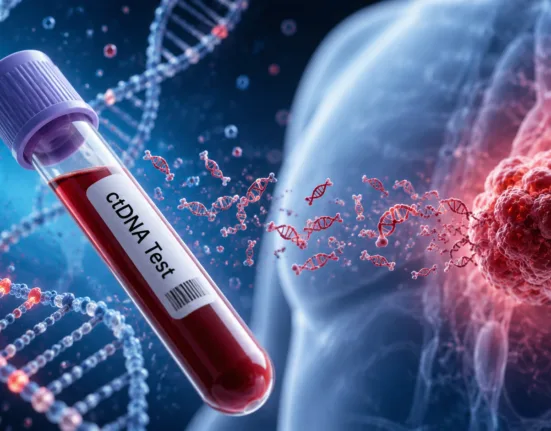
The Personalis data enters this context by emphasizing molecular residual disease detection through circulating tumor DNA. Instead of relying solely on tumor shrinkage or surgical pathology, ctDNA assays track fragments of tumor-derived genetic material circulating in the bloodstream. In theory, this approach can identify relapse risk earlier than imaging or pathology.
Industry observers note that the clinical promise of ctDNA monitoring has long been discussed in oncology research, but the practical barrier has been sensitivity. Detecting extremely low levels of tumor DNA after aggressive therapy requires assays capable of identifying rare molecular signals among vast quantities of normal DNA. The PREDICT-DNA results attempt to address this gap by focusing on ultrasensitive detection thresholds.
What the PREDICT-DNA study suggests about the clinical limits of traditional response metrics
One of the central insights from the study is that circulating tumor DNA detection following neoadjuvant therapy appeared to outperform several conventional prognostic markers.
According to the published findings, patients with detectable ctDNA after therapy were associated with a substantially higher probability of relapse compared with patients whose blood samples were ctDNA-negative. Multivariate analyses reportedly suggested that ctDNA status provided stronger prognostic value than tumor grade, nodal involvement, or even pathologic complete response.
This comparison matters because pathologic complete response has traditionally been considered one of the most reliable predictors of long-term outcomes in neoadjuvant breast cancer therapy. Yet the study suggests that molecular detection may capture relapse risk that pathology alone misses.
Clinicians tracking the field have increasingly questioned whether surgical pathology can fully represent tumor biology following systemic therapy. Residual microscopic disease may remain undetected, particularly when tumor burden is extremely low. If ctDNA monitoring can reliably identify patients at higher relapse risk despite apparently favorable pathology, it could reshape post-surgical treatment decisions.
What ultrasensitive ctDNA detection reveals about relapse biology after breast cancer therapy
A striking aspect of the Personalis study is the reported detection range. More than half of the circulating tumor DNA signals detected after neoadjuvant therapy reportedly occurred at concentrations below one hundred parts per million.
Such low levels highlight the biological challenge of detecting minimal residual disease in solid tumors. In patients who respond strongly to therapy, tumor DNA fragments may become extremely rare within the bloodstream.
Standard ctDNA tests may therefore miss signals that occur below conventional detection thresholds. Ultrasensitive assays attempt to overcome this limitation by analyzing a large number of tumor-specific mutations unique to each patient’s cancer.
The NeXT Personal platform reportedly tracks up to approximately 1,800 tumor-derived variants from each patient’s tumor profile. This personalized approach aims to increase detection probability by expanding the number of molecular markers that can be monitored in blood samples.
Industry observers note that personalized ctDNA tracking is emerging as a defining feature of next-generation MRD assays. Instead of scanning for a limited set of common mutations, these platforms build patient-specific genomic signatures. In principle, this strategy increases sensitivity while reducing the likelihood of false positives.
Why MRD detection is becoming a central battleground in precision oncology diagnostics
The Personalis results also reflect a broader trend in oncology diagnostics. Molecular residual disease detection has become one of the most competitive segments within precision oncology.
Several biotechnology and diagnostics companies are racing to develop ctDNA platforms capable of detecting recurrence months or even years before clinical symptoms appear.
This field includes companies developing assays for colorectal cancer, lung cancer, breast cancer, and other solid tumors. The goal is to create molecular surveillance tools that allow oncologists to intervene earlier with additional therapies.
Regulatory watchers suggest that widespread clinical adoption will depend on demonstrating not only prognostic value but also clinical utility. Detecting relapse risk earlier must translate into treatment decisions that improve patient outcomes.
Without evidence that early detection leads to better survival or treatment response, reimbursement adoption could remain limited.
For companies developing MRD assays, this distinction between prognostic insight and actionable intervention represents one of the central hurdles to commercial success.
What regulatory and reimbursement barriers could shape adoption of MRD testing
Even if ultrasensitive ctDNA detection proves clinically valuable, the path toward widespread adoption involves several additional steps.
Diagnostic tests must demonstrate analytical validity, clinical validity, and ultimately clinical utility before they gain routine acceptance in oncology practice. Prospective trials showing improved patient outcomes will likely play an important role in payer reimbursement decisions.
Industry observers note that reimbursement for MRD testing remains uneven across different cancer types and healthcare systems. In some cases, insurers require strong evidence that molecular monitoring changes treatment pathways or reduces long-term costs.
For companies such as Personalis, publication in high-impact journals like the Journal of Clinical Oncology can support credibility among clinicians and payers. However, regulatory watchers suggest that additional prospective trials will likely be needed to confirm clinical benefit.
Adoption may also depend on how easily MRD testing integrates into existing oncology workflows. Blood-based monitoring offers clear logistical advantages compared with imaging or repeated biopsies, but laboratories must demonstrate reliable turnaround times, scalability, and cost efficiency.
What oncologists and trial designers are likely to watch next in MRD-driven breast cancer monitoring
The implications of ultrasensitive ctDNA monitoring extend beyond diagnostics into clinical trial design.
Researchers increasingly view MRD detection as a potential surrogate endpoint for evaluating new therapies. Instead of waiting years for survival outcomes, investigators may use molecular relapse signals to assess treatment effectiveness earlier.
Such approaches could accelerate drug development in breast cancer and other tumor types. However, regulators will require strong evidence linking MRD status to meaningful clinical outcomes before accepting molecular markers as trial endpoints.
Clinicians tracking the field also emphasize the need to clarify how MRD results should guide treatment escalation or de-escalation. If a patient remains ctDNA-positive after therapy, additional systemic treatment may be considered. Conversely, ctDNA-negative status could potentially spare patients from unnecessary toxicity.
Determining these treatment algorithms will require carefully designed trials that integrate MRD testing into therapeutic decision making.
For now, the Personalis data contributes to a growing body of evidence suggesting that molecular monitoring may provide deeper insight into tumor biology than traditional clinical metrics alone.
Whether this insight ultimately transforms breast cancer management will depend on how rapidly clinical evidence evolves and how effectively diagnostic companies translate ultrasensitive technology into real-world oncology practice.