BioCardia, Inc. has announced the allowance of a Japanese patent covering its proprietary Heart3D fusion imaging software, designed to support treatment planning and real-time navigation during CardiAMP Cell Therapy procedures, as the company advances toward potential regulatory submissions in Japan following engagement with the Pharmaceuticals and Medical Devices Agency.
The deeper implication of this development lies in how it reframes a long-standing constraint in cardiac regenerative medicine. Variability in clinical outcomes has repeatedly limited the credibility and scalability of cell therapy approaches in ischemic heart failure. While much of the industry’s focus has centered on optimizing cell types and patient selection, less attention has been directed toward delivery mechanics. BioCardia’s integrated platform suggests that the next phase of progress may depend as much on procedural precision as on biological innovation.
What this patent reveals about the persistent gap between biological promise and delivery execution in cardiac cell therapy
Cell-based therapies for ischemic heart failure have produced a mixed record across clinical trials. Early studies have often shown encouraging signals in surrogate endpoints such as ventricular function or exercise capacity, yet these have not consistently translated into robust late-stage outcomes. Industry observers note that one underappreciated factor is variability in how therapies are delivered to the myocardium.
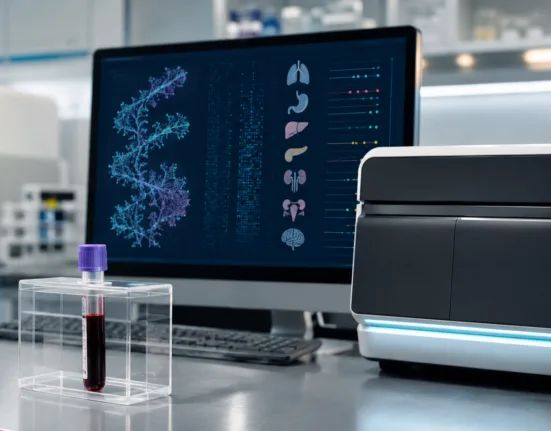
Without precise targeting, therapeutic cells may be introduced into regions of scar tissue or poorly perfused myocardium where their benefit is inherently limited. This introduces noise into clinical data and complicates interpretation of efficacy. The Heart3D fusion imaging platform attempts to address this by integrating preoperative three-dimensional imaging with intra-procedural visualization, allowing clinicians to map and target viable tissue more accurately.
This shift toward image-guided delivery mirrors broader trends in interventional cardiology, where mapping and navigation have become central to procedural success. The implication is that regenerative therapies may require similar levels of procedural sophistication to achieve consistent outcomes.
How integrated imaging and delivery platforms in ischemic heart failure therapy could reshape procedural standardization
The strategic significance of Heart3D becomes clearer when viewed alongside BioCardia’s CardiAMP cell therapy program and Helix intramyocardial delivery system. Rather than treating imaging, delivery hardware, and biologic therapy as separate components, the U.S.-based biotech firm is positioning them as a unified system.
This approach addresses a central challenge in regenerative medicine: operator dependency. Procedures that rely heavily on clinician judgment tend to produce variable outcomes, particularly when scaled across multiple centers. By embedding guidance and mapping into the workflow, Heart3D could reduce this variability and create a more standardized approach to therapy delivery.
Clinicians tracking the field suggest that such standardization may be essential for broader adoption. Healthcare systems are more likely to integrate therapies that can be implemented consistently across operators and settings. If imaging-guided navigation reduces variability, it may strengthen the case for incorporating cell therapies into routine practice.
What Japanese intellectual property protection signals about regulatory sequencing and commercialization strategy
The allowance of a patent in Japan provides insight into BioCardia’s regulatory and commercial positioning. Japan has emerged as a relatively favorable environment for regenerative medicine, with frameworks that allow conditional approval pathways based on early clinical data.
Regulatory watchers suggest that companies are increasingly using Japan as an initial commercialization market, leveraging its adaptive regulatory environment to generate real-world evidence. BioCardia’s engagement with the Pharmaceuticals and Medical Devices Agency indicates that it may be following this approach.
At the same time, discussions regarding approval pathways in the United States suggest a longer-term strategy. The divergence between regulatory expectations in Japan and the United States introduces both opportunity and complexity. While Japan may offer a faster route to market, the United States remains critical for scale and validation.
Why imaging-guided delivery may become a defining factor in competitive positioning within ischemic heart failure therapies
The ischemic heart failure landscape is increasingly competitive, with gene therapies, stem cell approaches, and device-based interventions all under development. In this context, differentiation is not limited to biological mechanism but extends to delivery reliability.
BioCardia’s emphasis on imaging-guided delivery highlights a shift in how therapies may be evaluated. Stakeholders are likely to prioritize consistency and reproducibility alongside efficacy. Therapies that can demonstrate stable outcomes across diverse settings are more likely to gain traction with clinicians, regulators, and payers.
Industry observers note that imaging platforms could also enhance data generation. By recording procedural details and delivery locations, systems like Heart3D may enable more granular analysis of treatment outcomes. This could support stronger clinical evidence and clearer economic justification.
How clinical evidence gaps and translational risks in cardiac cell therapy continue to constrain adoption in ischemic heart failure
Despite the strategic rationale, key uncertainties remain. The central question is whether improved delivery precision will translate into meaningful clinical benefits. Enhancements in targeting accuracy must lead to improvements in endpoints such as reduced hospitalizations or improved functional status.
There are also practical considerations. Advanced imaging systems can introduce additional complexity into workflows, including longer procedure times, training requirements, and capital costs. Hospitals may be cautious in adopting such systems unless benefits are clearly demonstrated.
The integration of software, devices, and biologic therapies introduces additional risk. Each component must perform reliably, and the interaction between components must be validated. Failures in any part of the system could affect overall outcomes.
How regulatory expectations for combined platforms could influence development timelines and evidentiary requirements
The convergence of software, device, and biologic components raises important regulatory considerations. Each element is traditionally evaluated under different frameworks, and integrating them may require new assessment approaches.
Regulatory watchers suggest that demonstrating the value of such platforms may involve complex trial designs that evaluate both individual components and the system as a whole. This could increase development timelines and costs, particularly in markets with stringent requirements.
In Japan, the pathway may allow earlier entry based on preliminary data, while in the United States the evidentiary bar is likely higher. This divergence could result in a staggered commercialization strategy, with initial market entry followed by more extensive clinical validation.
What clinicians, regulators, and industry observers will watch as Heart3D-enabled programs advance toward potential approval
As BioCardia advances its platform, clinicians will focus on whether imaging-guided delivery improves procedural success and patient outcomes. Regulators will assess the robustness of clinical data and safety profiles across patient populations.
Industry observers will evaluate scalability. The ability to deploy the system across multiple centers with consistent results will be critical. This includes not only technological performance but also integration into existing healthcare infrastructure.
The broader implication is that delivery may become a central pillar of innovation in regenerative medicine. If imaging-guided approaches prove effective, future therapies may increasingly rely on integrated systems that combine biological, mechanical, and digital components.
The allowance of the Heart3D patent therefore signals more than incremental intellectual property expansion. It reflects an evolving understanding that the success of regenerative therapies may depend on controlling not only what is delivered, but how and where it is delivered. Whether this approach can overcome variability in cardiac cell therapy remains uncertain, but it is a question that will shape the next phase of development in the field.