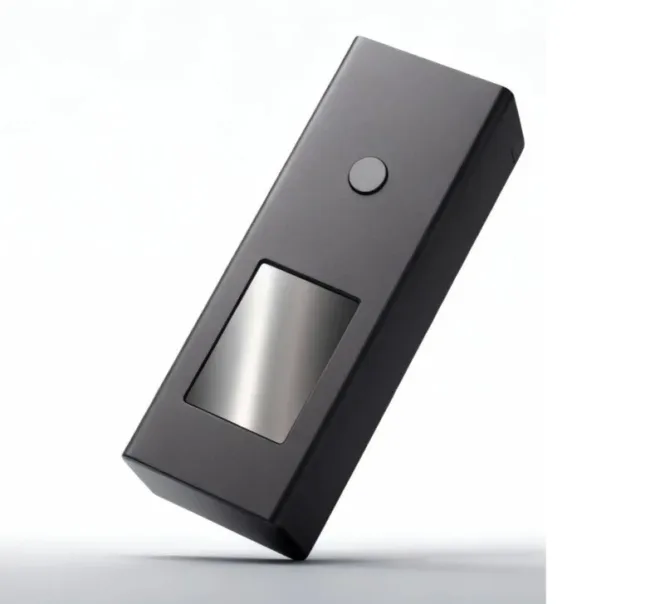
MATELASER, INC. has launched the W1 REGEN Series, a wearable cold laser therapy device delivering 5,100 mW/cm² of dual-wavelength red and near-infrared light through a 24-gram unit, positioning it as the lightest high-power photobiomodulation device ever commercialized. The official debut, coupled with a Kickstarter campaign and a planned CES 2026 showcase, marks an aggressive bid to shift laser therapy from clinics to consumers.
What MATELASER’s launch reveals about the future of medical-grade light therapy miniaturization
MATELASER’s claim of merging clinical output levels into a wearable form is more than a size metric. At a combined irradiance of 5,100 mW/cm², using a dual-wavelength VCSEL system at 660 nanometers and 810 nanometers, the W1 REGEN’s core innovation lies in how it addresses the penetration gap that has historically divided LED-based wellness tools from true therapeutic lasers. The form factor reduction to 24 grams without compromising output density signals a potentially new threshold in wearable photomedicine.
Industry observers have often drawn a hard line between aesthetic-oriented red light masks and clinical laser systems used for post-operative recovery or chronic musculoskeletal disorders. The MATELASER W1 REGEN appears to blur this line by packaging near-infrared and red light output in a compact structure that reportedly maintains stability during extended use. With a divergence angle of 25 degrees and high-frequency pulsing at 1,000 Hz, the device is being presented not just as a wellness gadget but as a credible platform for evidence-informed tissue regeneration, nerve healing, and inflammation control.
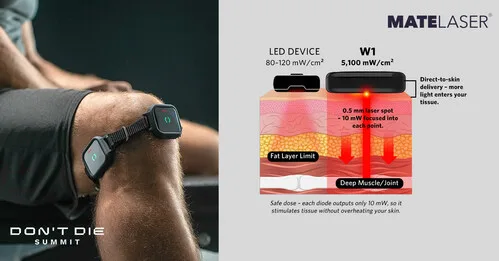
This design choice reflects a broader trend toward miniaturized medical devices where portability, precision, and power density are converging. The wearable device market, long dominated by fitness and consumer health trackers, may now be entering an era where clinic-grade therapeutic functionality becomes viable for at-home use, provided safety and efficacy standards are not compromised.
Why MATELASER is targeting a crossover audience of performance, pain, and longevity users
MATELASER’s decision to debut the W1 REGEN at Bryan Johnson’s “Don’t Die Summit” suggests a strategic pivot toward performance- and longevity-oriented users who already track biomarkers, experiment with recovery modalities, and prioritize regenerative health over reactive care. Early feedback from this audience, including bio-optimization influencers and elite recovery specialists, reportedly pointed to strong purchase intent. That could be a signal that the company is leaning into the growing demand for scientifically credible, self-directed recovery tools outside of traditional clinical channels.
Rather than chase early physician endorsement or reimbursement integration, MATELASER appears to be courting an ecosystem of early adopters—tech-savvy consumers, fitness professionals, aging adults with disposable income, and physical therapy enthusiasts. These users, many of whom are already primed by the quantified-self movement, represent a growing market for what might be termed ‘precision wellness.’
This positioning comes at a time when many high-performance users are losing faith in the efficacy of low-powered, LED-based red light products and are demanding clinically comparable output for musculoskeletal, circulatory, or neurological recovery. In that context, the W1 REGEN’s dual-wavelength, pulsed delivery system sets it apart as a product intended for functional outcomes rather than cosmetic glow.
How W1 REGEN compares to traditional red light and cold laser therapy devices
The photobiomodulation category is filled with devices claiming therapeutic impact, yet many fall short due to insufficient power output or non-directional energy dispersion. While typical red light panels and LED masks operate at irradiance levels well below 500 mW/cm², often distributed diffusely over large surface areas, the W1 REGEN offers a compact unit focused on high-intensity, localized therapy.
MATELASER’s choice of vertical-cavity surface-emitting laser (VCSEL) technology is notable. VCSELs have traditionally been used in optical sensing, LIDAR, and precision manufacturing, but they are now emerging as a new class of emitters for biomedical applications due to their coherence, stability, and miniaturization capabilities. Compared to standard LEDs, which scatter significantly and lose energy with depth, VCSELs maintain beam tightness and energy penetration, allowing for more targeted photobiological interaction in deeper tissues.
The W1 REGEN Series also includes the W1 REGEN ULTRA, which incorporates four synchronized 70 mW modules for total output of 280 mW. This model is clearly designed for users seeking simultaneous coverage across multiple muscle groups or joints, such as both knees, the lower back, or bilateral tendinopathies. The device offers three programmable treatment modes—continuous, 10 Hz pulsed, and 1,000 Hz high-frequency pulsed—allowing users to tailor sessions to acute pain, recovery, or longer-term cellular stimulation goals.
When evaluated against home-use alternatives such as Joovv, FlexBeam, or non-laser red light patches, MATELASER’s focus on output density, beam divergence control, and dual-wavelength VCSEL precision places it in a higher clinical utility tier. However, the lack of published clinical data or comparative trials leaves the real-world advantage unquantified for now.
What this device could enable in post-operative recovery and aging-related use cases
The potential value of the W1 REGEN extends far beyond performance recovery. For aging adults managing degenerative joint conditions, microvascular dysfunction, or nerve sensitivity, the availability of a portable device with clinical power densities could reduce dependence on physical therapy clinics or pain medications. The implications for post-surgical rehabilitation are equally significant, especially in the context of same-day discharge models where outpatient follow-up care often lacks consistency.
Moreover, the use of 810 nm near-infrared light is consistent with gold-standard PBM applications in functional recovery. This wavelength is associated with deeper tissue penetration, activation of cytochrome c oxidase in mitochondria, and modulation of inflammatory cytokines, suggesting therapeutic potential in soft tissue healing, nerve regeneration, and even cognitive applications.
However, clinicians tracking PBM trends caution that while dual-wavelength systems are theoretically superior, the dose-response curve in light therapy is narrow. Excessive power density without proper protocols can reduce efficacy or introduce variability in outcomes. The W1 REGEN’s output customization features offer flexibility, but user education and safety guardrails will be critical to ensure consistent use.
Where regulatory uncertainty and clinical validation gaps may slow momentum
Despite MATELASER’s FDA-certified manufacturing credentials, the W1 REGEN Series does not yet appear to have a specific 510(k) clearance or published clinical studies validating its therapeutic claims in controlled settings. This places the product in the broader category of Class I or II wellness-focused devices that can be sold for general health improvement without making disease-specific claims.
This regulatory ambiguity is not unique. Many home-use PBM products operate in a gray zone where they are cleared for circulation improvement or pain relief but are not positioned for treatment of specific conditions like arthritis, neuropathy, or post-surgical healing. If MATELASER intends to move toward formal medical reimbursement, evidence will be needed, either through randomized controlled trials or robust real-world evidence collection.
Another risk is scalability. Wearable therapeutic devices must perform consistently across varying skin types, muscle depths, and joint structures. Without adaptive calibration or intelligent feedback systems, outcomes can be uneven. It is unclear whether the W1 REGEN platform integrates usage analytics, dosing feedback, or skin-contact optimization to address this challenge. For clinicians and rehabilitation specialists, consistency of dose delivery is as critical as raw power output.
Why clinicians and investors will watch CES 2026 closely
MATELASER’s decision to showcase the W1 REGEN at CES 2026 reflects its ambition to be recognized not only as a consumer electronics disruptor but also as a legitimate player in the convergence of medical-grade technology and wellness devices. The CES presence offers exposure to digital health investors, physiotherapy innovators, and regulatory observers, all of whom will be evaluating whether the company can convert early momentum into scale and trust.
Clinicians, particularly those in sports medicine, pain management, and geriatric care, will be watching for real-world outcomes from early adopters. Key variables to track will include thermal stability during extended use, battery longevity, consistency of light output under variable anatomical placement, and user-reported outcomes on pain relief or mobility improvement.
The crowdfunding strategy, while effective for early capital injection and community engagement, does come with manufacturing and delivery risks. Delays in fulfillment or product reliability issues could erode trust in a sector already saturated with overhyped wellness gadgets.
Ultimately, MATELASER’s ability to differentiate W1 REGEN as a data-informed, clinically inspired recovery tool rather than a glorified LED patch will define its long-term relevance in the wearable health tech market.