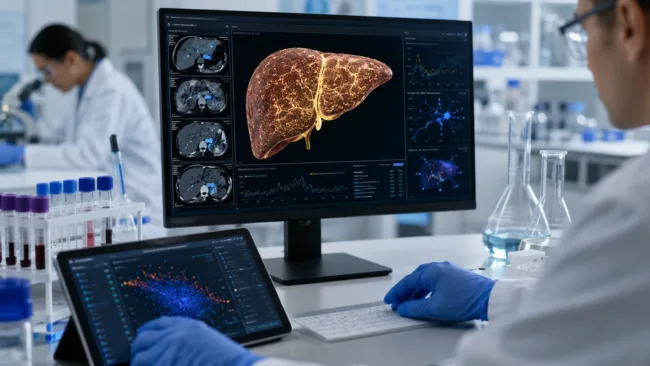
Devonian Health Group Inc. reported new preclinical data showing that its oral small-molecule candidate Thykamine demonstrated dose-dependent anti-fibrotic and anti-inflammatory effects in a human liver-on-a-chip model of metabolic dysfunction-associated steatohepatitis. The data were generated using CN Bio Innovations’ PhysioMimix Liver-on-a-Chip platform and position the program as a translational step between earlier murine MASH models and potential clinical development in fibrotic liver disease.
Why human organ-on-a-chip data matters more in MASH than in most metabolic indications
Industry observers tracking the metabolic liver disease space increasingly view human microphysiological systems as more than a screening novelty, particularly in MASH where animal models have repeatedly failed to predict clinical outcomes. The long history of late-stage trial disappointments has reshaped expectations around what constitutes meaningful preclinical validation. In this context, Devonian Health Group’s decision to prioritize a multicellular, flow-based human liver system reflects a strategic acknowledgment of where translational confidence is most often lost.
The PhysioMimix Liver-on-a-Chip model used in the study incorporates primary human hepatocytes, Kupffer cells, and hepatic stellate cells under continuous microfluidic flow. That architecture allows fibrotic signaling, extracellular matrix deposition, and inflammatory crosstalk to emerge in a way that static cultures cannot replicate. Clinicians following the field note that fibrosis progression, not steatosis reduction, remains the strongest predictor of outcomes in MASH, making fibrosis-linked readouts more relevant than lipid-centric endpoints.
What distinguishes fibrosis modulation from metabolic improvement in current MASH pipelines
Many late-stage MASH programs have focused on metabolic correction, lipid flux, or insulin sensitivity, only to encounter limitations when fibrosis endpoints became the primary regulatory hurdle. Regulatory watchers increasingly believe that future approvals will hinge on clear, reproducible fibrosis improvement supported by mechanistic plausibility.

In that light, Devonian Health Group’s emphasis on biomarkers such as pro-collagen and tissue inhibitor of metalloproteinases 1 aligns with regulatory priorities rather than legacy metabolic narratives. Suppression of collagen accumulation, confirmed through imaging-based readouts, places Thykamine within the narrower category of agents attempting to directly influence fibrotic architecture rather than indirectly slowing progression.
Interpreting dose-dependence as a translational signal rather than a marketing claim
Dose-dependent effects are often cited in preclinical disclosures but rarely interrogated for their downstream implications. In this study, Thykamine demonstrated progressively stronger effects on fibrosis-associated biomarkers at higher tested concentrations without triggering overt cytotoxicity. Industry analysts view this pattern as relevant not because it implies potency, but because it suggests a controllable therapeutic window.
The absence of elevated lactate dehydrogenase signals across the dosing range helps separate fibrosis modulation from non-specific cellular stress. Regulatory scientists note that fibrosis attenuation accompanied by hepatocyte injury has historically undermined several MASH candidates during safety reviews. The preservation of liver cell health in this model does not eliminate future safety risk, but it does reduce early-stage ambiguity around mechanism-driven toxicity.
Why comparisons to Elafibranor require nuance rather than headline framing
Elafibranor was included as a reference compound in the study, reflecting its historical role as a clinically advanced MASH candidate. While the reported collagen suppression exceeded that observed with Elafibranor under identical experimental conditions, clinicians caution against overinterpreting this comparison. Elafibranor’s clinical trajectory was shaped by trial design constraints, endpoint selection, and regulatory timing rather than by a lack of biological activity alone.
That said, the inclusion of a clinically benchmarked compound provides contextual grounding. It allows observers to situate Thykamine’s effects within a known pharmacological landscape rather than against abstract controls. The key takeaway is not superiority, but differentiation in how fibrotic signaling appears to be modulated in a human-relevant system.
Inflammatory modulation as a secondary but necessary pillar in MASH development
The observed reduction in pro-inflammatory cytokines interleukin-6 and interleukin-8 at later time points reinforces the notion that fibrosis modulation in MASH is unlikely to succeed without parallel inflammatory control. Clinicians tracking disease progression emphasize that chronic inflammatory signaling accelerates stellate cell activation and matrix deposition even when metabolic drivers are addressed.
From a development standpoint, inflammatory effects that emerge downstream rather than immediately may suggest indirect pathway engagement rather than broad immunosuppression. This distinction matters for long-term tolerability, particularly in a disease population characterized by metabolic comorbidities and polypharmacy.
What remains unresolved despite strong translational signaling
Despite the strengths of the human liver-on-a-chip data, regulatory observers caution that microphysiological systems do not replace clinical dose-finding, exposure-response modeling, or long-term safety evaluation. The concentrations tested in vitro may not translate cleanly into achievable or tolerable systemic exposures in humans.
Another unresolved question is whether fibrosis attenuation in a controlled microenvironment will persist under the heterogeneous inflammatory and metabolic pressures seen in real-world MASH populations. Patient stratification, disease stage, and background therapies will likely influence outcomes far more than preclinical models can predict.
How Thykamine’s broader immunomodulatory history shapes its MASH positioning
Thykamine has previously been evaluated in inflammatory and autoimmune indications, including ulcerative colitis and atopic dermatitis, providing a partial clinical backdrop that distinguishes it from entirely novel chemical entities. Industry analysts view this history as a double-edged sword. On one hand, it offers early human exposure data that may de-risk certain safety concerns. On the other, it raises questions about whether the compound’s immunomodulatory profile can be sufficiently targeted for chronic liver disease without unintended systemic effects.
The challenge for Devonian Health Group will be to demonstrate that the mechanisms driving benefit in fibrotic liver tissue are distinct from broader immune modulation, particularly as regulators scrutinize long-term risk in non-oncology chronic disease settings.
What clinicians, regulators, and investors are likely to watch next
Clinicians following the field will look for confirmation that fibrosis-linked biomarker changes correlate with histological improvement in more complex systems or early clinical studies. Regulatory watchers will focus on whether Devonian Health Group can articulate a clear development pathway aligned with evolving guidance on surrogate endpoints and accelerated approval frameworks.
From an industry perspective, scalability and manufacturing consistency will also come into focus. MASH is a population-scale disease, and therapies that cannot be produced or priced for broad deployment face commercial limitations regardless of biological promise.
The broader implication for organ-on-a-chip adoption in metabolic liver disease
Beyond Thykamine itself, the study underscores the growing credibility of organ-on-a-chip platforms in metabolic liver disease development. CN Bio Innovations’ systems have increasingly been referenced in regulatory-facing contexts, signaling a gradual shift in how preclinical evidence is weighted.
If subsequent programs continue to demonstrate alignment between microphysiological models and early clinical outcomes, industry observers believe these platforms may become an expected component of MASH development rather than an experimental adjunct.