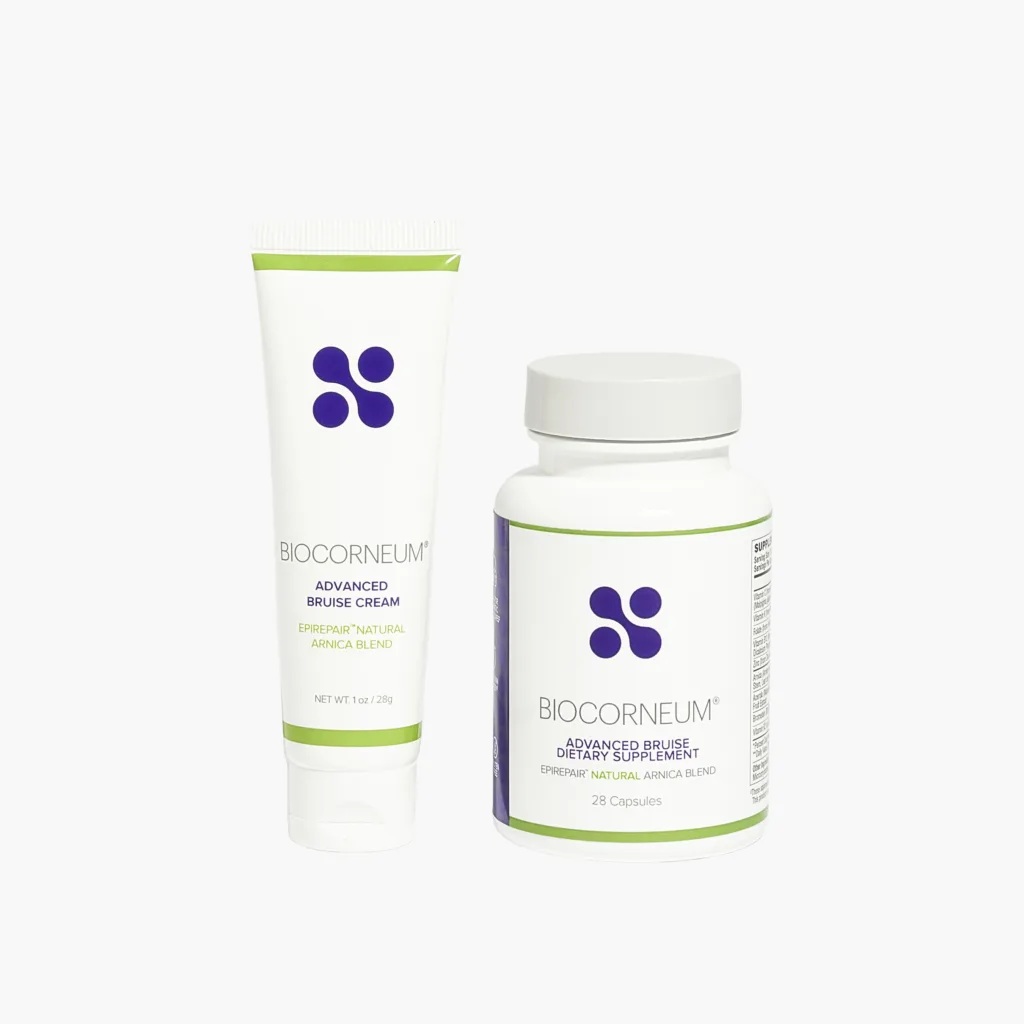
Biocorneum has launched a new Bruise Care System targeting patients undergoing aesthetic procedures such as injectables, liposuction, and sclerotherapy. The system, unveiled at the 2026 Plastic Surgery The Meeting in New Orleans, includes a proprietary bruise cream and a complementary oral supplement, both formulated to accelerate recovery by reducing inflammation and bruising. This marks a strategic expansion for the U.S.-based scar care brand, which is part of Nuance Medical’s professional skincare and post-surgical recovery portfolio.
Why this launch shifts Biocorneum’s clinical footprint in aesthetic aftercare
The new Bruise Care System is Biocorneum’s first major product expansion outside its core scar management focus, signaling a deliberate effort to stake a claim in the underserved but commercially potent bruise and swelling recovery category. While traditional scar products serve a longer-term regenerative function, bruise care addresses immediate post-procedural outcomes—a domain heavily influenced by patient expectations, social visibility, and downtime minimization.
This evolution positions Biocorneum as a broader perioperative recovery brand rather than a niche scar gel provider. Industry observers suggest the dual-action design is aligned with a growing trend toward bundled recovery solutions that combine topical and systemic approaches. By combining an arnica- and vitamin-enriched cream with a botanical-based supplement, Biocorneum is addressing both the surface-level discoloration and the underlying microvascular inflammation that contribute to bruising.
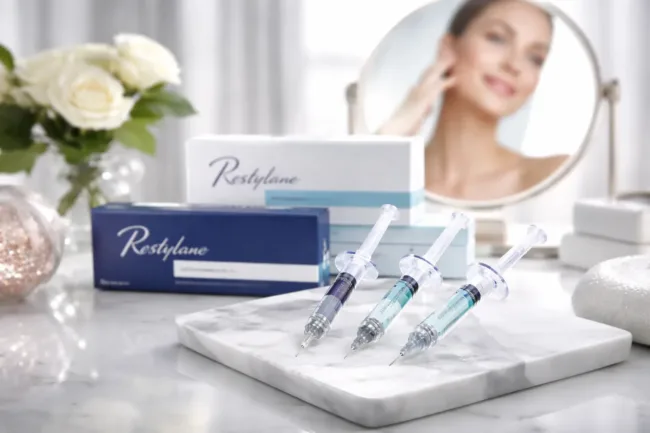
Clinicians in cosmetic dermatology and plastic surgery have long noted that bruising is one of the most visible—and frustrating—side effects of common procedures. While generally benign, ecchymosis and edema following injectables, energy devices, and minimally invasive surgeries can deter patient satisfaction and slow procedural throughput, particularly when social recovery is a concern. In this context, Biocorneum’s move to package recovery into a standardized two-step regimen aims to formalize what has traditionally been an ad hoc or improvised domain.
What this expansion reveals about the unstructured state of cosmetic recovery
The new system highlights a significant gap in the aesthetic care continuum: while procedures themselves have advanced rapidly in terms of safety, efficacy, and precision, the protocols around immediate recovery have not kept pace. Most recovery advice still falls on informal practitioner recommendations or generic pharmacy products with limited evidence or standardization.
The bruise management market is often saturated with stand-alone arnica creams or homeopathic gels with uncertain pharmacokinetics and minimal differentiation. Biocorneum is attempting to fill this void with a physician-facing product that carries the credibility of clinical brand heritage while also being accessible to consumers.
Experts in the dermatologic surgery space note that recovery protocols are becoming increasingly important for patient acquisition and retention. As injectables shift from novelty to routine maintenance, the patient experience—including recovery time and visibility of side effects—is now a determinant of loyalty. A product that can reduce the visibility of bruises within 48–72 hours could become a competitive differentiator for clinics, especially those operating in highly commoditized urban markets.
Biocorneum’s offering appears calibrated to this pressure point. The topical cream, which includes Emu oil, Vitamin K, Vitamin E, and Green Tea Extract, is designed to reduce inflammation and support microcirculation. The oral component, featuring Arnica, Acerola, Bromelain, and Vitamin K2, addresses systemic inflammation and skin integrity from within. While these ingredients are not novel individually, their combination into a single recovery system—with dual dosing and application protocols—is being positioned as a practice-enhancing tool for providers and a confidence-restoring product for patients.
What the channel strategy says about Biocorneum’s go-to-market evolution
Perhaps the most revealing aspect of this launch is not the product itself but how and where it is being introduced. Historically, Biocorneum’s flagship scar product has been recommended through clinician offices—especially post-surgery—and distributed in a controlled manner. With the bruise care line, the company is pursuing a hybrid channel model.
The product will be available through physician offices and med-spas, but also on direct-to-consumer platforms including Biocorneum.com, Amazon, and later through Walmart’s distribution network. This reflects a clear intent to capture both medical recommendation trust and mass-market retail exposure—a balancing act that few clinical skincare brands navigate well.
From a commercial lens, this move aims to secure volume and visibility without alienating prescribers who may be wary of recommending products patients can easily find elsewhere. The challenge will be maintaining clinical credibility while operating in consumer-facing marketplaces that typically lack guidance, oversight, or segmentation.
Observers from the cosmeceutical sector suggest this strategy may allow Biocorneum to scale quickly, especially as social media influencers and med-spa partnerships amplify brand awareness. However, there is also risk: the brand’s clinical equity—built over years in surgical and dermatology settings—could erode if the product is perceived as just another OTC wellness item without differentiation.
How clinicians may integrate this product into evolving procedural workflows
In high-volume practices, particularly those offering injectables, laser therapies, or body contouring, managing patient expectations around bruising is an ongoing challenge. While practitioners can control procedural technique, they have limited influence over patient-specific healing timelines, vascular fragility, or behavior post-procedure.
The availability of a ready-to-use recovery system, recommended for both pre- and post-procedural use, could help standardize protocols across clinics. Some aesthetic practices already recommend arnica tablets, cold compresses, and topical agents in various combinations, but rarely with consistency or brand alignment. A product like Biocorneum’s system offers the potential for bundled dispensing and patient education at the point of care.
Industry analysts suggest that adoption will depend on several factors: perceived efficacy based on anecdotal or published case reports, ease of patient use, retail margins for providers, and whether the regimen genuinely reduces visible bruising within a timeframe that patients value—typically under 5 days.
Moreover, because both components are non-prescription, practitioners will not face regulatory burdens in recommending them. However, the absence of peer-reviewed clinical trial data or head-to-head comparisons with competing bruise therapies may limit early uptake among evidence-driven physicians. The company’s next challenge will be to generate practitioner-validated outcome data, even if observational, to back the dual-formula’s superiority over monotherapies.
Regulatory and compliance perspectives in a supplement–topical hybrid launch
Unlike prescription products, the bruise care system operates in the regulatory gray zone between cosmetics, topicals, and dietary supplements. The topical component, while marketed for post-procedural use, must not cross into unapproved drug claims under U.S. Food and Drug Administration (FDA) labeling rules. Similarly, the oral supplement must stay within the scope of general structure–function claims.
Regulatory watchers suggest this formulation is relatively conservative from a compliance standpoint, relying on ingredients that are already well-tolerated and widely distributed. Still, as the product gains visibility, enforcement scrutiny around claims made by third-party sellers or influencers may increase. Brands operating in the direct-to-consumer recovery space have historically faced warning letters for exaggerated therapeutic claims, particularly in the supplement category.
Nuance Medical’s handling of labeling, practitioner materials, and e-commerce language will likely determine how long the company can maintain its current positioning without regulatory headwinds. For now, Biocorneum is leveraging its reputation in clinical settings to carry the brand message, which may help inoculate it against early skepticism.
What still needs to be proven before this becomes a standard-of-care add-on
Despite the strength of the brand and the market fit of the launch, critical unknowns remain. The product’s efficacy in comparison to generic arnica gels or single-agent oral supplements has not been publicly benchmarked. Nor has Biocorneum disclosed any controlled studies assessing endpoints such as bruise resolution time, reduction in hematoma diameter, or patient satisfaction scores.
Additionally, the behavioral friction of a two-step system—requiring both topical application and daily oral dosing—could affect real-world adherence. In fast-moving practices or with low-engagement patients, even minor complexity can reduce follow-through, which in turn blunts outcomes.
Finally, from a payer and pricing perspective, this remains a fully out-of-pocket product. With an estimated cost of $75 for the full regimen, patients may be selective unless they perceive strong value or are guided directly by their provider. In bundled procedure pricing models, integrating bruise recovery kits may require restructuring of treatment packages or upsell strategies that some practices are not yet equipped to handle.
Still, the broader momentum is unmistakable: aesthetic medicine is entering an era where outcomes are judged not just on end results but on experience. Downtime, side effects, and speed of return to baseline are becoming competitive vectors. If Biocorneum can credibly deliver faster recovery from bruising, it may succeed in redefining what best-in-class aftercare looks like—not just for scars, but for the full spectrum of visible healing.