Lee’s Pharmaceutical Holdings Limited has acquired the Staccato One Breath Technology platform and related assets from Alexza Pharmaceuticals, gaining exclusive rights to manufacture and license Staccato alprazolam under its global agreement with UCB. The transaction expands Lee’s Pharmaceutical’s inhalation drug delivery pipeline, deepens its foothold in central nervous system therapies, and positions the company to scale innovation from Greater China to international markets.
Why this deal signals a new delivery strategy for CNS innovation
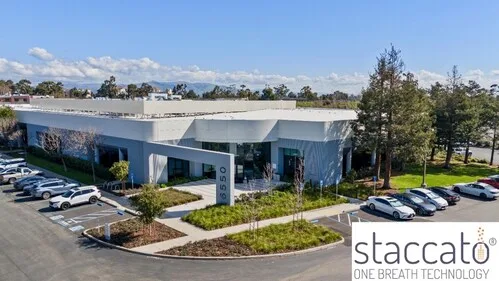
Lee’s Pharmaceutical Holdings Limited is making a definitive statement with this acquisition: it is no longer content being a regional player commercializing licensed molecules. By acquiring the full Staccato One Breath Technology platform from Alexza Pharmaceuticals, the company now owns the intellectual property, equipment, product pipeline, trademarks, and access to the U.S.-based GMP manufacturing facility in Fremont, California. This vertical integration across development and manufacturing gives Lee’s Pharmaceutical the autonomy to drive product innovation, cost optimization, and global licensing on its own terms.
The Staccato platform, validated through the prior approval of Adasuve for agitation in psychiatric disorders, is built around a proprietary aerosol delivery method capable of delivering excipient-free drugs as fast as intravenous injection. For acute CNS conditions like epilepsy, breakthrough cancer pain, or psychiatric agitation, this speed and convenience combination may offer a significant therapeutic edge. Clinicians watching the space have noted that inhalation-based systems often struggle with manufacturing complexity or regulatory hurdles. With both the hardware and the rights now in-house, Lee’s Pharmaceutical appears better equipped to execute than many of its predecessors.
What makes the UCB partnership a commercial accelerant
Perhaps the most strategically valuable aspect of this deal is the acquisition of Alexza’s rights and responsibilities under the existing license and supply agreement with UCB. The Belgium-based biopharmaceutical company holds global development and commercialization rights for Staccato alprazolam, a drug-device combination currently in Phase 3 clinical trials for rapid seizure rescue (ClinicalTrials.gov ID: NCT05077904). The fact that a major global neurology player is advancing this program provides not only clinical validation but a downstream financial incentive structure that could prove lucrative for Lee’s Pharmaceutical.
Under the terms of the agreement, Lee’s Pharmaceutical and its U.S. subsidiary, Nova Pneuma Inc., may receive up to 60.5 million U.S. dollars in development, regulatory, and sales milestones. In addition to milestone payments, the company is entitled to tiered royalties on net sales and manufacturing revenue from the global supply of Staccato alprazolam. This structure offers an unusually balanced risk-reward equation: Lee’s Pharmaceutical does not shoulder the full burden of commercialization but stands to benefit substantially if UCB succeeds.
Industry observers believe this deal insulates Lee’s Pharmaceutical from the volatility of clinical trial outcomes while enabling it to focus its own resources on adjacent inhalation programs and manufacturing excellence.
Why inhalation delivery is central to Lee’s Pharmaceutical’s future pipeline
The company is already active in inhalation-based CNS therapeutics. In Greater China, Lee’s Pharmaceutical has been commercializing Adasuve for agitation associated with schizophrenia and bipolar disorder. The acquisition eliminates the need for further licensing payments related to Adasuve and other Staccato-based programs, allowing the company to consolidate margin and reinvest in R&D.
In addition to Adasuve, two Phase 2 assets now enter the company’s pipeline: one targeting Parkinson’s disease and the other aimed at cyclic vomiting syndrome. Both indications present clear opportunities where fast-acting, non-invasive therapies could meet unmet needs. The Parkinson’s program could provide rapid relief from off episodes, while cyclic vomiting syndrome remains a largely neglected condition with few standardized treatment protocols.
With the Staccato platform now under full ownership, Lee’s Pharmaceutical can develop these candidates without navigating the usual tangle of licensing restrictions or royalty structures, accelerating internal decision-making and regulatory planning.
How manufacturing control strengthens Lee’s Pharmaceutical’s global ambitions
The inclusion of Alexza’s GMP facility in Fremont gives Lee’s Pharmaceutical more than just IP. It provides the infrastructure needed to produce, scale, and supply inhalation-based therapies to global markets. For a company headquartered in Hong Kong and focused historically on China, this U.S. manufacturing base represents a major international expansion milestone.
Few biopharmaceutical firms operating out of Asia have vertically integrated platforms with Western production capacity and regulatory readiness. The acquisition puts Lee’s Pharmaceutical in a unique position to serve both Western and Asian markets with a harmonized platform, avoiding delays tied to tech transfer or external manufacturing partners.
This operational capability will be critical not only for UCB’s ongoing trial and eventual commercialization of Staccato alprazolam but also for any future Lee’s Pharmaceutical-driven pipeline products seeking approval in the United States or Europe.
What the acquisition tells us about Lee’s Pharmaceutical’s transformation trajectory
This deal marks a pivotal transition for Lee’s Pharmaceutical from a regionally focused biopharmaceutical company into a potential global delivery platform owner. Until now, much of the company’s revenue base came from licensed products across oncology, cardiovascular, and women’s health categories within China, Hong Kong, Macau, and Taiwan. With this acquisition, the company becomes a licensor and global manufacturing supplier, flipping its business model from licensee to platform steward.
By eliminating its licensing cost obligations to Alexza, gaining royalty streams from UCB’s commercial efforts, and controlling one of the most differentiated CNS delivery platforms in active development, Lee’s Pharmaceutical is building multiple, diversified revenue streams. This includes fee-for-service manufacturing, milestone payments, royalties, and direct commercialization in selected territories.
Analysts tracking Asia-based biopharma innovation believe this model resembles a hybrid between CDMO-style asset utilization and therapeutic asset development. If successful, it could serve as a blueprint for other mid-cap companies in the region looking to step beyond local markets.
What limitations and risks remain in scaling the Staccato franchise
Despite the platform’s potential, some key limitations remain. Adasuve’s commercial performance outside of China has historically been underwhelming, raising questions about payer willingness to reimburse inhalation-based CNS therapies, especially those with novel delivery mechanisms. Even with fast onset, market education, and physician trust in the device’s reliability will be critical for adoption.
Another challenge lies in manufacturing scale and quality control. The Staccato system is mechanically complex, involving heat and vaporization elements that must operate flawlessly to deliver correct doses. Scaling production across multiple products while maintaining consistency will require rigorous quality systems and process validation.
Additionally, Lee’s Pharmaceutical’s financial upside from alprazolam is tightly linked to UCB’s performance. Should UCB pivot priorities or encounter regulatory delays, milestone payments and royalty flows could be postponed or reduced. This interdependency creates a reliance on external execution that is partly outside Lee’s Pharmaceutical’s control.
Finally, while the Phase 2 programs in Parkinson’s disease and cyclic vomiting syndrome are promising, advancing them into late-stage development and through regulatory approvals will require substantial capital, coordination, and market positioning, especially in North America and Europe.
What regulators, clinicians, and industry partners will monitor next
Regulators will likely focus on how Lee’s Pharmaceutical manages the Staccato manufacturing facility post-transfer. Any deviation in quality, equipment functionality, or supply readiness could impact ongoing trials and commercialization.
Clinicians and epilepsy specialists are expected to closely watch the outcomes of the Phase 3 trial of Staccato alprazolam. If positive, the product could redefine seizure rescue treatment paradigms, offering an alternative to rectal diazepam or intranasal midazolam.
Meanwhile, industry partners may interpret this acquisition as a signal that Lee’s Pharmaceutical is open to out-licensing other Staccato-based programs or offering CDMO-like services for inhalation drug development. The platform’s versatility, combined with secured manufacturing, could open doors for collaborations in acute migraine, PTSD, and other high-burden CNS indications requiring rapid relief.
The next 12 to 18 months will determine whether Lee’s Pharmaceutical can operationalize its expanded pipeline and transform Staccato from a niche inhalation tool into a broad-based CNS delivery engine.