
ImpetusDX has introduced its IDX Oral Health Microbial Testing panel, a rapid saliva-based diagnostic tool that identifies key oral bacteria within 24 to 48 hours, offering a streamlined way to detect periodontal pathogens during routine hygiene visits. Developed by the oral diagnostics company and processed through the CAP-accredited and CLIA-certified lab infrastructure of Physicians Choice Labs, the IDX panel aims to help dental teams move beyond visual exams and probing depths by using PCR technology to quantify microbial burden early, clearly, and consistently.
Why embedding molecular diagnostics into routine dental hygiene may be a turning point for periodontal care
The launch of the IDX Oral Health Microbial Testing panel signals a growing convergence between microbiome science and routine clinical workflows in dentistry. For decades, standard periodontal evaluation has relied heavily on physical markers such as probing depth, gingival inflammation, and bone loss seen via radiographs. These metrics, while foundational, often miss early microbial dysbiosis, leading to underdiagnosed cases in early-stage disease and uncertainty in treatment planning.
What ImpetusDX offers through its IDX panel is a paradigm shift in periodontal screening. Rather than waiting for visible symptoms or bone loss, clinicians can now detect the presence and relative abundance of known and emerging bacterial pathogens via real-time polymerase chain reaction analysis. The test includes species such as Selenomonas noxia, Filifactor alocis, Pseudomonas aeruginosa, and Streptococcus mutans, which provide a broader diagnostic spectrum compared to legacy tests focused solely on red-complex bacteria. This extended microbial coverage may offer clearer insight into both the severity and origin of periodontal inflammation.
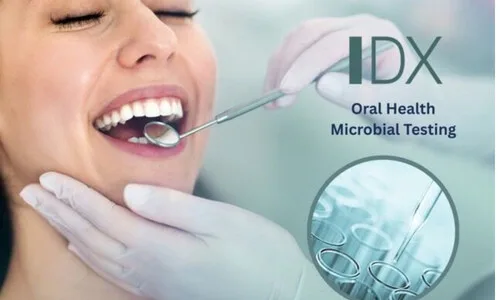
The operational model also shows deliberate sensitivity to dental practice dynamics. By allowing for chairside saliva collection during routine cleanings, hygiene visits, or treatment planning sessions, the panel reduces barriers to integration. Results are delivered as a semi-quantitative, color-coded report within 24 to 48 hours. Samples shipped on Mondays typically generate actionable results by Tuesday, which enables clinicians to follow up swiftly with antimicrobial protocols, surgical planning, or patient education. In contrast to outsourced or batch-sent tests that can introduce diagnostic lag, this model supports same-week decision-making.
What the test’s structure reveals about ImpetusDX’s broader ambitions in oral–systemic health
The inclusion of emerging oral pathogens in the IDX panel reflects a deliberate push beyond conventional periodontitis diagnostics into a wider realm of oral–systemic linkage. Research continues to validate correlations between oral bacterial load and systemic health conditions, including atherosclerosis, glycemic variability in type 2 diabetes, adverse pregnancy outcomes, and even associations with neuroinflammatory disorders. Companies like ImpetusDX are clearly positioning their platforms to meet the diagnostic needs not just of dentists, but of a broader network of interdisciplinary providers invested in early inflammation detection.
Industry analysts following the oral microbiome market have pointed to a strategic gap in tests that are easy to administer yet clinically comprehensive. Most saliva-based PCR tests for periodontal pathogens focus on a limited spectrum of organisms or operate within slow diagnostic pipelines. The IDX panel’s advantage lies in combining logistical efficiency, a broader microbe list, and workflow compatibility. This makes it easier to adopt in private practices while offering enough diagnostic differentiation for clinicians working in preventive, integrative, or functional medicine environments.
Clinicians adopting the test have reported stronger patient engagement when they are shown microbial profiles rather than just gum measurements. This aligns with a rising trend in visual and data-supported case acceptance strategies, where patients are more likely to accept non-surgical or antibiotic interventions if microbial evidence is presented clearly. In addition, the color-coded report format, delivered digitally, supports cross-specialty collaboration where dental professionals and referring providers can co-review findings and align on systemic management if needed.
Reimbursement, education, and workflow support may determine how widely this spreads
Despite clear advantages in speed and microbial coverage, the biggest determinant of adoption will likely be how easily ImpetusDX can support dental practices operationally. The company’s approach includes not only CAP-accredited and CLIA-certified testing infrastructure through Physicians Choice Labs, but also onsite education, workflow mapping, and implementation assistance. That includes CE-accredited training modules, hygienist-focused incentive programs, and educational pilots that aim to lower the friction of bringing diagnostic testing into a production-driven clinical model.
The test is priced at $189, with discounts available for high-volume practices and modest insurance-eligible collection reimbursements. For practices already offering advanced hygiene programs, adjunctive diagnostics, or medical-dental integration, this cost may be recouped quickly through increased case acceptance and aligned clinical protocols. However, for smaller or cost-sensitive practices, whether patients are willing to pay for a non-mandated diagnostic test may still pose a barrier. How ImpetusDX addresses these hesitations through messaging, clinical validation, and coding strategies will shape uptake in these environments.
Unlike many test providers that stop at lab processing, ImpetusDX appears committed to closing the feedback loop by embedding itself into the day-to-day operations of dental teams. Representatives can be dispatched for workflow optimization, while sample collection kits and result portals are designed to require minimal change in daily routine. This handholding strategy has been increasingly popular among diagnostics companies trying to penetrate small and mid-sized practices, where provider time is the scarcest commodity.
Clinical interpretation still carries risk, especially in early-stage or asymptomatic cases
Although the PCR-based nature of the test provides objective microbial quantification, interpretation still requires clinical context. Detecting the presence of a pathogen does not confirm active disease. Conversely, a low pathogen count does not always guarantee periodontal stability. The danger lies in over-treatment or overt medicalization of subclinical findings, especially when patients present without traditional signs of disease.
Regulatory watchers and oral health researchers are likely to pay close attention to how dental teams use and explain these results. Overuse of antibiotics or anti-infective therapies in the absence of clear inflammation may create unintended consequences. Training around interpretation frameworks, integration into existing risk assessments, and transparent patient communication will be essential.
Another consideration is the validation of test performance and longitudinal impact. While the test includes several clinically relevant pathogens, there is no public dataset yet that correlates IDX panel usage with improved long-term periodontal or systemic outcomes. For major dental institutions, schools, or public health providers to integrate the platform more broadly, outcome evidence and real-world performance metrics will likely be required. The company has stated its intention to pursue expanded inclusion in dental school programs and state-based initiatives, which suggests that efforts in this area may already be underway.
A step forward in clinical hygiene, but future growth will depend on evidence and ecosystem alignment
The IDX Oral Health Microbial Testing panel introduces a credible and timely solution to a well-known gap in clinical hygiene and early periodontal detection. By combining advanced molecular diagnostics, broad microbial targets, and operational ease, ImpetusDX has positioned itself at the intersection of dental, systemic, and microbiome-centered care.
However, for the panel to become more than a niche tool in progressive practices, it will need to prove durable across practice sizes, care models, and reimbursement climates. Evidence of outcome improvement, diagnostic reproducibility, and cost-benefit alignment will play a decisive role. As the field of oral diagnostics continues to evolve, especially in connection to systemic disease management and whole-person medicine, platforms like IDX will be tested not only on their technology but also on how well they integrate into the multi-directional pressures facing modern dental care.
