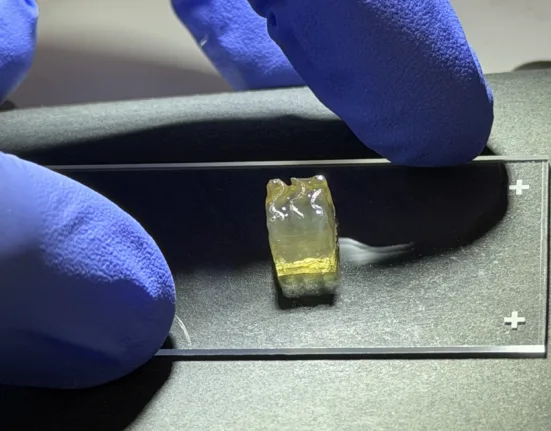
The U.S. Food and Drug Administration (FDA) has granted INTENT Biologics a full pediatric study waiver for its lead candidate, PEP Biologic, under IND 019567. The waiver, part of an agreed Initial Pediatric Study Plan (iPSP), applies to the product’s adult-focused development for diabetic foot ulcers (DFUs), a serious chronic wound indication preparing for pivotal Phase III studies in 2026. The waiver follows recent Fast Track designation for the exosome-based biologic and effectively removes pediatric study requirements from the company’s upcoming Biologics License Application.
Why the pediatric waiver adds strategic value to PEP Biologic’s late-stage development program
While pediatric waivers are routine for adult-only conditions, their early approval during pre-BLA discussions signals regulatory clarity and alignment. For INTENT Biologics, the timing of this waiver—paired with recent Fast Track status—consolidates a streamlined FDA path just as it transitions into pivotal-stage execution. The waiver formally confirms that no pediatric studies are required for DFU, a condition with virtually no incidence in children, thereby removing a common regulatory hurdle that could delay review cycles or trigger post-marketing obligations.
This development is particularly relevant given the company’s plans to file a Biologics License Application following its upcoming pivotal trial in 2026. With pediatric requirements now resolved, INTENT Biologics avoids both the cost and ethical complexity of recruiting pediatric subjects into studies where the disease burden is overwhelmingly adult. Regulatory analysts following the field suggest that this early-stage waiver also reduces BLA preparation risk, a non-trivial concern in a first-in-class therapeutic area like exosome-based biologics.
What the Fast Track designation reveals about PEP Biologic’s clinical positioning in diabetic wound care
Fast Track status, awarded in late 2025, strengthens INTENT Biologics’ case that PEP Biologic addresses a serious, unmet need with the potential to outperform existing therapies. The current DFU landscape is dominated by debridement, skin substitutes, and non-specific wound dressings. No biologic has been approved for DFU in nearly three decades. This creates a rare market vacuum in a condition with high morbidity, substantial costs, and limited durable treatment options.
PEP Biologic, a platelet-derived exosome product, operates through a regenerative signaling mechanism that aims to resolve inflammation, modulate immune response, and accelerate tissue healing. Clinicians tracking the wound care space note that most DFU therapies today focus on mechanical closure or infection control. By contrast, PEP Biologic introduces a systemic biologic modality that attempts to shift the underlying tissue repair dynamics—a distinction that may help justify pricing, reimbursement, and broader formulary access if clinical endpoints are met.
The Fast Track designation also unlocks tangible regulatory advantages. It allows INTENT Biologics to submit its BLA in rolling segments and opens the door for accelerated or priority review if supported by data. This can significantly compress timelines, particularly important in a market where no competitive biologics have recently challenged the status quo.
What distinguishes PEP Biologic in a category still nascent in FDA-regulated regenerative therapeutics
As a first-in-class exosome-based biologic, PEP Biologic exists in a regulatory gray zone. While regenerative medicine advanced therapies (RMAT) and cell-based products have carved out clear precedents, exosome therapies remain under evolving FDA scrutiny. INTENT Biologics appears to be navigating this with a conservative approach—staying within the framework of an IND, securing Fast Track status, and pursuing traditional BLA rather than accelerated pathways like RMAT or breakthrough therapy.
The underlying platform, developed by RION and the Mayo Clinic, is based on platelet-derived exosomes packaged into a lyophilized, shelf-stable formulation. This gives PEP Biologic a manufacturing and distribution advantage compared to cell-based or cryopreserved therapies. Industry observers suggest this could position the product favorably for outpatient clinics and community wound care settings where infrastructure is limited. The shelf-stable profile also strengthens health economic arguments by reducing waste, easing inventory management, and enabling more predictable dosing cycles.
Still, the novelty of the mechanism raises questions. Will FDA view exosome biologics more like biologics or more like cell-free regenerative products? How will it interpret potency assays, release specifications, and CMC (chemistry, manufacturing, and controls) data? These unknowns are not trivial and could resurface as the company finalizes its pivotal trial protocol and moves toward BLA filing.
What clinicians and reimbursement stakeholders may watch as pivotal trials begin in 2026
As PEP Biologic moves into late-stage studies, a key determinant of success will be how well its mechanism translates into meaningful clinical endpoints—specifically, durable wound closure, recurrence prevention, and time to healing. In prior studies of advanced DFU products, including skin substitutes like Apligraf or Dermagraft, response rates have often been modest, and real-world performance has fallen short of trial results. If INTENT Biologics can exceed these benchmarks, its platform could signal a shift in clinical preference toward regenerative, immune-modulating therapies over physical wound coverings.
However, trial design will be under the microscope. DFU is a notoriously heterogeneous indication, with comorbidities like infection, vascular insufficiency, and poor glycemic control influencing outcomes. The pivotal study’s inclusion criteria, stratification strategy, and endpoint definition will shape how clinicians and payers assess eventual utility. Without sufficient real-world generalizability, PEP Biologic may face adoption barriers despite promising science.
Reimbursement will also play a critical role. Given the lack of directly comparable FDA-approved biologics in DFU, pricing frameworks may need to be adapted. Payers will likely scrutinize not just efficacy, but also cost offsets such as reduced hospitalization, avoidance of amputation, and long-term wound recurrence rates. If these data are not explicitly built into the pivotal trial, post-marketing studies may become necessary to support formulary placement.
What could go wrong as INTENT Biologics advances toward commercialization
While INTENT Biologics has methodically cleared key early regulatory milestones, several risks remain. Chief among them is the uncertainty around regulatory precedent for exosome therapeutics. No exosome-based drug has yet been approved by the U.S. Food and Drug Administration. If agency reviewers raise questions around potency, safety, or product consistency late in the review cycle, timelines could slip substantially.
Second, manufacturing scale-up may present a challenge. While RION’s proprietary biomanufacturing platform appears robust, biologics manufacturing at scale—particularly for vesicle-based products—often encounters variability issues that can delay validation batches or complicate commercial launch.
Finally, competition may emerge from other regenerative modalities currently in development. As interest in cell-free biologics and tissue-modulating therapies increases, the window for PEP Biologic to establish itself as the default biologic in DFU may narrow. Companies with legacy wound care infrastructure and established salesforces could move into this space with adjacent technologies.