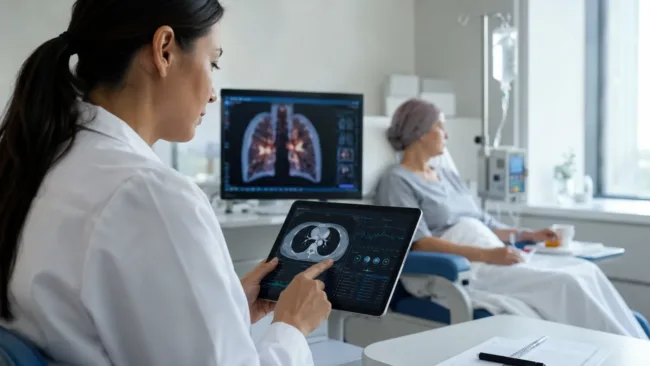
The rapid progress of artificial intelligence in medical imaging is creating fresh optimism among healthcare leaders seeking to close the persistent equity gap in breast cancer screening. The regulatory push by Lunit, a Seoul-based AI diagnostics firm, for its Lunit INSIGHT Risk model, which estimates a woman’s five-year breast cancer risk directly from mammogram images, is the latest sign of a sector determined to transform prevention and early detection for millions of women. Yet the central question remains: Is artificial intelligence genuinely positioned to make breast cancer screening fair and accessible for all populations, or will systemic disparities simply evolve in new forms as digital health goes mainstream?
How does the equity gap in breast cancer screening still shape outcomes for women in the U.S. and around the world?
For decades, disparities in breast cancer outcomes have mirrored deep and persistent inequalities in healthcare access, insurance coverage, and diagnostic innovation. In the United States, Black and Hispanic women are statistically less likely to be diagnosed at an early stage, often present with more aggressive forms of the disease, and face higher mortality rates compared to White women. Rural communities, low-income groups, and women in many emerging economies face similar challenges, with fewer screening options, logistical hurdles, and inconsistent access to high-quality care.
The roots of these inequities are complex and interconnected. Many women lack access to routine mammography due to the cost, geographic isolation, a shortage of trained clinicians, or longstanding mistrust of the healthcare system. Traditional risk calculators have often been built and validated predominantly on White, insured, and urban populations, raising the risk of misclassification and underperformance among minorities and those outside major metropolitan areas. Additional barriers, such as digital literacy, cultural perceptions of cancer, and limited awareness, further restrict the reach and impact of established prevention efforts.
Can AI-powered breast cancer risk models like Lunit INSIGHT Risk make a real difference in addressing these disparities?
Artificial intelligence offers a fundamentally new approach to risk prediction and early detection, one that could help democratize access to personalized breast cancer prevention. Lunit INSIGHT Risk, currently under review by the United States Food and Drug Administration, distinguishes itself from traditional models by generating five-year breast cancer risk estimates using only mammogram images. This eliminates the need for complex patient questionnaires and reduces the risk that women with incomplete medical or family histories are left out.
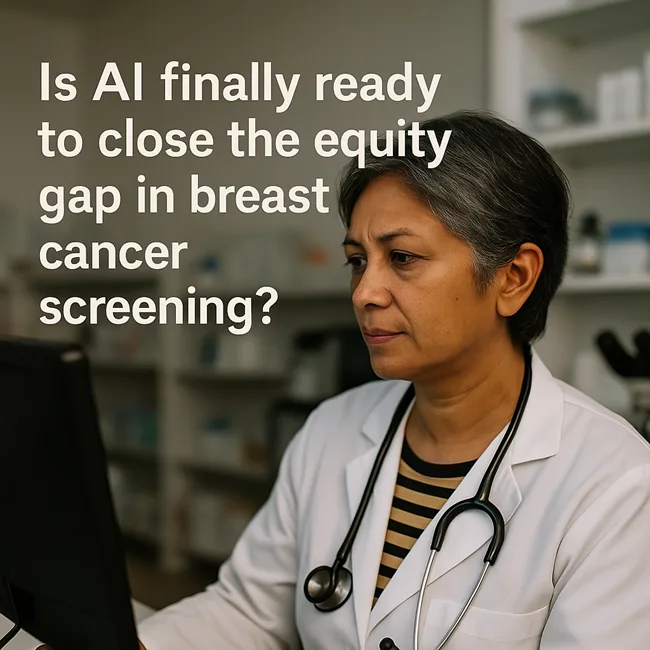
What sets the Lunit model apart is its emphasis on validation across diverse patient groups. Large peer-reviewed studies from the United States and Canada have demonstrated that the model maintains strong predictive accuracy across different ages, races, and breast density categories, making it a candidate for broader, more equitable adoption. By automating risk assessment as part of standard imaging, the technology promises to minimize manual data collection and limit the exclusion of patients who might otherwise be overlooked.
Despite these advances, the success of artificial intelligence in promoting health equity depends on more than technical innovation. Experts highlight that if models are trained on unrepresentative data or deployed in environments that do not guarantee equal access to screening, existing gaps can persist or even widen. Achieving real equity requires not just ongoing model auditing and public transparency, but also intentional efforts to address systemic, digital, and logistical barriers.
Are AI and digital health companies making measurable progress on equity in breast cancer screening, or is the risk of bias still present?
Lunit is one of several technology firms positioning artificial intelligence as a catalyst for fairer, more inclusive breast cancer screening. Companies such as Volpara Health, Kheiron Medical, iCAD, and Google Health are investing heavily in algorithms and platforms designed to boost detection rates, streamline workflows, and potentially reduce disparities. Volpara Health has emphasized breast density assessment, which is especially relevant for younger and minority women, while Kheiron Medical’s Mia platform is undergoing validation in both the United Kingdom and United States for its ability to perform across a range of clinical settings.
Major academic centers are also exploring whether artificial intelligence can help bridge historic divides. Institutions such as Massachusetts General Hospital and Emory University are conducting large-scale studies to test artificial intelligence model performance across race, ethnicity, and income levels. These efforts are not limited to algorithmic accuracy alone, but also consider whether earlier cancer detection is being achieved in groups that have long been underserved. The first results are promising, showing that certain artificial intelligence tools deliver consistent outcomes across population subgroups. Yet there is a consensus that fair algorithms are only part of the solution. Real-world success will also depend on targeted community outreach, culturally competent care, and patient education to build trust and drive adoption among those who have historically been left behind.
What role are regulators and policymakers playing in driving equitable adoption of AI in breast cancer screening?
Regulators in the United States, Europe, and Asia are increasingly focused on ensuring that the rapid adoption of artificial intelligence in healthcare does not exacerbate existing disparities. The United States Food and Drug Administration’s Breakthrough Device Designation, awarded to Lunit INSIGHT Risk, reflects a desire to accelerate access to novel diagnostic tools while maintaining high standards for evidence and safety. Recent policy shifts require that artificial intelligence models provide clear validation data across different demographic groups, with post-market surveillance plans in place to monitor ongoing performance and fairness.
Guidelines from bodies such as the United States Preventive Services Task Force and the National Comprehensive Cancer Network now mention the potential of artificial intelligence-powered screening and risk assessment. These organizations urge caution, calling for robust real-world data and careful monitoring to ensure that technology-driven gains in early detection are not limited to privileged groups. Payer policies are evolving more slowly, with reimbursement and insurance coverage for artificial intelligence-enabled screening still under pilot in most regions, though this is expected to shift as more validation data becomes available.
Internationally, health systems in the United Kingdom, Australia, and Scandinavia are incorporating risk-based artificial intelligence tools into population-wide screening initiatives, with explicit performance benchmarks for equity. These programs are being closely studied for insights into how artificial intelligence models perform across diverse populations and in different healthcare environments.
What will it take for artificial intelligence to actually close the equity gap in breast cancer screening rather than just narrow it?
The next phase of artificial intelligence adoption in breast cancer prevention will be defined by actions both inside and outside the technology sector. Achieving real equity will depend on ongoing investment in diverse and representative data, regular bias audits, and mechanisms for patient and provider feedback. Companies like Lunit, Volpara Health, and Kheiron Medical will need to prove that their artificial intelligence tools can deliver consistent, high-quality outcomes for women in rural clinics, safety-net hospitals, and global health settings—not just at major academic medical centers.
Equally critical is strengthening the ecosystem around artificial intelligence innovation. This means ensuring universal access to mammography, building care pathways that translate risk predictions into actionable follow-up, and aligning insurance and reimbursement policies to prevent new forms of exclusion. Culturally tailored outreach, patient navigation programs, and provider education will be essential to address historic mistrust and logistical barriers that cannot be solved by algorithms alone.
Market analysts and clinical leaders remain cautiously optimistic that digital health can accelerate progress toward equitable breast cancer screening, but emphasize that results will hinge on the choices made now. The upcoming Food and Drug Administration decision on Lunit INSIGHT Risk will be closely watched as a marker for how quickly health systems can move from promise to practice. The hope is that, starting in 2026, artificial intelligence risk models can help to truly shift the needle on one of healthcare’s most persistent equity challenges and usher in a new era of personalized, accessible breast cancer prevention for all.