Emmaus Life Sciences has entered a licensing and exclusive distribution agreement with NeoImmuneTech, Inc. for the North American rights to market, sell, and distribute Endari (prescription grade L-glutamine oral powder), its U.S. Food and Drug Administration-approved therapy for sickle cell disease. The deal, which includes an upfront payment and royalties, shifts responsibility for the commercial strategy of Endari in the United States, Canada, and U.S. territories to NeoImmuneTech, subject to final regulatory clearances.
This transaction does more than reassign a revenue stream—it underscores the growing segmentation in how rare disease assets are commercialized, and reveals diverging growth theses between an established sickle cell drug maker and a T cell-focused immunotherapy developer.
What this reveals about Emmaus Life Sciences’ evolving commercial focus
Emmaus Life Sciences has long depended on Endari as its core commercial asset since its 2017 FDA approval. The drug marked the first U.S.-approved treatment for sickle cell disease in decades and established a beachhead for Emmaus in global rare disease markets. However, despite its initial commercial promise, Endari’s U.S. growth has likely plateaued amid intensified competition and evolving payer expectations.
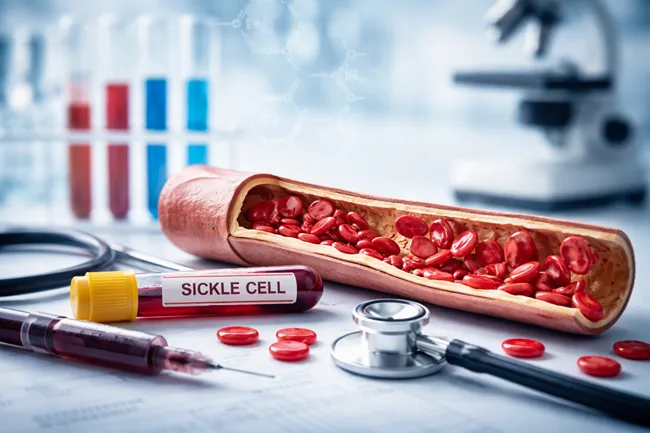
By licensing out Endari’s North American commercialization, Emmaus is signaling a clear pivot toward ex-U.S. markets—especially in regions such as the Middle East and Brazil, where pricing flexibility, population growth, and regulatory traction may offer better returns on investment. Industry analysts tracking Emmaus suggest this could be part of a broader capital redeployment strategy to prioritize geographies with lower distribution costs and higher relative growth potential.
While the company retains manufacturing and ex-North American rights, the decision to cede control of the U.S. market suggests that Emmaus views Endari’s domestic potential as mature—and not central to its future upside. This move also reduces overhead from U.S. sales operations, while creating a modest but steady royalty stream from NeoImmuneTech’s efforts.
What this enables for NeoImmuneTech’s U.S. pipeline ambitions
For NeoImmuneTech, a clinical-stage biopharmaceutical company focused on T cell-based immunotherapies, the acquisition of Endari’s U.S. commercialization rights offers more than a revenue-generating product. It provides a ready-built commercial infrastructure—distribution channels, payer relationships, and market presence—that can be leveraged for its lead clinical asset, NT-I7 (efineptakin alfa), an interleukin-7-based immunotherapy.
This move represents a classic case of platform seeding: use an existing approved product with a defined reimbursement path to build market familiarity, then layer pipeline assets onto that infrastructure as they advance. Regulatory watchers suggest the model is particularly useful for clinical-stage companies that wish to avoid building full commercial capabilities from scratch.
But this is not without risk. Endari is a non-biologic small molecule therapy, with a relatively commoditized clinical profile and growing competition from gene therapies, hydroxyurea alternatives, and pipeline biologics. The sales and education model for Endari may not translate cleanly to immuno-oncology, where NT-I7 is being developed for broader indications such as solid tumors and viral infections.
NeoImmuneTech’s leadership believes that the experience of selling an FDA-approved product will help it mature into a full-spectrum biotech firm. However, investors may question whether the capital and human resources required to scale Endari’s U.S. presence could dilute the company’s focus on NT-I7’s clinical development—particularly in light of funding constraints across the sector.
What this changes in the sickle cell treatment landscape
The Emmaus–NeoImmuneTech deal also comes amid a notable reshuffling in the sickle cell treatment landscape. In recent years, the field has expanded beyond small molecules to include gene therapy approaches from Vertex Pharmaceuticals and CRISPR Therapeutics (Casgevy), as well as biologics like Oxbryta (voxelotor) from Global Blood Therapeutics, now a part of Pfizer Inc.
While Endari remains a non-curative, symptom-reducing therapy aimed at lowering acute complications, its competitive profile is under pressure. Clinicians tracking the space note that although L-glutamine is orally administered and well-tolerated, its clinical effect size is modest compared to newer entrants. Moreover, the reimbursement environment for sickle cell disease is tightening, with payers increasingly scrutinizing cost-effectiveness metrics.
From a commercialization standpoint, Endari occupies a niche: it is neither the first-line therapy of choice for all clinicians, nor the most advanced in mechanism. As such, its utility lies in broader accessibility, particularly in underinsured populations or in countries where gene therapies remain financially out of reach. NeoImmuneTech’s ability to position Endari as part of a pragmatic care package—potentially alongside emerging diagnostics or risk stratification tools—may be key to unlocking incremental value.
What could go wrong in the North American relaunch
While the agreement terms appear strategic, execution risks loom. NeoImmuneTech is not a known player in the sickle cell ecosystem and may face trust barriers among prescribers, patient advocacy groups, and payers accustomed to Emmaus’ decade-long presence in the space. Additionally, any delay in meeting regulatory prerequisites for the agreement’s effective date could disrupt continuity of supply or reimbursement.
Furthermore, the deal structure appears to hinge heavily on NeoImmuneTech’s success in securing approvals to sell and distribute the product. Should the company face operational or regulatory hurdles—such as manufacturing compliance, state-level licensing delays, or payer access bottlenecks—it could reduce revenue visibility for both parties.
Also worth watching is whether NeoImmuneTech intends to rebrand or reposition Endari to align with its broader pipeline narrative, or whether it will maintain the status quo while it gears up for future launches. Any deviation from the drug’s established messaging could risk confusion or compliance missteps.
What industry observers will be watching next
The key question now is whether NeoImmuneTech can translate a mature rare disease product into a stepping stone for commercial credibility in immunotherapy. This will hinge on three factors: its ability to expand Endari’s penetration among underdiagnosed or underserved patient groups; the degree to which it can operationalize a U.S. commercial team; and how synergistically it can align NT-I7’s future commercialization strategy with its Endari platform experience.
From Emmaus’ side, attention will now shift to how aggressively it expands Endari across Saudi Arabia, Europe, and Latin America, and whether this ex-U.S. focus leads to new licensing or joint venture deals. Industry analysts also note that with the U.S. revenue stream outsourced, Emmaus may become more attractive to potential strategic acquirers looking for international rare disease pipelines with lean domestic operations.
In the broader context, the transaction reflects a growing trend in rare disease markets: smaller firms outsourcing commercialization to focus on capital-light growth, while clinical-stage companies use approved therapies as training grounds for more ambitious portfolio plays.

NeoImmuneTech takes over Endari’s U.S. rights from Emmaus: What this signals for the future of sickle cell treatment added by Pallavi Madhiraju on
View all posts by Pallavi Madhiraju →