Sanofi has entered into a global licensing and development agreement with South Korea based biotechnology company ADEL for an early-stage Alzheimer’s disease drug candidate targeting pathological tau protein, with total potential deal value of up to approximately $1.04 billion. The agreement includes an upfront payment of around $80 million, downstream development and commercial milestones, and tiered royalties, with the tau-directed monoclonal antibody currently in Phase 1 clinical evaluation following clearance by the U.S. Food and Drug Administration.
Sanofi’s decision to license a tau-focused asset at this stage reflects a deliberate strategic recalibration rather than opportunistic dealmaking. After years of industry-wide retreat from Alzheimer’s research, large pharmaceutical companies are selectively returning to the space with narrower biological hypotheses, clearer risk tolerance, and a greater emphasis on mechanistic differentiation over late-stage certainty.
Why Sanofi’s renewed Alzheimer’s focus reflects a shift in risk tolerance rather than scientific optimism
Alzheimer’s disease remains one of the most capital-intensive and failure-prone therapeutic areas in modern drug development. Despite recent regulatory approvals for amyloid-targeting therapies, clinical benefit remains modest, payer scrutiny is intense, and physician adoption has been uneven. These realities have tempered expectations that amyloid alone can meaningfully alter long-term disease trajectories.
Against this backdrop, Sanofi’s renewed engagement suggests a shift in how the company evaluates risk. Rather than seeking near-term commercial validation, Sanofi appears willing to absorb early clinical uncertainty in exchange for optionality across disease mechanisms that may become relevant as combination and stage-specific treatment paradigms evolve. Industry observers note that this approach prioritises strategic positioning over short-term pipeline optics.
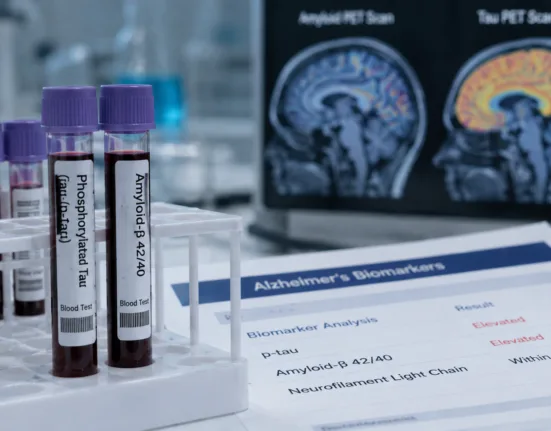
The timing also reflects a broader reassessment of Alzheimer’s biology. While amyloid accumulation may initiate disease processes, tau pathology increasingly appears to track more closely with neuronal loss and cognitive decline, particularly in symptomatic stages. This distinction has reopened interest in tau as a therapeutic target, despite earlier disappointments.
What targeting acetylated tau changes compared with prior tau-directed strategies
The candidate licensed from ADEL is a humanized monoclonal antibody designed to selectively bind acetylated tau, specifically tau acetylated at lysine 280. This focus on a disease-associated post-translational modification distinguishes it from earlier tau programs that broadly targeted total tau levels or aggregation states.
Tau acetylation has been implicated in impaired clearance and enhanced aggregation, making it an attractive but technically challenging target. By narrowing its focus to a specific pathological form of tau, ADEL’s approach aims to preserve physiological tau function while interfering with disease-driving processes. Clinicians tracking tau research believe this selectivity may prove critical in balancing efficacy and safety.
However, intracellular localisation remains a fundamental challenge for all tau antibodies. Unlike amyloid beta, which accumulates extracellularly, tau aggregates form inside neurons, raising questions about target accessibility, dosing requirements, and long-term tolerability. These hurdles have historically limited clinical success, underscoring why early-phase validation remains essential.
Why tau is re-emerging as a complementary rather than competing Alzheimer’s target
The resurgence of tau-focused programs does not signal a wholesale abandonment of amyloid strategies. Instead, it reflects growing acceptance that Alzheimer’s disease is biologically heterogeneous and temporally staged. Amyloid-targeting therapies may be most relevant early, while tau-directed approaches could become more important as disease progresses.
This layered view of Alzheimer’s biology has implications for trial design, regulatory strategy, and eventual clinical use. Biomarker-driven patient selection, combination regimens, and sequential treatment algorithms are increasingly discussed among industry observers, even if practical implementation remains distant.
Sanofi’s decision to license a tau asset at the Phase 1 stage suggests confidence that regulatory frameworks will continue to evolve toward accommodating mechanistic diversity, provided biomarkers and clinical endpoints are robustly linked. Regulatory watchers note that tau-focused programs may face different evidentiary expectations than amyloid therapies, particularly if positioned for later disease stages.
How the ADEL deal fits into Sanofi’s broader neuroscience portfolio construction
The ADEL agreement aligns with Sanofi’s broader effort to rebuild its neuroscience pipeline around differentiated biology rather than single-asset bets. Earlier this year, Sanofi expanded its presence in neurodegeneration through the acquisition of Vigil Neuroscience, adding programs focused on microglial function and neuroinflammation.
Together, these moves indicate a portfolio-level strategy that spans multiple disease drivers, including tau pathology, immune modulation, and microglial biology. Rather than positioning any one asset as transformative, Sanofi appears to be assembling a modular neuroscience platform capable of adapting as scientific consensus evolves.
Industry analysts note that this diversified approach may reduce binary risk while preserving upside. If tau, microglia, or combination strategies gain regulatory or clinical traction, Sanofi will already have embedded exposure across those pathways.
Why Sanofi is increasingly sourcing neuroscience innovation from Asian biotech ecosystems
The partnership with ADEL also highlights the growing role of Asian biotechnology hubs, particularly South Korea, in generating globally competitive neuroscience assets. Over the past decade, South Korea has invested heavily in translational research infrastructure, early-stage funding, and regulatory alignment with Western markets.
For multinational pharmaceutical companies, these ecosystems offer access to novel biology, cost-efficient early development, and increasingly sophisticated clinical execution. Industry observers suggest that early licensing from Asian biotechs allows global pharmaceutical companies to shape development strategy from the outset rather than acquiring late-stage assets with fixed risk profiles.
Sanofi’s willingness to commit significant capital to a South Korea based company signals confidence in the region’s scientific maturity and may encourage further cross-border neuroscience collaborations.
What the deal does and does not mean for Sanofi’s financial outlook
From a financial perspective, the ADEL transaction is unlikely to materially affect Sanofi’s near-term earnings. The asset remains in early clinical development, and meaningful value creation will depend on successful progression through multiple development stages.
However, the deal reinforces Sanofi’s longer-term growth narrative at a time when large pharmaceutical companies face patent expiries and competitive pressure across established franchises. Equity markets have generally been more tolerant of early-stage neuroscience investments when framed as strategic renewal rather than revenue replacement.
Sanofi’s muted share price reaction following the announcement reflects investor realism rather than scepticism. Most market participants recognise that Alzheimer’s investments are long-cycle bets where clinical data, not deal size, ultimately drives valuation impact.
What clinical, regulatory, and commercial uncertainties remain unresolved
Despite renewed interest in tau biology, substantial uncertainties persist. Translating preclinical promise into meaningful cognitive outcomes has proven difficult, and tau-directed therapies must demonstrate not only biomarker impact but also clinically relevant benefit.
Regulatory pathways for non-amyloid Alzheimer’s therapies remain less defined, particularly regarding acceptable endpoints and surrogate markers. Regulators are likely to scrutinise safety profiles closely, given the chronic nature of treatment and the vulnerability of the patient population.
Commercialisation challenges also loom. Diagnostic infrastructure capable of reliably identifying tau pathology, payer willingness to reimburse combination therapies, and physician readiness to adopt complex treatment algorithms will all influence eventual uptake.