Enhertu cut breast cancer recurrence risk by 53% against T-DM1, but will lung toxicity affect its use?
Enhertu wins EU approval after cutting invasive recurrence or death risk by 53% versus T-DM1. Lung toxicity remains a key consideration.


Enhertu wins EU approval after cutting invasive recurrence or death risk by 53% versus T-DM1. Lung toxicity remains a key consideration.

Chipscreen secures China IND clearance for CS43158, targeting FLT3 mutations and resistance pathways in acute myeloid leukemia.
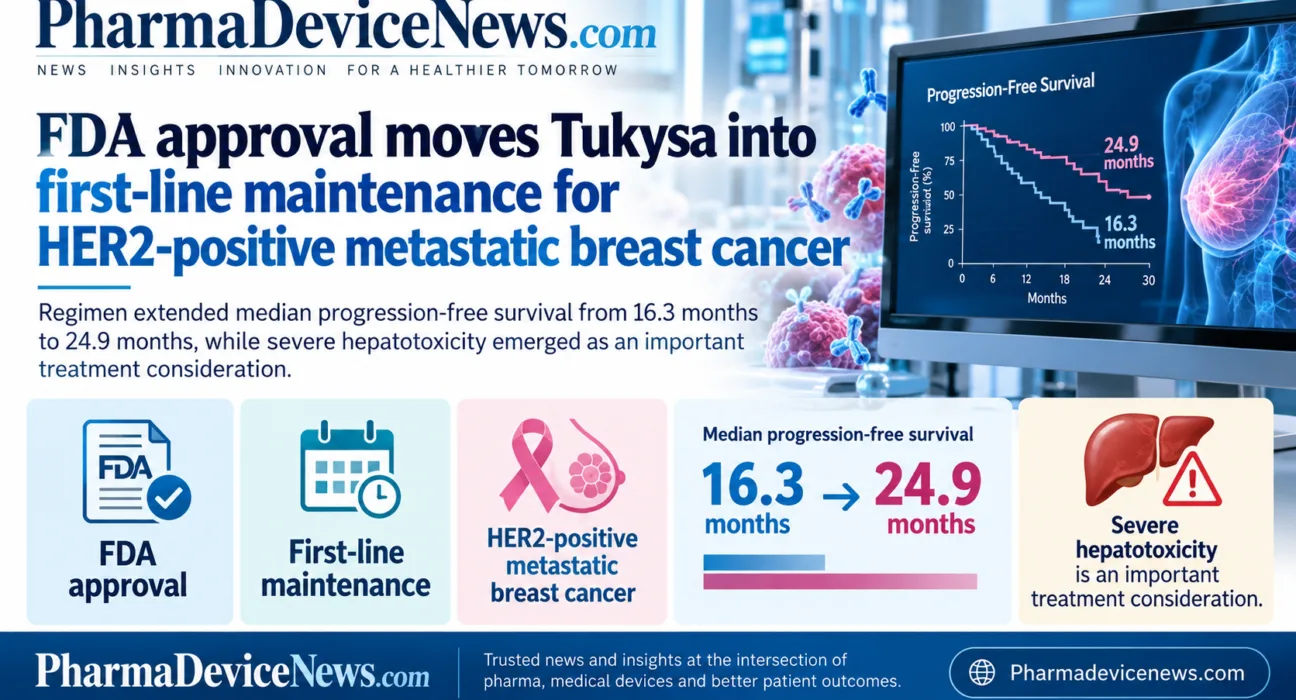
FDA approval moves Pfizer’s Tukysa into first-line maintenance for HER2-positive metastatic breast cancer after the regimen extended median progression-free survival from 16.3 to 24.9 months, although severe hepatotoxicity has emerged as an important treatment consideration.

Enhertu reduced the risk of progression or death by 37% against pembrolizumab plus chemotherapy in first-line HER2-mutant metastatic non-small cell lung cancer, potentially opening another earlier-treatment market for AstraZeneca and Daiichi Sankyo.

The European Commission has approved AstraZeneca and Daiichi Sankyo’s Enhertu with pertuzumab for first-line HER2-positive metastatic breast cancer after DESTINY-Breast09 showed a 44% reduction in the risk of progression or death compared with long-standing THP therapy.

FDA Fast Track designation could increase regulatory interaction around safusidenib while Nuvation Bio tests the IDH1 inhibitor across several glioma settings.

Innovent Biologics will commercialize Daiichi Sankyo’s VANFLYTA in China after its June approval for newly diagnosed FLT3-ITD AML.

EU approval moves Datroway into first-line metastatic TNBC after TROPION-Breast02 showed survival gains, intensifying the TROP2 ADC race.

EU regulators back Enhertu plus pertuzumab for first-line HER2-positive metastatic breast cancer, shifting focus to approval, safety and access.

American Regent recalls one papaverine injection lot after glass or paraformaldehyde particles were found, raising serious injectable safety concerns.