Trace Biosciences, a clinical-stage biotechnology company focused on nerve-targeted imaging agents, has received Investigational New Drug (IND) clearance from the U.S. Food and Drug Administration for LGW16-03, its first fluorescent imaging compound designed to highlight peripheral nerves during surgery. This regulatory milestone authorizes the company to launch first-in-human trials of the compound, marketed as NerveTrace Dx, which emits a near-infrared signal to allow real-time visualization of nerves intraoperatively.
The significance of this development lies not just in the regulatory greenlight, but in what it could mean for a large set of surgical procedures where nerve damage remains a preventable but persistent complication. With no FDA-approved agents currently available for nerve-specific imaging, Trace Biosciences is attempting to pioneer a new modality—cutting by color rather than anatomical estimation.
What this reveals about the unmet need in surgical nerve protection
Accidental nerve injury remains one of the more underappreciated yet serious risks in a wide range of surgeries, including prostatectomies, thyroid procedures, and orthopedic interventions. Clinical observers note that these injuries often go unrecognized intraoperatively and manifest later as complications ranging from temporary numbness to permanent functional deficits. The lack of real-time, nerve-specific imaging tools forces surgeons to rely on anatomical maps and intuition, especially when nerve structures are obscured or variable across patients.
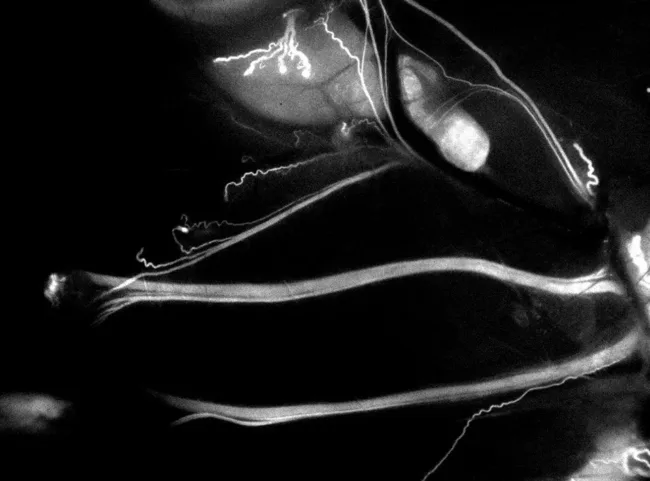
The promise of LGW16-03 is its potential to make these structures visible in a dynamic surgical field. While fluorescence-guided surgery is well established in oncology (notably in lymphatic and tumor visualization), the extension into nerve tissue is a comparatively uncharted application. The molecule’s selective binding to nerve tissues and its compatibility with existing near-infrared imaging systems give it a chance to integrate into surgical workflows without requiring new infrastructure. This integration will be a critical factor in eventual adoption.
What changes with this IND milestone for Trace Biosciences
From a development standpoint, the IND clearance enables Trace Biosciences to transition from preclinical development into formal clinical testing. According to the company, the initial Phase I study will begin in orthopedic surgeries, chosen likely due to high visibility of surgical planes and well-defined nerve pathways. This could serve as a relatively low-risk validation setting for safety, pharmacokinetics, and intraoperative performance.
More importantly, it marks Trace’s entry into a niche but potentially transformative segment of intraoperative imaging. The company is building a broader platform around nerve-specific visualization, with applications that could extend to nerve repair, regeneration guidance, and even targeted drug delivery if the molecular targeting mechanism proves robust.
Industry analysts watching fluorescence-guided surgery believe Trace is positioning itself to replicate, in nerve imaging, what other firms like Lumicell and On Target Laboratories have done in tumor margin detection. But unlike tumor tissues, which often exhibit metabolic or receptor-based uptake differences, nerves lack strong differentiators in most imaging contexts—making specificity a long-standing challenge.
What could go wrong or slow adoption of LGW16-03
Despite the milestone, Trace Biosciences faces a set of operational and clinical risks typical for imaging agents but amplified by the novelty of the indication. Manufacturing scalability, regulatory predictability, and the challenge of establishing clinical utility in real-world surgical environments all remain open questions.
Fluorescent dyes in general have struggled with standardization, lot-to-lot consistency, and off-target accumulation. If LGW16-03 demonstrates even minor uptake in non-neural tissues or fails to deliver consistently high contrast in complex surgical fields, it could compromise surgeon trust and reduce adoption enthusiasm. Clinicians may also hesitate if the imaging requires workflow disruptions, calibration of unfamiliar systems, or additional training during already delicate procedures.
From a regulatory standpoint, the pathway for imaging agents that do not directly treat but only enable visualization can be tricky. Regulatory watchers note that demonstrating a meaningful impact on surgical outcomes—beyond visual clarity—could become a bar Trace must clear in later-phase studies. Since LGW16-03 is not a therapeutic product, payers may require evidence that its use leads to fewer readmissions, lower complication rates, or reduced OR time to justify reimbursement.
What this could enable for future nerve-targeted platforms
What makes the LGW16-03 IND clearance more than just a niche imaging milestone is the underlying platform it validates. If Trace Biosciences can demonstrate safety, specificity, and operational simplicity in humans, it could open the door to a new class of nerve-targeted imaging compounds and eventually therapies. The molecular scaffold used to target peripheral nerves might be adapted for guided nerve repair surgeries, intraoperative stimulation optimization, or even diagnostics in neuropathies.
Moreover, the opportunity for companion imaging in nerve-sparing robotic surgery is particularly compelling. With the continued rise of robot-assisted procedures—especially in urology and gynecology—high-precision visualization tools that integrate into camera systems could serve as differentiators for surgical centers and system vendors alike.
Some industry observers see parallels to the way tumor-specific imaging agents like Cytalux (pafolacianine) changed intraoperative gynecologic oncology. Nerve-specific agents could do the same for procedures where unintended nerve damage is currently accepted as collateral risk.
What clinicians and regulators will likely monitor in upcoming trials
As Trace initiates its Phase I study, clinical and regulatory stakeholders will be watching for several signals. First, the safety profile—any systemic or local adverse events will be heavily scrutinized, especially given the proximity to critical structures. Second, the fidelity of imaging—whether the nerve signal is consistent, artifact-free, and preserved in diverse tissue environments.
Surgical usability will also be key. Can the fluorescence be viewed through blood, cauterized tissue, or in obese patients? Does the agent require special timing or administration procedures? These practical considerations will determine whether LGW16-03 remains a research tool or becomes part of routine surgical protocol.
Finally, regulators may require a bridge between visualization and surgical outcomes. Phase II and III studies will likely need to quantify not just visibility but impact: whether fewer nerves are injured, whether complications decline, and whether surgeon confidence improves.
What this means for peer companies in surgical imaging
Trace Biosciences’ entrance into clinical testing may spur interest from incumbents and imaging platform integrators. Companies with intraoperative imaging systems such as Stryker, Intuitive Surgical, and Olympus may eventually seek partnerships or acquisitions to expand their visualization portfolios beyond vasculature and tumor tissue.
In the broader context, Trace is navigating a middle ground between high-risk therapeutic development and commoditized surgical hardware. Its bet is that a nerve-specific agent—if safe, reliable, and easy to integrate—can command both clinical utility and commercial interest, especially in high-stakes procedures where patient outcomes hinge on nerve preservation.
If successful, the company could help establish a new standard in surgical imaging and pave the way for precision-guided interventions across multiple specialties. But success will depend not just on molecular targeting, but on the company’s ability to translate technical innovation into surgical trust. That will be the true test in the operating room.