
Trividia Health, Inc. has initiated a labeling correction for all TRUE METRIX blood glucose monitoring systems to update how the E-5 error code is described in owner booklets and instructions for use across multiple international markets. The change clarifies that users experiencing symptoms of high blood glucose alongside an E-5 reading must seek immediate medical attention, following reports of serious injuries and one death linked to delayed response. The action has been notified to the U.S. Food and Drug Administration and does not involve device removal or replacement.
Why this labeling change reframes device safety risk beyond hardware or software faults
Labeling corrections are often treated as low-impact regulatory housekeeping, but this update exposes how device instructions themselves can function as a safety-critical interface. In the case of TRUE METRIX systems, the E-5 error code has long served a dual purpose, flagging either an extreme hyperglycemic event or a test strip issue. Industry observers note that combining two fundamentally different scenarios under a single alert places heavy interpretive burden on users, especially in non-clinical settings where stress, symptoms, or low health literacy may already impair judgment.
The revised language explicitly elevates urgency when symptoms are present, attempting to close a gap where users might previously have defaulted to retesting rather than escalating care. That distinction matters because very high glucose levels above 600 mg/dL are not simply numerical outliers but potential precursors to acute metabolic emergencies. By reframing the E-5 message as a conditional emergency signal rather than a troubleshooting prompt, Trividia Health is implicitly acknowledging that human factors design can be as consequential as analytical accuracy.
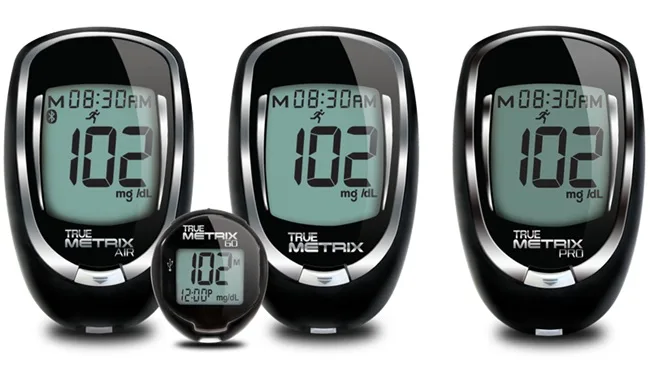
What is genuinely new versus incremental in the E-5 update
From a regulatory classification standpoint, this action remains a labeling correction rather than a recall, field safety corrective action, or software update. No device functionality has changed, and the meters remain cleared for use. That makes the move incremental in form but meaningful in substance. The novelty lies in the explicit linkage between symptom presence and immediate medical escalation, which was previously less direct and potentially ambiguous.
Clinicians tracking the field believe the update tacitly recognizes that users do not always distinguish between meter errors and physiological extremes in real time. The correction does not resolve the underlying ambiguity of the E-5 code itself, but it narrows the decision pathway by removing optionality when symptoms align with high glucose. In that sense, the change is less about adding information and more about constraining interpretation to reduce delay.
How TRUE METRIX compares with evolving expectations for glucose monitoring alerts
The broader glucose monitoring landscape has shifted toward continuous glucose monitoring platforms that emphasize trend arrows, alarms, and predictive alerts rather than static error codes. Compared with these systems, traditional fingerstick meters like TRUE METRIX rely heavily on textual instructions to contextualize results. Regulatory watchers suggest that this places older platforms under increasing scrutiny as expectations rise for intuitive, real-time risk communication.
While TRUE METRIX devices remain widely used due to affordability and broad retail distribution, their alert architecture reflects an earlier era of design assumptions. Competitor systems increasingly differentiate between analytical errors and physiological danger through distinct visual or audible signals. The E-5 correction brings TRUE METRIX instructions closer to that mindset without altering the device itself, but it also underscores the limitations of retrofitting safety logic through documentation alone.
Clinical relevance and what the injury data signals to regulators and clinicians
The disclosure of 114 reported serious injuries and one death associated with the E-5 error code since global launch is likely to draw attention not only to the product but to reporting practices across the sector. Industry observers note that adverse event attribution in glucose monitoring is complex, often involving user behavior, comorbidities, and access to care. Even so, the persistence of severe outcomes over a long commercial period suggests a pattern regulators cannot ignore.
Clinicians may interpret the update as a reminder to reinforce patient education around extreme readings, particularly for populations relying on low-cost meters outside of integrated care systems. The fact that injuries accumulated over years rather than clustering around a specific manufacturing issue points to systemic rather than episodic risk. That distinction matters because it shifts mitigation strategies away from quality control and toward communication and training.
Regulatory pathway clarity and why this is not the end of scrutiny
Trividia Health has notified the U.S. Food and Drug Administration, positioning the action within established post-market surveillance and correction frameworks. The absence of a recall indicates that regulators view the issue as addressable through labeling rather than device modification, at least for now. Regulatory watchers suggest this reflects a balancing act between risk mitigation and maintaining access to widely used monitoring tools.
However, labeling corrections tied to serious adverse outcomes can prompt follow-on questions. Regulators may examine whether similar dual-meaning alerts exist elsewhere in the product line or across the broader market. The update also raises the possibility of future expectations for clearer differentiation between analytical errors and physiological danger in glucose meters, even for legacy devices.
Adoption and real-world effectiveness challenges that labeling alone may not solve
One unresolved question is how effectively revised instructions reach end users, particularly those who have owned their meters for years and rarely consult manuals. Pharmacies and distributors are being asked to post notices and forward information, but industry observers caution that passive dissemination has limits. In real-world settings, behavior change often lags behind documentation updates.
There is also the challenge of symptom recognition. Fatigue, thirst, and blurred vision are common complaints that may not immediately trigger alarm in users accustomed to chronic hyperglycemia. The revised wording assumes users can accurately self-assess symptom severity and link it to the meter alert. Clinicians tracking patient behavior note that this assumption may not hold uniformly, especially among vulnerable populations.
What risks and blind spots remain after the correction
Even with clearer instructions, the E-5 code continues to conflate two distinct scenarios. Retesting remains the first step in both pathways, potentially delaying escalation if users focus on resolving a perceived strip issue. The correction mitigates but does not eliminate this risk. Industry analysts suggest that future device iterations may need to separate extreme physiological readings from technical errors at the interface level rather than in text.
There is also the broader question of how adverse event data feeds back into design decisions. The long interval between product launch and labeling correction may invite scrutiny of how quickly safety signals were identified and acted upon. While post-market surveillance inherently involves lag, regulators and industry observers alike may ask whether earlier intervention could have reduced harm.
What clinicians, regulators, and industry observers are likely to watch next
Attention is likely to turn to whether similar corrections emerge across other glucose monitoring platforms with comparable alert structures. Regulators may assess whether guidance needs updating to encourage clearer risk stratification in point-of-care devices. Clinicians will watch for evidence that the revised instructions translate into faster care-seeking behavior during extreme events.
For Trividia Health, the next phase will involve demonstrating that the correction effectively reduces adverse outcomes without disrupting access or usability. Industry observers suggest that while this action closes an immediate gap, it also highlights the strategic challenge facing manufacturers of legacy devices as safety expectations evolve. The TRUE METRIX update may ultimately be remembered less as an isolated correction and more as a signal that labeling is no longer a peripheral consideration in device risk management.
