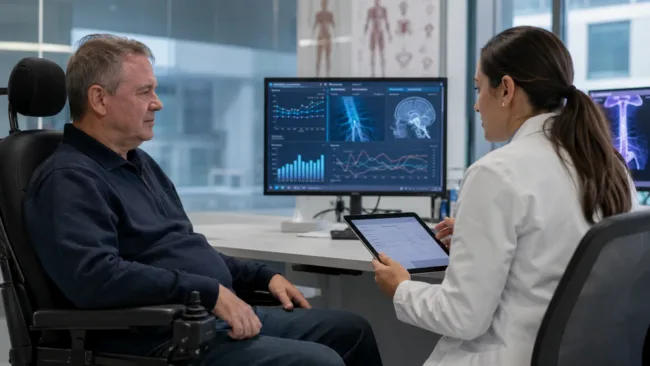
Celosia Therapeutics has dosed the first participant in its Phase 1b KOANEWA clinical trial of CTx1000, an investigational gene therapy for amyotrophic lateral sclerosis, at Macquarie University Hospital in Sydney. The Australian biotech firm said the first-in-human, open-label study is designed primarily to assess safety and tolerability after a single administration, while also tracking biomarkers and exploratory clinical measures in a disease setting where therapeutic progress remains frustratingly limited.
What makes this development worth watching is not merely that another experimental ALS therapy has entered the clinic, but that Celosia Therapeutics is attempting to intervene at one of the field’s most heavily discussed pathological signals: abnormal TDP-43 accumulation. In ALS drug development, that matters because the pipeline has historically struggled to move from mechanistic promise to durable clinical benefit. A new entrant claiming to directly clear pathological TDP-43 therefore arrives with both scientific intrigue and a heavy burden of proof.
Why direct TDP-43 targeting could matter more than another incremental ALS pipeline update
The genuine point of differentiation in CTx1000 is its stated design goal. Rather than aiming broadly at neuroinflammation, excitotoxicity, or generic neuroprotection, the programme is framed around selective binding and clearance of toxic forms of TDP-43, a protein long implicated in the biology of ALS and several related neurodegenerative conditions. That makes the approach more ambitious than many incremental pipeline additions, because it attempts to engage a putative disease driver rather than simply soften downstream consequences of neuronal injury.
That distinction is important in a field where available medicines have generally offered modest benefit, complicated access dynamics, or ongoing debate about real-world impact. Industry observers tracking ALS development have repeatedly treated TDP-43 as a compelling but difficult target, partly because its pathology is common across much of the disease population, yet partly because translating that biology into a safe and effective therapy has remained elusive. In that sense, CTx1000 is entering clinical testing in one of the most scientifically attractive and operationally unforgiving corners of neurodegeneration research.
The promise, of course, lies in the possibility that a therapy capable of clearing pathological TDP-43 could alter the trajectory of disease rather than merely stretch timelines at the margin. The risk is that mechanistic elegance in preclinical systems may still fail to produce clinically meaningful benefit in humans. ALS has humbled many programmes that looked persuasive in animal models or biomarker-rich preclinical packages. That is why the start of human dosing should be treated as an important transition point, but not yet as evidence that the biology has been clinically validated.
What the KOANEWA study design reveals about Celosia Therapeutics’ immediate development priorities
The KOANEWA study is described as a first-in-human, open-label Phase 1b trial evaluating a single administration of CTx1000 in people with ALS. That design tells the market several things at once. First, Celosia Therapeutics is clearly prioritising early safety characterisation, which is unsurprising for a genetic medicine in a vulnerable patient population. Second, the inclusion of biomarker profiling alongside exploratory clinical measures suggests the Australian biotech firm understands that safety alone will not be enough to hold attention in a competitive neuroscience market. Even at this early stage, the field will want evidence that the therapy is engaging the intended biology in a measurable way.
An open-label format is appropriate for a first-in-human study, but it also imposes interpretive limits. Biomarker shifts, patient-level anecdotes, or even signs of slowed decline can generate interest, yet they do not resolve questions about durability, reproducibility, or the magnitude of any therapeutic effect. In neurodegenerative disease, where clinical trajectories can vary and placebo-controlled confirmation is essential, early signals can easily attract more excitement than they deserve. That means Celosia Therapeutics will need to be disciplined in how it frames any future readouts from KOANEWA.
The single-administration aspect is another feature worth watching. It supports the narrative that gene therapies can deliver durable biological effects without chronic dosing, which is commercially attractive and strategically differentiated from continuous treatment models. But that convenience thesis only works if the company can show that one administration produces meaningful target engagement for long enough to matter. Otherwise, a theoretically elegant dosing model risks becoming a practical limitation.
Why preclinical claims of halted progression and partial reversal still need clinical grounding
Celosia Therapeutics has tied CTx1000 to preclinical work suggesting the therapy halted disease progression in multiple ALS models and, in some cases, partially reversed disease manifestations. In biotech terms, that is exactly the kind of preclinical profile that helps a programme reach the clinic. In industry reality, it is also the point where expectations can run ahead of evidence.
The problem is not that such data are irrelevant. On the contrary, they are essential to explaining why CTx1000 deserves human testing at all. The issue is that ALS development is littered with examples where preclinical strength did not translate into clinically meaningful outcomes. Model systems are simplifications, disease heterogeneity in humans is substantial, and the timing of intervention can radically alter results. A treatment that performs well under controlled experimental conditions may confront a very different challenge in patients who present at varying stages of disease progression and with potentially different underlying molecular profiles.
That creates an especially high bar for a therapy positioned around TDP-43. If pathological TDP-43 is indeed central to disease biology, the opportunity is major. But if TDP-43 pathology turns out to be only one part of a more complex and heterogeneous cascade, then even successful target engagement may not automatically lead to the scale of clinical benefit investors, clinicians, and patient communities hope to see. This is where biomarker strategy becomes crucial. Celosia Therapeutics will need to show not just that CTx1000 can be administered safely, but that it can produce interpretable biological evidence consistent with its proposed mechanism.
What clinicians and regulators are likely to watch as CTx1000 moves through early ALS testing
Clinicians following the programme are likely to focus first on tolerability and procedural feasibility, especially given that gene therapies in neurology often raise questions around delivery method, immunogenicity, and the broader burden placed on already fragile patients. In a fatal, fast-moving disease such as ALS, a therapy cannot be meaningfully transformative if administration itself proves too complex, risky, or difficult to scale beyond specialist centres.
Regulatory watchers, meanwhile, will be looking for pathway clarity. KOANEWA may establish an initial safety foundation, but the larger question is how Celosia Therapeutics builds a package robust enough to support later-stage development. That includes patient selection strategy, the relevance and validation status of any biomarkers used, the relationship between molecular changes and functional outcomes, and whether the company can generate a development plan that regulators view as scientifically coherent rather than merely novel.
Another issue is population definition. ALS is often discussed as a single disease, but its biological diversity complicates targeted development. If CTx1000 works best in a subset of patients with particular TDP-43 pathology features, Celosia Therapeutics may ultimately need a more refined patient stratification strategy. That could strengthen efficacy signals, but it could also narrow the commercial opportunity and complicate trial recruitment. Precision in neurodegeneration is strategically attractive, yet it rarely comes without trade-offs.
How adoption and scalability questions could become as important as the underlying science
Even if CTx1000 produces encouraging early data, the path to real-world adoption will be shaped by more than clinical promise. Genetic medicines face recurring questions around manufacturing consistency, cost structure, site readiness, and reimbursement logic. In rare and severe diseases, pricing flexibility can be greater than in mass-market indications, but payers still demand evidence that high-cost therapies deliver meaningful benefit on outcomes that matter.
For Celosia Therapeutics, that means the company’s eventual challenge is twofold. It must first prove that the mechanism works well enough to justify larger and more expensive trials. Then it must demonstrate that the therapy can fit into a treatment ecosystem that includes specialist neurologists, advanced monitoring, and pressure from health systems to prioritise interventions with measurable value. In other words, scientific novelty may open the door, but operational credibility is what keeps a programme alive through later development.
This is also why the first-patient milestone should be viewed as a strategic threshold rather than a commercial one. It confirms that the platform has crossed from laboratory theory into clinical accountability. From here, every future update will be judged less by narrative ambition and more by whether it reduces uncertainty. In ALS, that is the real currency.
Why Celosia Therapeutics now faces a credibility test that goes far beyond first-patient dosing
For Celosia Therapeutics, the start of KOANEWA is an important milestone because it places the company in the rare group of developers actively testing a TDP-43-focused therapeutic concept in humans. That alone gives the programme relevance. But relevance is not the same as validation, and the market will quickly move past the symbolism of first-patient dosing.
The harder questions begin now. Can the Australian biotech firm show that CTx1000 is safe enough to justify broader exposure? Can it produce biomarker data that support the proposed mechanism rather than merely decorate it? Can exploratory efficacy signals emerge in a way that is intriguing but also interpretable? And can the company do all of this without overstating what an early open-label study can really prove?
Those are not minor hurdles. They are the central tests that separate a compelling neurodegeneration story from a clinically credible one. Still, there is a reason this development deserves attention. ALS continues to need therapies that aim higher than symptomatic management, and TDP-43 remains one of the most important unresolved targets in the field. If CTx1000 can begin to de-risk that biology, Celosia Therapeutics may have done more than launch a small Phase 1b study. It may have opened a clinically meaningful new argument about where ALS treatment innovation should go next. For now, though, the operative phrase is still “may have.” In this disease area, hope earns attention, but data earn belief.