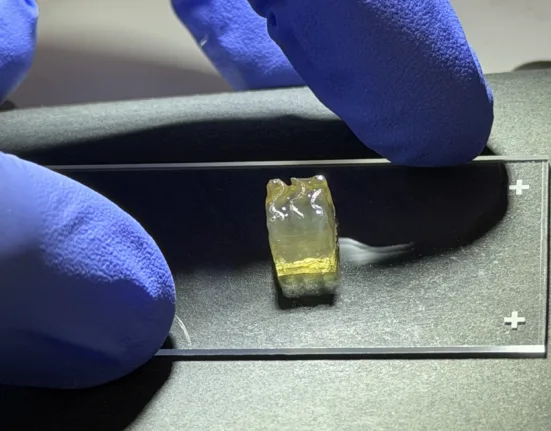
Matricelf Ltd. announced it has signed a memorandum of understanding to establish a dedicated subsidiary focused on developing and commercializing its autologous engineered tissue technology for Parkinson’s disease and related Parkinsonism conditions. The proposed subsidiary would receive an exclusive worldwide sublicense to apply the company’s regenerative medicine platform to Parkinson’s disease following completion of a planned capital raise and definitive agreement.
Rather than simply expanding its internal pipeline, the Israeli regenerative medicine company is effectively reorganizing its Parkinson’s program into a semi independent development vehicle. This structural decision reflects a broader shift emerging across biotechnology, where single indication subsidiaries are increasingly used to isolate capital risk, attract specialized investors, and accelerate development timelines for high uncertainty therapeutic areas such as neurodegeneration.
Why spinning out a Parkinson’s therapy program into a subsidiary could reshape development strategy for regenerative medicine
For biotechnology companies working on platform technologies, Parkinson’s disease presents a paradox. The medical need is immense and the scientific challenge remains formidable. Neurodegenerative diseases have historically produced high clinical failure rates, particularly in programs attempting disease modification rather than symptomatic relief.
In this context, Matricelf Ltd.’s decision to isolate its Parkinson’s program in a dedicated entity can be interpreted as both a financing strategy and a risk management mechanism. Industry observers note that regenerative medicine platforms often face difficulty raising capital when multiple indications compete for resources under a single corporate structure. By creating a specialized subsidiary, the company can align capital allocation directly with the Parkinson’s program without diluting shareholder equity at the parent level.
The structure also signals a degree of maturity in the company’s development roadmap. Instead of treating Parkinson’s as an exploratory pipeline extension, the spinout suggests the therapy has reached a stage where a dedicated operational and financing structure may accelerate translational progress.
The biotechnology sector has increasingly experimented with similar models. Platform developers in gene therapy, RNA therapeutics, and cell therapy have used spinouts to pursue high risk programs while preserving the financial stability of the parent entity. For investors and strategic partners, such structures also create clearer valuation pathways tied to specific disease programs.
What this move reveals about the evolving economics of Parkinson’s disease drug development
Parkinson’s disease represents one of the largest unmet needs in neurology. Current therapies remain largely symptomatic, with treatments such as levodopa and dopamine agonists primarily focused on restoring dopamine signaling rather than addressing neuronal degeneration.
As a result, any technology capable of restoring or replacing damaged neural tissue attracts significant scientific attention. Autologous tissue engineering platforms, such as the one being developed by Matricelf Ltd., attempt to rebuild neural structures using a patient’s own cells, theoretically reducing immune rejection risks.
However, the economics of developing regenerative therapies for neurological disorders remain complex. Clinical trials are typically lengthy, endpoints are difficult to measure, and regulatory approval pathways can involve extensive long term safety monitoring. These challenges make Parkinson’s programs particularly capital intensive.
By structuring the program under a new entity expected to raise approximately 3.5 million dollars in early financing, Matricelf appears to be adopting a staged capital strategy. The goal is likely to fund early development milestones without requiring large scale dilution at the parent company level.
Industry analysts tracking the sector note that regenerative neurology remains in an exploratory phase compared with oncology or rare genetic diseases. Many cell based programs have demonstrated promising preclinical signals but struggle to translate those signals into consistent clinical outcomes.
For that reason, investors increasingly prefer program specific financing structures that allow targeted capital deployment.
How autologous tissue engineering approaches differ from traditional Parkinson’s treatments
Traditional Parkinson’s therapies focus on neurotransmitter modulation. Medications attempt to increase dopamine levels or mimic dopamine activity in the brain. These approaches address symptoms but do not stop neuronal degeneration.
Regenerative medicine approaches attempt to intervene earlier in the disease process. Instead of replacing dopamine chemically, they aim to repair or regenerate damaged neural structures.
Matricelf Ltd.’s technology combines autologous stem cells with proprietary hydrogel scaffolds designed to support tissue regeneration. The concept is to create engineered neural tissue that can integrate into damaged areas of the central nervous system.
Clinicians following regenerative neurology research emphasize that this strategy differs fundamentally from pharmaceutical interventions. While drugs typically influence signaling pathways, engineered tissue therapies attempt structural repair.
That distinction introduces both promise and risk. If successful, such therapies could theoretically slow or reverse disease progression. However, the complexity of integrating engineered tissue into the brain raises significant scientific and regulatory questions.
Neural connectivity, long term integration, and safety outcomes remain critical unknowns for most regenerative neurology programs.
Why Parkinson’s disease is becoming a major battleground for advanced cell therapy platforms
The global Parkinson’s disease treatment market continues to expand as populations age and diagnostic awareness improves. Estimates place the current market value in the mid single digit billions of dollars with projections pointing toward steady growth through the end of the decade.
More importantly, the disease’s underlying biology makes it a compelling target for regenerative approaches. Parkinson’s disease primarily involves degeneration of dopamine producing neurons in the substantia nigra region of the brain. In theory, replacing or regenerating those neurons could restore lost function.
Several biotechnology companies and academic groups are exploring related approaches, including stem cell derived neuron transplantation, gene therapy targeting dopamine pathways, and neuroprotective biological treatments.
Within this landscape, autologous cell platforms offer one potential advantage. Because the cells originate from the patient, immune compatibility concerns may be reduced compared with donor derived therapies. That could simplify long term treatment protocols and reduce the need for immunosuppressive drugs.
However, manufacturing personalized autologous therapies presents operational challenges. Each treatment must be produced individually for the patient, which complicates scalability and cost control.
Regulators are also cautious about therapies involving stem cells or engineered tissues, particularly when targeting the brain.
What regulators and clinicians will watch next as the Parkinson’s subsidiary develops
Even if the subsidiary structure is finalized, the scientific pathway remains uncertain. Several milestones will determine whether the Parkinson’s program progresses toward clinical testing and eventual commercialization.
Clinicians following the field will focus on preclinical evidence demonstrating that engineered neural tissue can survive and integrate into the brain without causing abnormal growth or inflammation.
Regulatory watchers will examine whether the therapy is categorized primarily as a cell therapy, tissue engineered product, or combination biologic device. Each classification carries different approval pathways and manufacturing requirements.
Manufacturing scalability will also be closely scrutinized. Autologous therapies must maintain consistency despite patient specific production processes. Regulators often require extensive quality control protocols to ensure reproducibility.
Another key issue will be clinical trial design. Parkinson’s disease progresses slowly, which makes demonstrating meaningful disease modification challenging. Trials may need long follow up periods to confirm sustained benefit.
Industry observers note that early stage regenerative neurology programs frequently face difficulties translating preclinical promise into measurable clinical endpoints.
What this expansion into neurological disease suggests about Matricelf’s broader technology ambitions
Although the immediate focus is Parkinson’s disease, the strategic implications extend further. Matricelf Ltd.’s regenerative medicine platform was initially developed for spinal cord injury applications.
Expanding into Parkinson’s disease suggests the company sees broader potential for its autologous tissue engineering technology across multiple neurological indications.
If the Parkinson’s program advances successfully, the subsidiary model could serve as a template for additional disease specific ventures built around the same core platform.
Industry observers note that this modular expansion model allows biotechnology companies to scale innovation without overextending internal resources. Each disease program can attract investors, collaborators, and regulatory expertise tailored to that specific therapeutic area.
However, the approach also fragments development efforts. Managing multiple subsidiaries requires coordination across intellectual property, manufacturing infrastructure, and regulatory compliance.
The success of the strategy will ultimately depend on whether Matricelf’s underlying technology demonstrates reproducible clinical value.
The broader regenerative neurology question that still remains unanswered
Despite decades of research, regenerative medicine has yet to produce a widely adopted therapy for major neurodegenerative diseases. Parkinson’s disease remains one of the most actively studied targets because the underlying neuronal loss is relatively well understood.
Yet translating laboratory breakthroughs into clinical therapies has proven extraordinarily difficult. Neural networks are complex, and restoring them requires precise integration of new cells into existing brain circuits.
That challenge explains why many pharmaceutical companies have historically prioritized symptomatic drugs over regenerative approaches.
Matricelf Ltd.’s Parkinson’s subsidiary represents another attempt to push regenerative neurology toward clinical reality. Whether this approach succeeds will depend not only on scientific innovation but also on careful trial design, regulatory alignment, and sustainable manufacturing strategies.
For now, the subsidiary plan primarily signals intent. The coming years will determine whether that intent evolves into a viable therapeutic platform capable of changing how Parkinson’s disease is treated.
If the technology progresses through early development milestones, the program could become a case study in how regenerative medicine companies structure commercialization pathways for complex neurological diseases. If it falters, it will reinforce the longstanding caution surrounding cell based therapies targeting the brain.
Either way, the move highlights how biotechnology companies are experimenting with new organizational models to pursue some of medicine’s most difficult challenges.