Akeso, Inc. and INOVIO have entered a clinical collaboration and supply agreement to evaluate the bispecific checkpoint inhibitor cadonilimab in combination with the DNA immunotherapy candidate INO-5412 for the treatment of glioblastoma. The combination will be studied within the Phase II adaptive platform trial INSIGhT, sponsored by the Dana-Farber Cancer Institute, with dosing expected to begin in the second half of 2026.
The study will test whether combining dual checkpoint inhibition with antigen-targeting DNA immunotherapy can improve immune activation in glioblastoma, one of the most treatment-resistant solid tumors.
Why combining checkpoint blockade with DNA immunotherapy reflects a growing shift in glioblastoma research strategy
Glioblastoma remains one of oncology’s most difficult therapeutic targets, and decades of clinical trials have produced only incremental improvements in survival. The standard of care still centers on surgical resection followed by radiotherapy and temozolomide chemotherapy, with median survival typically remaining around 15 to 20 months.
Checkpoint inhibitors that revolutionized treatment in melanoma and lung cancer have struggled to deliver comparable results in glioblastoma. One key reason lies in the tumor’s immunologically “cold” microenvironment. Glioblastoma tumors often show limited immune cell infiltration and significant immunosuppressive signaling within the central nervous system.
The combination proposed by Akeso and INOVIO attempts to address these limitations through a two-layer immune activation strategy. Cadonilimab provides checkpoint inhibition by targeting both PD-1 and CTLA-4, two critical immune regulatory pathways. Meanwhile, INO-5412 aims to stimulate antigen-specific immune responses by introducing tumor-associated antigen targets through a DNA immunotherapy platform.
Industry observers note that this approach reflects a broader shift in immuno-oncology thinking. Rather than relying solely on checkpoint inhibitors, researchers increasingly view them as one component within combination regimens designed to prime the immune system before checkpoint blockade is applied.
If successful, the strategy could represent a way to convert immunologically cold tumors into immune-responsive ones, a challenge that has historically limited immunotherapy’s impact in central nervous system malignancies.
How cadonilimab’s dual PD-1 and CTLA-4 targeting differs from conventional checkpoint inhibitor strategies
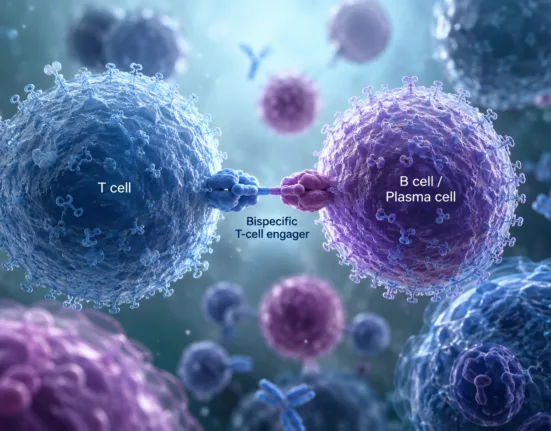
Cadonilimab occupies an unusual position in the immunotherapy landscape because it is designed as a bispecific antibody targeting both PD-1 and CTLA-4 simultaneously. The therapy has already received approval in China for several cancer indications, including cervical and gastric cancers, providing early clinical validation for the mechanism.
Traditional immunotherapy combinations often involve administering separate PD-1 and CTLA-4 antibodies together, such as nivolumab and ipilimumab. While such combinations can improve efficacy in certain cancers, they also frequently increase toxicity.
Cadonilimab attempts to replicate dual checkpoint inhibition using a single molecule engineered to modulate both pathways. The theoretical advantage is improved therapeutic synergy with potentially more controlled immune activation.
From a drug development perspective, bispecific checkpoint inhibitors are gaining increasing attention across oncology pipelines. Several pharmaceutical companies are exploring similar approaches, but few have progressed into large-scale clinical testing.
For Akeso, the collaboration with INOVIO represents an opportunity to expand cadonilimab’s clinical footprint beyond currently approved indications and into central nervous system oncology, a domain where immunotherapy innovation remains limited.
What INOVIO’s DNA immunotherapy platform adds to the immuno-oncology combination approach
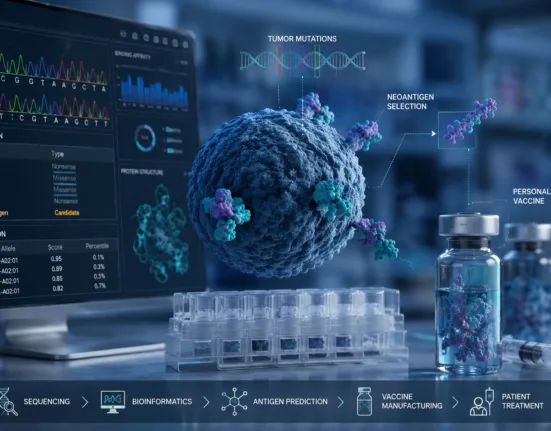
INO-5412 represents a different technological category within cancer immunotherapy. The investigational therapy combines two components: INO-5401, which encodes tumor-associated antigens, and INO-9012, which expresses the immune-stimulating cytokine interleukin-12.
Together, the system attempts to instruct the body’s immune system to recognize and attack cancer cells expressing those antigens.
The targeted antigens encoded by INO-5401 include hTERT, WT1, and PSMA, all of which have been associated with multiple tumor types, including glioblastoma. By stimulating T-cell recognition of these targets, the therapy aims to drive immune infiltration into tumor tissue.
Clinical signals supporting this approach have already emerged in earlier trials. Investigators reported that INO-5401 plus INO-9012 generated measurable immune responses when combined with checkpoint inhibition in patients with newly diagnosed glioblastoma.
While such early-stage results remain exploratory, they provide the biological rationale for the new collaboration. Combining antigen-targeting immunotherapy with checkpoint blockade may improve immune activation and overcome some of the resistance mechanisms that have historically limited checkpoint inhibitors in brain tumors.
Why the INSIGhT adaptive platform trial has become an important testing ground for GBM innovation
The INSIGhT trial structure itself represents a notable element of the collaboration. Rather than conducting a standalone clinical trial, the cadonilimab and INO-5412 combination will be evaluated within an adaptive platform study.
Adaptive platform trials allow multiple experimental therapies to be tested simultaneously within a single trial framework. Treatments can be added or removed as data emerges, enabling faster identification of promising approaches.
In diseases with limited therapeutic progress, such as glioblastoma, this model has gained increasing support among clinical researchers.
The INSIGhT trial is sponsored by the Dana-Farber Cancer Institute and conducted in collaboration with Mass General Brigham Cancer Care. Researchers involved in the study have emphasized that the platform is designed to accelerate the identification of effective therapies for glioblastoma, which currently has few meaningful treatment options.
By entering the INSIGhT trial, Akeso and INOVIO gain access to an established research infrastructure and a patient population already engaged in the platform’s ongoing investigations.
For investigators, the addition of the combination therapy expands the portfolio of immune-based approaches being tested within the trial.
What clinicians and researchers will watch as the combination moves toward clinical testing
Despite the scientific rationale supporting the collaboration, several questions will likely shape how the oncology community evaluates the program.
The first involves immune activation within the brain tumor microenvironment. Glioblastoma’s location behind the blood-brain barrier has historically limited the effectiveness of many systemic therapies. Researchers will watch closely to determine whether the combination can generate meaningful immune responses within the central nervous system.
Trial design will also be scrutinized. Adaptive platform trials provide flexibility but can also introduce statistical complexity. Clinicians tracking the study will likely examine endpoints related to survival, immune activation markers, and progression-free survival.
Safety will represent another important consideration. Dual checkpoint inhibition has historically been associated with increased immune-related adverse events. Although cadonilimab’s bispecific design may theoretically mitigate some toxicity concerns, real-world safety data in glioblastoma patients remains limited.
Finally, the broader question remains whether immunotherapy combinations can meaningfully alter outcomes in a disease where multiple immunotherapy approaches have already failed.
What the collaboration reveals about the evolving immunotherapy development landscape
The partnership between Akeso and INOVIO also illustrates how immunotherapy innovation is increasingly driven by cross-company collaborations.
Large pharmaceutical companies once dominated immuno-oncology development through blockbuster checkpoint inhibitor programs. Today, the field is evolving toward more specialized combinations involving emerging platforms such as DNA immunotherapy, bispecific antibodies, and cellular therapies.
Collaborations allow companies to test complementary technologies without independently developing every component.
For Akeso, which has built a growing pipeline of bispecific antibodies, partnerships offer a route to explore new disease settings and combination strategies. For INOVIO, which focuses on DNA medicine platforms, combining its immunotherapy candidates with checkpoint inhibitors may represent the most realistic pathway to clinical relevance.
The collaboration therefore reflects a broader pattern in oncology development, where companies combine novel technologies to address biological challenges that single-agent therapies have struggled to overcome.
Why the glioblastoma treatment landscape still demands innovation despite decades of research
Few diseases illustrate the limits of modern oncology as clearly as glioblastoma. Despite extensive research investment and hundreds of clinical trials, treatment progress has remained frustratingly slow.
The tumor’s genetic heterogeneity, immune evasion mechanisms, and location within the central nervous system create a combination of challenges rarely encountered in other cancers.
As a result, clinicians and researchers increasingly view combination therapies as the most plausible path forward.
The Akeso and INOVIO collaboration therefore enters a field where expectations remain cautious but where the need for innovation remains urgent.
Whether the combination ultimately demonstrates clinical benefit will depend on the interplay between immune activation, tumor biology, and patient selection. But the study represents another attempt to test whether multi-layer immunotherapy strategies can overcome the barriers that have long defined glioblastoma treatment.