
AIROS Medical, a U.S.-based medical device company specializing in compression therapy, has announced a five-year warranty for its AIROS 6P and AIROS 8P sequential pneumatic compression devices. The extension applies to all devices sold after January 1, 2026, and marks a notable increase from the previous three-year coverage. The move positions AIROS Medical as an outlier in a segment where shorter warranties remain the norm across compression therapy systems used in the treatment of lymphedema and chronic venous insufficiency.
What this warranty extension signals about device reliability and industry positioning
This is not simply a customer service enhancement. For AIROS Medical to commit to a five-year warranty signals a calculated risk anchored in internal durability metrics. In a niche category where many devices are reimbursed through durable medical equipment (DME) channels and evaluated not just for performance but longevity and post-acute care suitability, this warranty could serve as a strategic lever. The underlying confidence appears to stem from a consistent track record of internal performance data, which the company claims has supported the decision.
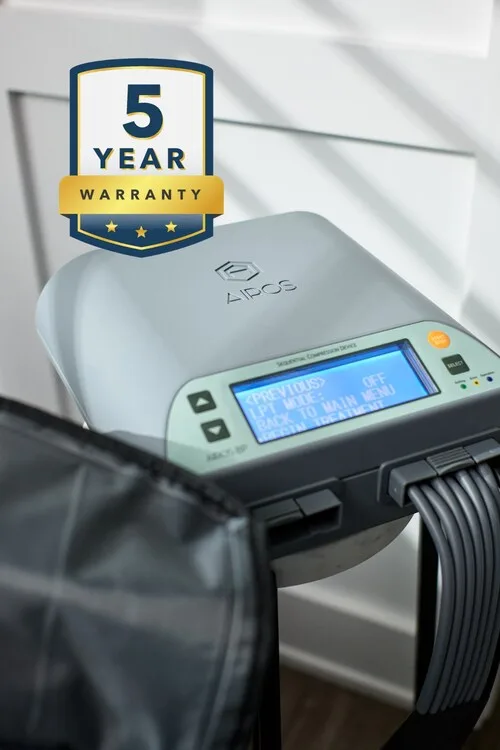
For buyers such as clinics, physical therapists, and home health agencies, this warranty provides risk mitigation at a time when budget constraints and capital preservation pressures are rising. For patients, especially those navigating chronic conditions like lymphedema or chronic venous insufficiency, a longer device lifecycle can mean fewer administrative hurdles, reduced out-of-pocket equipment turnover, and improved treatment continuity.
Industry observers suggest that AIROS Medical may be aiming to reposition itself not just as a lower-cost or newer entrant, but as a durability-first brand in a market historically driven by reimbursement cycles, physician preference, and limited product differentiation.
What this changes for purchasing dynamics in compression therapy
Warranty terms, often buried in procurement fine print, can be a deciding factor in institutional purchases, particularly in the DME and home care segments. By moving to five-year coverage, AIROS Medical alters the calculus for payers, providers, and distributors who must compare total cost of ownership (TCO) across competitive offerings. While many established players in the compression therapy space offer similar three-year terms, few match or exceed this five-year threshold without upcharges or extended service contracts.
From a procurement standpoint, this update introduces a competitive variable into tender evaluations and contract renewals. Clinics and hospital systems negotiating preferred device vendors for lymphatic and venous care pathways now have to weigh warranty longevity as a de-risking factor. This could subtly shift decision-making away from purely clinical brand loyalty and toward lifecycle and service assurances.
Clinicians who operate in outpatient rehab or oncology settings may also find greater justification in selecting devices with longer support timelines, especially in patient populations with chronic swelling, fibrosis, or post-cancer lymphedema where compression therapy becomes a multiyear need rather than an episodic intervention.
What remains unchanged: clinical utility and regulatory constraints
While the warranty increase is commercially significant, it does not signal any immediate clinical or regulatory change. The AIROS 6P and AIROS 8P devices remain prescription-only and fall within established compression therapy categories as defined by payers and regulators. There are no changes to therapy indications, reimbursement coding, or contraindications.
As such, this announcement does not address clinical outcomes, pressure settings, garment compatibility, or usability parameters—all of which remain central to provider trust and patient adherence. Analysts tracking the space caution against interpreting warranty length as a proxy for therapeutic superiority. Longer device support does not inherently improve patient outcomes but may reduce costs associated with servicing, replacement, or abandonment due to technical failure.
Why durable medical equipment providers may benefit the most
For DME suppliers operating under constrained reimbursement rates and aggressive competitive bidding contracts, the five-year warranty may unlock margin stability. Replacement costs and service call burdens on DME businesses can be substantial, particularly when devices fail prematurely or require out-of-warranty repairs. AIROS Medical’s move allows suppliers to potentially extend inventory depreciation cycles and reduce service liabilities.
Additionally, for hospital-at-home programs and post-acute care providers exploring longer therapy durations outside of inpatient settings, the extended warranty provides a layer of operational predictability. These models depend heavily on equipment uptime and low-touch maintenance, making warranty-backed reliability a priority in vendor selection.
However, the warranty extension also introduces a longer service obligation for AIROS Medical itself. The company must now ensure that support infrastructure, parts availability, and field technician networks are aligned with this five-year commitment. Any gap between warranty promises and actual support delivery could undermine the credibility gained through the offer.
Competitive implications and what the market may test next
The most immediate question raised by this move is whether competitors such as Bio Compression Systems, Tactile Medical, or Lympha Press will follow suit. While warranty duration alone may not force a reshuffle in market share, it does put reputational pressure on rivals to match durability claims or risk ceding procurement trust.
For start-ups or smaller device makers in the space, the challenge becomes capital-intensive: extending warranties may require changes in manufacturing quality control, logistics planning, and after-sales service models—all of which strain margins in early growth stages.
Meanwhile, clinicians and institutional purchasers may begin asking for more transparent lifecycle data and service guarantees in the RFP process. If this trend grows, it could force a recalibration of warranty expectations across adjacent categories such as orthopedic bracing, wound compression, and neuromuscular stimulation devices.
Risks and unknowns: what needs to be watched
The key risk in any warranty-led strategy is overextension. If device returns, service claims, or failure rates trend upward during the back half of the warranty window, the cost burden could materially impact margins. AIROS Medical’s assertion that KPIs have supported this move needs to be validated over time, particularly as higher-volume deployments test real-world durability.
Moreover, if the extended warranty becomes a de facto standard across the category, the differentiation advantage could diminish. In that case, manufacturers may need to shift the focus toward user-centric design, data integration, or digital health linkage as the next innovation frontier.
Regulatory watchers may also scrutinize how such warranties are framed in marketing materials, especially under FDA guidance for device claims that could be interpreted as performance assurances.
