Ro brings Eli Lilly’s Zepbound KwikPen to its platform as U.S. obesity drug distribution shifts further toward vertically integrated, cash-pay access models. The launch places the recently FDA-approved multi-dose tirzepatide pen into a telehealth environment built around prescribing, coaching, monitoring, and fulfillment, extending Eli Lilly and Company’s effort to control authentic supply and simplify access outside the traditional reimbursement maze.
Why the Ro rollout matters beyond convenience in the fast-changing GLP-1 access battle
The immediate story is about form factor, but the more important story is about channel power. Eli Lilly and Company is no longer just selling a weight-loss drug. It is steadily shaping how that drug is discovered, prescribed, paid for, and refilled. By adding Zepbound KwikPen to Ro’s platform, the Indianapolis-headquartered drugmaker is reinforcing a model in which the product and the distribution path are increasingly intertwined. That matters because the obesity drug market is no longer being defined only by clinical efficacy. It is being defined by who can make treatment feel available, predictable, and logistically manageable for self-pay patients.
That shift has strategic consequences. Telehealth platforms such as Ro are not functioning merely as marketing affiliates or prescription conduits. They are becoming front-end demand engines, education channels, adherence tools, and pricing interpreters. In obesity care, where dropout rates can be high and reimbursement remains inconsistent, those layers are commercially valuable. They can reduce friction between interest and initiation, which may matter just as much as headline efficacy once a market matures.
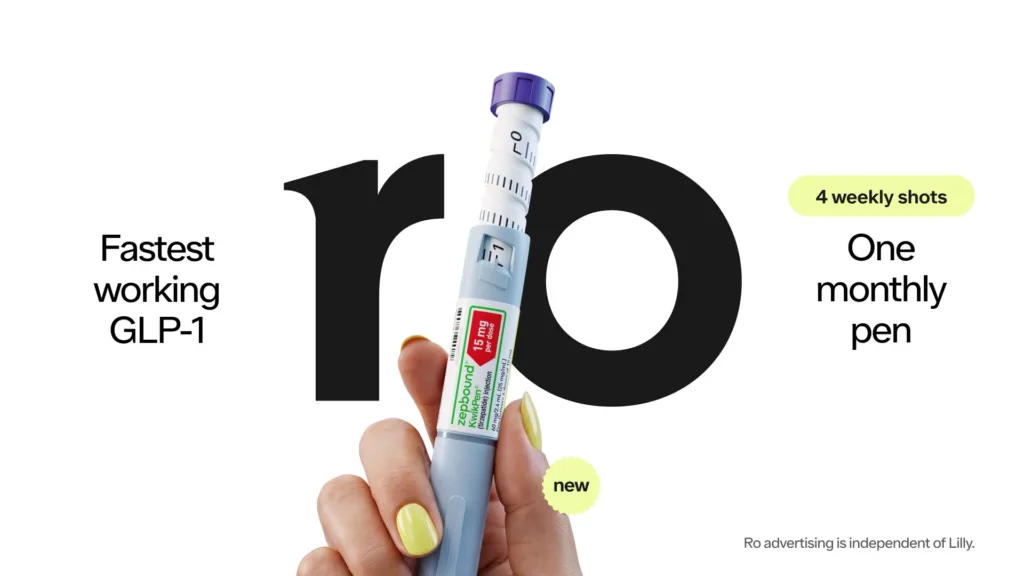
For Ro, the KwikPen launch strengthens its claim that telehealth can serve as a durable care model rather than a temporary workaround born out of supply disruption. For Eli Lilly and Company, it broadens the set of controlled, branded pathways through which authentic tirzepatide reaches patients, at a time when the company remains highly motivated to steer demand away from compounded or gray-market alternatives. Eli Lilly and Company has repeatedly emphasized self-pay availability and transparent pricing through LillyDirect and related channels, while Ro is positioning itself as one of the clearest external access points layered on top of that strategy.
What the multi-dose pen reveals about how obesity treatment is becoming a consumer health logistics market
The KwikPen format may look like a simple device upgrade, but it speaks to a larger commercial truth. Obesity treatment is increasingly behaving like a hybrid of chronic disease management and consumer subscription medicine. Patients are not only evaluating efficacy. They are evaluating hassle, refill timing, dose continuity, coaching access, side-effect support, and whether the care journey feels stable enough to sustain months of use.
That is where a multi-dose pen can matter. Device convenience alone does not alter tirzepatide’s underlying benefit-risk profile, but it can influence the patient experience around routine administration. In a category where adherence and persistence shape real-world commercial outcomes, small frictions can become large attrition drivers. A more convenient delivery format therefore has strategic value, even if it is not a therapeutic innovation in the strict scientific sense.
The launch also underscores how obesity drug makers are thinking about packaging and distribution as competitive tools. Once clinical superiority narrows or becomes familiar to prescribers, commercial differentiation shifts toward access architecture. In that environment, the question is no longer only which therapy performs best in trials. The question becomes which therapy is easiest to start, easiest to afford, hardest to counterfeit, and simplest to stay on.
That is especially relevant as U.S. self-pay pricing becomes a headline battleground. Eli Lilly and Company has expanded self-pay options, and transparent cash-pay channels are becoming central to competition with Novo Nordisk’s weight-loss franchise. Ro’s pricing around starter and maintenance doses closely mirrors the broader Lilly self-pay framework, suggesting that device rollout and pricing discipline are being coordinated as part of a wider channel strategy rather than treated as isolated commercial events.
Why this launch says more about channel control and counterfeit avoidance than about new clinical evidence
There is little that is clinically novel in this specific announcement. Tirzepatide’s efficacy profile in obesity has already been well established, and the Ro news does not introduce a new pivotal dataset, a label expansion, or a changed clinical standard. What is genuinely new is distributional and operational. The development extends Eli Lilly and Company’s effort to keep patients inside authenticated, manufacturer-aligned pathways at a moment when high demand has historically created openings for compounding activity, unsafe imitation products, and fragmented patient journeys.
That is why the most important comparison is not between Zepbound and another obesity drug on efficacy grounds. It is between controlled branded access and uncontrolled market leakage. Industry observers tracking the category have long noted that when demand outruns official supply or insurance support, alternative channels fill the gap. For branded manufacturers, that creates reputational, safety, and revenue risks simultaneously.
Ro’s role here is useful precisely because it combines the medical encounter, patient onboarding, monitoring, and commercial navigation into one branded care environment. That does not eliminate all access friction, but it does reduce the number of handoffs. Fewer handoffs can mean fewer drop-offs, fewer sourcing ambiguities, and fewer opportunities for patients to drift toward non-authentic supply. Eli Lilly and Company’s own materials continue to emphasize authentic sourcing and self-pay pharmacy channels for vials and KwikPens, making it clear that channel integrity is now central to the company’s obesity strategy.
How clinicians and regulators may interpret the shift toward platform-based obesity prescribing at national scale
Clinicians are likely to view this rollout through two lenses. The first is practical: whether a better delivery and support pathway can improve continuity of care for appropriate patients. The second is structural: whether obesity prescribing is moving too quickly into platform-mediated consumer medicine without equivalent expansion in longitudinal clinical oversight.
Ro says patients will receive messaging access, coaching, dose logging, side-effect monitoring, and educational support. Those features address real operational needs, especially in a therapy class where dose escalation and tolerability management are critical. Yet telehealth-enabled scale always raises questions about consistency of evaluation, appropriateness of initiation, management of contraindications, and the quality of follow-up when very high patient volumes are involved.
Regulatory watchers are likely to keep focusing less on the pen itself and more on the surrounding model. Direct-to-patient obesity care can improve access, but it also compresses commercial influence and clinical decision support into the same ecosystem. That does not automatically create a problem, but it invites scrutiny. As weight-loss drugs become more mainstream, observers will pay closer attention to how digital platforms balance prescribing growth with clinical rigor, documentation standards, and escalation pathways for adverse events or discontinuation decisions.
From an industry perspective, this makes the Ro launch interesting not because it introduces a new medical claim, but because it highlights how device format, prescribing workflow, and commercial infrastructure are converging into a single market proposition.
What could still go wrong as Eli Lilly and Ro expand a smoother cash-pay path for tirzepatide access
The most obvious unresolved issue is durability of affordability. Transparent pricing is more attractive than opaque pricing, but it is not the same as broad affordability. Even discounted cash-pay rates remain expensive for many patients, particularly in a chronic-use category where treatment duration can stretch well beyond initial enthusiasm. A smoother purchasing experience may improve conversion, but it does not solve the long-term economic challenge of sustained self-funded therapy.
Another risk is that convenience may outpace capacity. Obesity medicine remains a category where demand can surge suddenly. If the channel succeeds commercially, refill continuity and dose availability become crucial. The penalty for failure is not only lost sales. It is patient frustration, treatment interruption, and renewed migration toward alternative sources. That makes supply reliability and fulfillment discipline integral to the success of any telehealth-aligned rollout.
There is also the question of market saturation. Ro is not the only digital player competing to intermediate obesity care, and the broader field is getting more crowded as manufacturers experiment with different partner models, pricing ladders, and access programs. If too many services begin to look functionally similar, differentiation may narrow to price, speed, and brand trust. In that scenario, device convenience helps, but it does not guarantee loyalty.
Finally, clinical scrutiny of the obesity category is only intensifying. As more patients enter therapy through scaled digital systems, real-world questions around persistence, discontinuation, weight regain, adverse event management, and patient selection will attract more attention. The commercial system is becoming more polished. The next phase of scrutiny will ask whether that polish translates into consistently high-quality outcomes in ordinary practice.
In that sense, Ro’s Zepbound KwikPen launch is less a standalone product-access story than a signpost for where obesity medicine is heading. The category is evolving from a blockbuster drug race into a full-stack care and delivery contest. The companies that win may not be the ones with the strongest data alone. They may be the ones that make clinically complex treatment feel operationally simple without cutting corners on safety, authenticity, or follow-through.