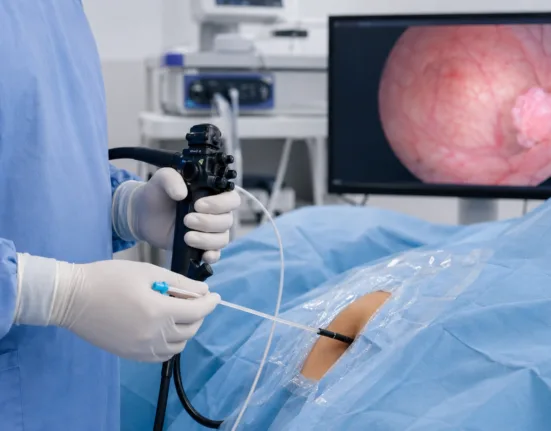
UroGen Pharma Ltd. reported that UGN-103 achieved a 94.5% six-month duration of response by Kaplan-Meier estimate in the ongoing Phase 3 UTOPIA trial evaluating the investigational intravesical mitomycin therapy in patients with recurrent low-grade intermediate-risk non-muscle invasive bladder cancer. The biotechnology company said the durability findings were generally consistent with the pivotal ENVISION study supporting approval of ZUSDURI, while also confirming alignment with the United States Food and Drug Administration ahead of a planned New Drug Application submission in the third quarter of 2026.
The latest UTOPIA update matters less because it introduces a fundamentally new scientific mechanism and more because it reinforces UroGen Pharma Ltd.’s effort to build a durable uro-oncology franchise around recurrent low-grade intermediate-risk non-muscle invasive bladder cancer. UGN-103 increasingly appears positioned as a lifecycle and execution strategy designed to strengthen operational usability, manufacturing scalability, and long-term commercial defensibility around an already validated intravesical delivery platform.
Why durable response rates in recurrent LG-IR-NMIBC remain critical for long-term bladder cancer management
Recurrent low-grade intermediate-risk non-muscle invasive bladder cancer remains one of the most operationally difficult settings in uro-oncology despite relatively favorable survival outcomes. Patients often cycle through repeated cystoscopies, tumor resections, surveillance visits, and intravesical treatments over many years because recurrence rates remain persistently high.
That recurring management burden means physicians are not simply looking for temporary lesion clearance. They are attempting to reduce repeat procedures, surveillance intensity, and long-term healthcare utilization while preserving quality of life. In this setting, durability of response can become more clinically meaningful than short-term response rates alone.
The importance of the UTOPIA findings is amplified by the fact that UGN-103 produced durability results broadly consistent with the ENVISION trial supporting ZUSDURI. Industry observers tracking localized bladder cancer therapies note that reproducibility itself carries substantial weight because intravesical treatment outcomes can vary depending on administration technique, exposure duration, and patient selection.
The ability to reproduce favorable durability trends across development programs potentially strengthens confidence in the RTGel-enabled sustained drug exposure strategy underlying both products. That consistency may become increasingly important during regulatory review and eventual commercial adoption discussions.
How RTGel intravesical drug delivery technology is shaping the future of NMIBC treatment strategies
The broader clinical thesis behind UroGen Pharma Ltd.’s platform remains centered on sustained local drug exposure within the bladder. Conventional intravesical therapies often face limitations because urinary function rapidly dilutes or removes therapeutic agents, reducing exposure time at tumor sites.
RTGel technology attempts to address that limitation by enabling prolonged mitomycin exposure following intravesical administration. Clinicians monitoring innovation in non-muscle invasive bladder cancer increasingly view exposure duration as one of the most important variables influencing recurrence control in low-grade disease.
This matters because recurrent NMIBC management frequently becomes a long-term disease-control exercise rather than a one-time curative intervention. Therapies capable of maintaining local control while remaining feasible in outpatient urology settings may therefore occupy an important position between procedural management and more aggressive escalation strategies.
Importantly, UGN-103 is not being presented as a reinvention of the underlying science. Instead, UroGen Pharma Ltd. appears focused on optimizing a therapeutic platform that already achieved regulatory validation through ZUSDURI. That approach may reduce development and commercial risk compared with pursuing entirely novel intravesical technologies.
Why manufacturing simplification and outpatient usability could strengthen UroGen Pharma Ltd.’s competitive position
One of the more strategically important aspects of UGN-103 is the company’s emphasis on streamlined manufacturing and simplified reconstitution. Those operational details may initially appear secondary to efficacy endpoints, but outpatient oncology and urology practices are heavily influenced by workflow efficiency, preparation burden, nursing coordination, and procedural scheduling. Small improvements in therapy preparation can materially affect implementation willingness across busy community practices.
Industry analysts increasingly note that mature oncology categories often become operational competition markets as much as efficacy competition markets. Once physicians become comfortable with a therapeutic mechanism, factors such as administration reliability, supply consistency, and ease of integration into clinical workflow can strongly influence adoption patterns.
UroGen Pharma Ltd. appears to be positioning UGN-103 around that reality. By preserving the RTGel platform while simplifying manufacturing and preparation processes, the biotechnology company may be attempting to deepen physician loyalty before broader competition emerges in recurrent low-grade intermediate-risk disease.
The manufacturing discussion also carries broader scalability implications. Localized drug delivery platforms can encounter operational bottlenecks if production complexity interferes with commercial rollout. Simplifying production processes early may therefore support longer-term expansion if demand increases following approval.
Why recurrent low-grade bladder cancer remains an attractive long-duration commercial market opportunity
From a commercial perspective, recurrent low-grade intermediate-risk non-muscle invasive bladder cancer represents a highly durable treatment category because patients often remain under active urologic surveillance for years. That creates repeated opportunities for therapeutic intervention and longitudinal disease management. While the disease lacks the mortality urgency associated with muscle-invasive bladder cancer, its recurrence burden generates substantial cumulative healthcare costs and procedural demand.
This helps explain why UroGen Pharma Ltd. continues investing heavily in the category despite broader oncology industry focus shifting toward immunotherapy combinations and precision oncology in advanced disease settings. The company also benefits from having already established a regulatory and commercial foothold through ZUSDURI. UGN-103 now appears designed to extend that position while reinforcing intellectual property protection potentially into 2041.
Lifecycle extension strategies are common across pharmaceutical markets, but they can become particularly effective when tied to physician familiarity and procedural integration. Urologists already accustomed to RTGel-enabled intravesical administration may encounter relatively limited transition friction if UGN-103 enters broader clinical use.
What regulators, clinicians, and uro-oncology investors will watch before UGN-103 NDA submission
Despite the encouraging durability findings, several important questions remain unresolved before potential approval. The UTOPIA trial remains a single-arm study, meaning clinicians and regulators will continue relying partly on historical comparisons when interpreting efficacy consistency. While alignment with ENVISION strengthens confidence, broader real-world validation will still matter after commercialization.
Longer-term durability data will also remain important because recurrent bladder cancer management often unfolds over multi-year timelines. Physicians will want clearer visibility into whether recurrence suppression remains durable beyond the currently disclosed follow-up period.
Safety and tolerability consistency will require continued scrutiny as well. Intravesical therapies can produce urinary irritation and localized adverse events that influence adherence and continuation rates in outpatient practice.
Competitive pressure cannot be ignored either. The bladder cancer treatment landscape continues evolving across localized delivery technologies, novel intravesical agents, and immune-based approaches. Although UroGen Pharma Ltd. currently maintains an early leadership position in recurrent low-grade disease, sustaining that advantage will require continued operational execution.
The latest UTOPIA data ultimately reinforce that UGN-103 may strengthen platform credibility more than scientific disruption. UroGen Pharma Ltd. appears increasingly focused on turning RTGel-enabled intravesical therapy into a durable disease-management infrastructure within recurrent low-grade bladder cancer care rather than positioning the therapy as a standalone breakthrough innovation.