What the Lumipulse pTau 217 CSF assay signals about the next wave of Alzheimer’s biomarker development
Fujirebio Holdings Inc., a wholly owned subsidiary of H.U. Group Holdings Inc., has launched a Research Use Only (RUO) assay for measuring phosphorylated tau at threonine 217 (pTau 217) in cerebrospinal fluid (CSF) using its fully automated Lumipulse G CLEIA platform. The assay delivers results in 35 minutes and is positioned to support research into early-stage Alzheimer’s disease (AD) and related dementias. This launch extends Fujirebio’s expanding suite of neuro-assays and highlights the company’s continued investment in platform-driven biomarker access.
This is not a clinical diagnostic product, but it marks a decisive move in the pre-commercial space—one that could recalibrate how researchers study neurodegenerative biomarkers, optimize cohort selection, and build multi-analyte profiling capabilities ahead of full regulatory validation. It also expands the availability of CSF-based tau assays beyond the previously more widely implemented pTau 181 variant, suggesting a gradual but firm realignment of research focus.
Why pTau 217 is emerging as a front-runner among AD fluid biomarkers
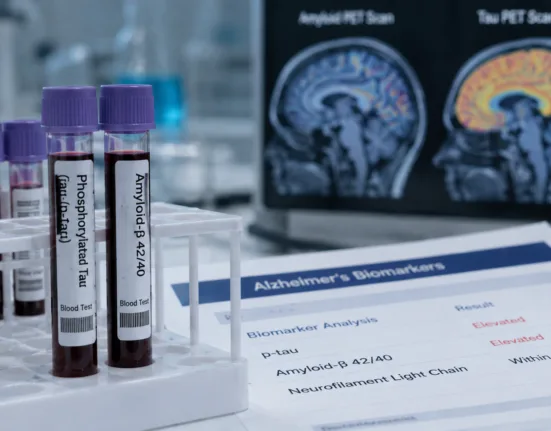
Phosphorylated tau proteins serve as proxies for tauopathy, the abnormal accumulation of tau proteins that forms neurofibrillary tangles—a hallmark of Alzheimer’s pathology. Of the many pTau epitopes under evaluation, pTau 217 has demonstrated higher specificity for AD pathology than pTau 181 in recent studies, especially in distinguishing Alzheimer’s from non-AD dementias.
Numerous publications, including head-to-head comparisons in longitudinal cohorts, have found that CSF and plasma levels of pTau 217 correlate more closely with tau PET imaging, Braak staging, and clinical cognitive decline. That predictive power makes it increasingly attractive for use in both early-stage drug development and trial enrichment strategies, particularly when high-fidelity stratification is essential for preventing dilution of therapeutic effect.
By deploying pTau 217 on the Lumipulse platform, Fujirebio aligns itself with this evolving consensus and lays groundwork for integration into future clinical workflows, even if full IVD status is not yet achieved. Researchers are likely to prioritize this assay in studies that seek to validate cross-platform biomarker thresholds or establish CSF-plasma concordance.
What this RUO launch changes for Alzheimer’s trial design and fluid biomarker infrastructure
The ability to measure pTau 217 in CSF samples via a random-access, fully automated immunoassay system matters at both operational and scientific levels. From an operational standpoint, centralized labs and contract research organizations (CROs) now have access to an assay that fits within existing CLEIA workflows, offering robust throughput, reproducibility, and quantitation without custom-built pipelines.
This standardization is critical for multi-site trial designs, where inter-lab variability in tau measurements has historically undermined biomarker-driven endpoints. Moreover, the 35-minute turnaround time reduces logistical burdens and opens up the possibility of pairing CSF pTau 217 measurements with other core analytes—such as Aβ42/Aβ40 ratios, neurogranin, neurofilament light chain (NfL), or YKL-40—on the same platform.
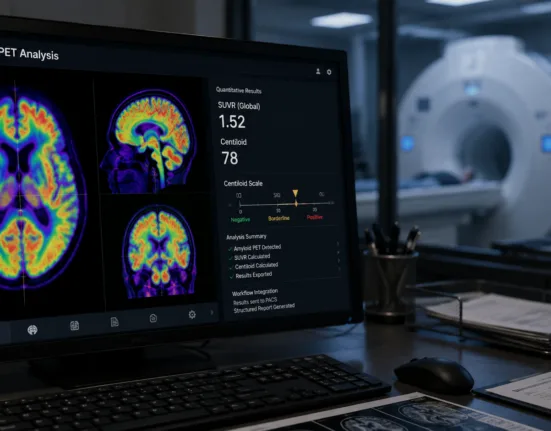
On the scientific front, the launch strengthens the case for fluid-based early diagnostic pipelines, which remain a strategic imperative given the limitations of PET imaging in terms of cost, accessibility, and radiation exposure. As regulators begin to accept fluid biomarkers as surrogate endpoints or enrichment criteria, assays like Fujirebio’s will become indispensable for adaptive trial designs, especially in the preclinical or mild cognitive impairment (MCI) stages.
How Fujirebio is consolidating its position in neurology despite regulatory complexity
While the pTau 217 CSF assay remains RUO, Fujirebio’s clear intention is to dominate the platform-based biomarker space with a combination of assay breadth, automation, and global deployment capabilities. With over 75 years in diagnostics and a scalable manufacturing backbone, the company is positioned to offer flexible CDMO partnerships and custom assay development services to life sciences firms seeking pre-commercial biomarker integration.
What distinguishes Fujirebio from newer entrants is not necessarily assay novelty, but rather its regulatory and operational credibility. The Lumipulse system is already deployed in neurological diagnostics laboratories worldwide, including those specializing in Parkinson’s disease, prion diseases, and CNS oncology. Adding pTau 217 to this ecosystem is a form of portfolio consolidation, encouraging users to expand rather than switch platforms.
The strategic challenge lies in balancing RUO designation with expectations of clinical application. Regulatory watchers will be looking for signs of validation studies, cross-laboratory calibration efforts, and alignment with emerging Alzheimer’s biomarker frameworks, such as the ATN (amyloid/tau/neurodegeneration) model that is gaining traction in clinical guideline updates.
What clinicians and trial sponsors should monitor in the coming quarters
For clinicians engaged in research, the biggest question is whether pTau 217 will eventually replace pTau 181 in routine biomarker panels. Early indications suggest that while the former offers better specificity and earlier detection, pTau 181 remains more widely validated, especially under current Centers for Medicare & Medicaid Services (CMS) and FDA frameworks. A transition will likely require demonstration of clinical utility, cost-effectiveness, and cohort-specific risk stratification improvements.
Trial sponsors, particularly those working in disease-modifying therapies (DMTs) or anti-tau immunotherapies, are expected to evaluate whether incorporating Lumipulse pTau 217 CSF testing improves their biomarker enrichment strategies. This is especially relevant as the field moves away from binary amyloid positivity and toward more nuanced fluid-based staging.
Stakeholders in public health and payer organizations will also want clarity on the health economics profile of widespread pTau 217 testing. While lumbar puncture remains invasive, the relative cost-efficiency of fluid biomarker testing compared to PET may become increasingly persuasive in risk-based screening models, especially in aging populations.
What comes next for fluid biomarker standardization and market competition
The launch of Fujirebio’s pTau 217 CSF assay intensifies competition in an already crowded biomarker landscape. Companies like Quanterix, C2N Diagnostics, Roche Diagnostics, and Thermo Fisher Scientific are each pursuing distinct paths—some focusing on plasma-based diagnostics, others on single-molecule assays, and others yet on point-of-care miniaturization. Against this backdrop, Fujirebio’s differentiation strategy appears to be rooted in assay platform integration and deployment readiness.
The next 12 to 24 months could bring clarity on whether pTau 217 will enter clinical practice through the laboratory-developed test (LDT) route, an FDA-cleared kit, or remain confined to research settings. The broader push toward standardized Alzheimer’s diagnostic criteria, including the NIA-AA framework and EMA guidance, will influence both regulatory timelines and commercial strategy.
In the meantime, the Lumipulse pTau 217 CSF assay offers an immediately actionable tool for researchers exploring AD pathogenesis, staging, and trial design. It also raises the bar for biomarker developers who must now balance analytical performance, operational simplicity, and platform compatibility in a fast-evolving field.