BrainSpace, a U.S.-based medical technology company, has received 510(k) clearance from the U.S. Food and Drug Administration for Intellidrop, a fully automated cerebrospinal fluid (CSF) drainage and intracranial pressure (ICP) monitoring system. The cleared indication covers ventricular or lumbar use in patients requiring external CSF drainage and continuous pressure monitoring—making it potentially relevant across a broad spectrum of neurocritical care conditions, from traumatic brain injury to post-operative management following skull base tumor surgery.
What this changes in neurocritical care infrastructure and nursing workflow
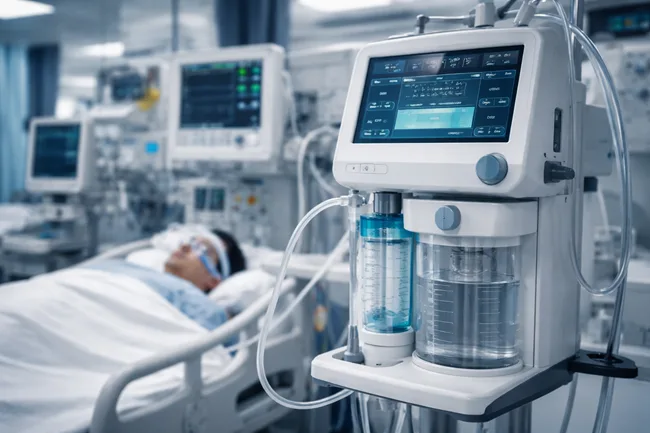
For neuro ICUs already strained by staffing shortages and rising acuity levels, the clearance of Intellidrop introduces a new class of fully automated external ventricular drain (EVD) systems that could relieve ICU nurses of manual drip chamber adjustments. Rather than relying on periodic nurse interventions to maintain pressure thresholds, Intellidrop applies closed-loop, gravity-based drainage algorithms that adjust CSF flow toward clinician-defined pressure or volume goals.
Industry observers note that while several smart monitoring systems for ICP exist, few integrate both drainage and decision-making logic into a single automated loop. This level of system autonomy could enable hospitals to reallocate nursing time, reduce alarm fatigue, and standardize critical care protocols—particularly in smaller centers or during off-shift staffing. The move may also shift procurement decision-making away from traditional suppliers toward digital medtech firms like BrainSpace, whose platforms emphasize continuous data capture and algorithmic logic.
Why automation in CSF management is gaining clinical and economic urgency
Brain injury and neurodegeneration represent one of the largest unmet global care burdens, with nearly one-third of the global population expected to experience a neuro-related event in their lifetime, according to data cited in The Lancet. Yet ICU workflows around CSF drainage remain labor-intensive and risk-prone, often relying on analog systems, visual drip rate estimates, and manual recalibration after patient repositioning.
BrainSpace’s Intellidrop not only automates these steps but also incorporates continuous measurement into a platform capable of generating contextualized brain fluid data. That distinction matters clinically: inconsistent or delayed drainage can exacerbate secondary brain injury, while reliable, pressure-targeted control improves outcomes, especially in time-sensitive conditions like subarachnoid hemorrhage or acute hydrocephalus.
Economically, U.S. hospitals are under pressure to reduce length of stay and post-ICU complications while managing persistent nursing shortages. Industry analysts believe that platforms offering time-saving automation and standardization could become highly defensible within ICU procurement cycles, particularly if they help prevent adverse events or rehospitalizations linked to suboptimal CSF management.
What this enables for future AI-driven neuro diagnostics and therapeutics
What separates Intellidrop from legacy EVD systems is not just automation, but the way it captures structured data to train what BrainSpace calls “Physical AI” models. These models aim to use continuous, multimodal brain fluid signals such as CSF pressure dynamics, volume patterns, and contextual parameters like patient movement or sedation state to inform predictive care.
Clinicians tracking digital neuro monitoring believe that the creation of real-world, high-resolution datasets across brain fluid parameters could eventually support earlier detection of intracranial hypertension, shunt failure, or evolving neuroinflammatory processes. This aligns with broader trends in precision neurology, where biomarkers are scarce and passive monitoring technologies remain underutilized.
By transforming the CSF drain into a therapeutic and diagnostic interface, BrainSpace is also reinforcing the emerging “Brain Fluid Interface” (BFI) category. Industry analysts suggest this could mirror the trajectory of cardiac monitoring, where closed-loop devices and digital diagnostics now dominate high-acuity care settings.
What regulatory clarity this brings—and what uncertainties remain
The FDA’s 510(k) clearance provides the foundational regulatory pathway for commercial deployment, but the full scope of Intellidrop’s capabilities may not yet be captured by the indication language. While the clearance covers CSF drainage and pressure monitoring, the system’s role in generating novel multimodal data streams may eventually require additional submissions or post-market validation, particularly if BrainSpace pursues AI-assisted alerting or therapeutic decision support.
Regulatory watchers point out that classification pathways for AI-enabled monitoring systems remain fluid. If Intellidrop or future BFI devices begin providing diagnostic interpretations or integrating with neuroimaging platforms, they could fall under more complex premarket approval (PMA) or software as a medical device (SaMD) categories. How the FDA interprets closed-loop automation in invasive neurocritical contexts will likely set precedent for other entrants in the BFI space.
What commercial adoption could hinge on—and what might slow it down
For hospitals, adoption of Intellidrop will likely hinge on a combination of staffing economics, clinical performance, and interoperability. Ease of integration into existing ICU telemetry systems, EMRs, and nursing protocols could become decisive factors in procurement. Clinical champions may also look for multicenter data demonstrating reductions in ICU length of stay, fewer drain-related complications, or improvements in nurse workload and satisfaction.
That said, barriers remain. The cost of capital equipment procurement in critical care units often requires cross-departmental consensus, especially when replacing long-standing analog systems. Reimbursement clarity for advanced drainage technologies is still emerging, and it remains unclear how automated CSF management will be coded or reimbursed in different payer environments.
Another potential concern is clinician trust in closed-loop brain fluid systems. While automation in cardiac care has matured, neurosurgical teams may be slower to embrace hands-off drainage, especially for high-risk cases or post-operative recovery. Robust clinical education and transparent audit trails will likely be necessary to build confidence in real-world settings.
What industry observers and neuro clinicians will watch next
As BrainSpace begins commercial rollout of Intellidrop, industry observers will likely track three fronts. First, hospital uptake, particularly whether smaller hospitals and community ICUs adopt the system to compensate for limited neuro staffing. Second, platform expansion, whether BrainSpace introduces AI-driven alerting or connects Intellidrop to other brain health platforms. Third, clinical evidence, whether post-clearance studies can validate outcome benefits beyond workflow improvement.
Clinicians following BFI technologies will also look for broader platform integration. The holy grail of neuro monitoring remains a unified system that connects CSF, cerebral blood flow, and interstitial fluid metrics with imaging, labs, and patient behavior. Whether BrainSpace can build toward that vision or attract partners who can may shape the long-term relevance of Intellidrop and its successors.