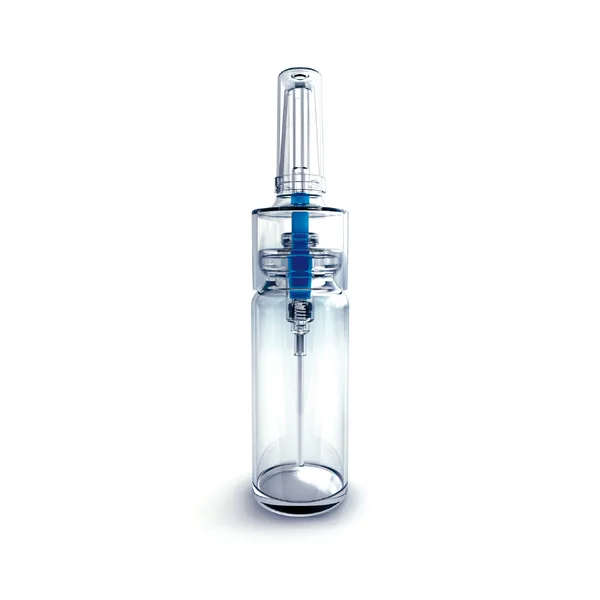
Clearmind Medicine Inc. has entered into a development agreement with Polyrizon Ltd. to advance an intranasal formulation of MEAI, the company’s proprietary non-hallucinogenic neuroplastogen, with the aim of improving bioavailability and supporting clinical development in addiction-related and other central nervous system indications.
The announcement immediately places formulation strategy at the center of Clearmind Medicine Inc.’s pipeline narrative, shifting attention away from compound novelty alone and toward delivery optimization as a potential determinant of clinical and commercial viability. Rather than expanding the molecule portfolio, the U.S.-listed, Vancouver-based biotech is attempting to solve a familiar CNS problem early: how to reliably deliver a neuroactive agent at therapeutic levels while maintaining tolerability, patient usability, and regulatory clarity.
Why intranasal delivery may materially change the clinical positioning of MEAI in addiction and CNS disorders
Intranasal delivery has long been viewed as an attractive but technically challenging route for central nervous system therapeutics, particularly for compounds intended to act rapidly or bypass first-pass metabolism. For MEAI, a next-generation neuroplastogen designed to promote neuroplasticity without hallucinogenic effects, the delivery route could meaningfully influence both efficacy signals and safety interpretation in future trials.
Industry observers tracking CNS drug development note that oral administration often introduces variability in absorption, delayed onset, and metabolic degradation that can obscure dose-response relationships in early-stage studies. An intranasal formulation, if successfully engineered, may offer faster systemic exposure and more consistent pharmacokinetics, which in turn could sharpen clinical readouts in proof-of-concept studies for addiction-related disorders.
At the same time, intranasal delivery is not merely a convenience upgrade. For addiction indications, where adherence and rapid symptom modulation can influence outcomes, a non-invasive route that avoids injections while delivering predictable exposure may strengthen MEAI’s differentiation against oral small molecules and more invasive neuromodulation approaches.
What Polyrizon Ltd.’s hydrogel platform signals about formulation risk management rather than speed
Polyrizon Ltd. brings to the collaboration a proprietary intranasal hydrogel technology designed to extend nasal residence time and modulate drug release. While the press announcement emphasizes enhanced bioavailability and targeted delivery, the deeper strategic implication is risk mitigation around one of intranasal delivery’s most persistent weaknesses: rapid mucociliary clearance.
Regulatory watchers suggest that many intranasal programs falter not because of inadequate drug potency but due to inconsistent exposure and local tolerability issues. A hydrogel-based approach that stabilizes residence time could, if supported by preclinical and clinical data, help Clearmind Medicine Inc. present a more controlled and regulator-friendly delivery profile.
However, hydrogel systems also introduce their own variables, including manufacturing reproducibility, long-term stability, and local tissue response. For a clinical-stage biotech, these factors can extend development timelines if not addressed early. The decision to engage a specialized delivery company at this stage implies that Clearmind Medicine Inc. is prioritizing formulation robustness over rapid clinical entry, a choice that may reduce downstream setbacks but demands disciplined execution.
How MEAI compares with existing addiction-focused CNS therapies on mechanism and delivery expectations
MEAI sits within a growing category of neuroplasticity-oriented therapies that seek to modify neural circuitry rather than simply suppress symptoms. Unlike traditional addiction treatments that rely on receptor antagonism or substitution therapies, neuroplastogens aim to facilitate longer-term behavioral change through synaptic remodeling.
Clinicians following this space note that while the mechanism is conceptually appealing, clinical translation has been uneven, particularly for compounds associated with hallucinogenic effects or complex administration protocols. Clearmind Medicine Inc.’s emphasis on a non-hallucinogenic profile addresses one barrier, while intranasal delivery could address another by simplifying administration and reducing systemic exposure variability.
Compared with oral small molecules, an intranasal MEAI formulation may offer faster onset, which could be relevant for craving modulation or acute symptom management. Compared with injectable or implant-based approaches, it retains patient autonomy and may lower barriers to adoption in outpatient settings. The challenge will be demonstrating that these theoretical advantages translate into measurable clinical benefit without introducing new safety or tolerability concerns.
How intranasal delivery introduces distinct regulatory scrutiny for MEAI compared with oral CNS addiction therapies
From a regulatory perspective, intranasal CNS therapies occupy a nuanced position. While the route of administration is well established, each formulation is effectively treated as a new product, requiring comprehensive pharmacokinetic, safety, and local tolerability assessment.
Regulatory observers suggest that Clearmind Medicine Inc. will need to clearly articulate how the intranasal formulation compares with any existing or planned oral versions of MEAI, particularly if bridging studies are required. Demonstrating consistent exposure, manageable variability, and absence of nasal toxicity will be critical for advancing into later-stage trials.
The involvement of Polyrizon Ltd. as a related party introduces an additional layer of scrutiny, particularly under Canadian securities regulations governing related party transactions. While the company has disclosed reliance on standard exemptions, governance-conscious investors are likely to monitor how intellectual property, cost allocation, and development milestones are structured to ensure alignment with minority shareholder interests.
What adoption and scalability questions remain unresolved despite the formulation advance
Even if the intranasal MEAI formulation performs well in early studies, several adoption-related questions remain open. Manufacturing scalability for hydrogel-based intranasal products can be more complex than for conventional nasal sprays, potentially affecting cost of goods and commercial pricing flexibility.
Payers and healthcare systems may also scrutinize whether intranasal delivery offers sufficient incremental benefit over oral alternatives to justify reimbursement, particularly in addiction treatment settings where cost sensitivity is high. Industry analysts note that delivery innovation alone rarely secures favorable coverage without accompanying evidence of improved outcomes or reduced healthcare utilization.
Patient acceptance is another variable. While intranasal administration is generally well tolerated, chronic or repeated use can raise concerns about nasal irritation or adherence fatigue. These factors will need to be evaluated in longer-duration studies that reflect real-world use patterns rather than short-term pharmacokinetic trials.
Why the collaboration reframes Clearmind Medicine Inc.’s near-term milestones and investor expectations
The development agreement with Polyrizon Ltd. subtly reshapes how Clearmind Medicine Inc.’s progress will be measured over the next several quarters. Rather than focusing solely on clinical trial initiation or top-line efficacy data, observers are likely to watch formulation milestones, preclinical comparability studies, and early safety signals associated with intranasal administration.
For a clinical-stage biotech operating in a competitive CNS landscape, the ability to present a coherent narrative linking mechanism, delivery, and clinical strategy can influence both regulatory confidence and investor sentiment. The intranasal MEAI program introduces additional complexity, but it also offers a clearer pathway to differentiation if execution is disciplined.
Industry watchers suggest that success will depend less on the novelty of the hydrogel technology itself and more on how seamlessly it integrates into MEAI’s overall development plan. Delays or formulation setbacks could compress timelines and strain resources, while smooth progress could strengthen Clearmind Medicine Inc.’s positioning as a company thinking holistically about CNS drug development rather than chasing isolated innovations.