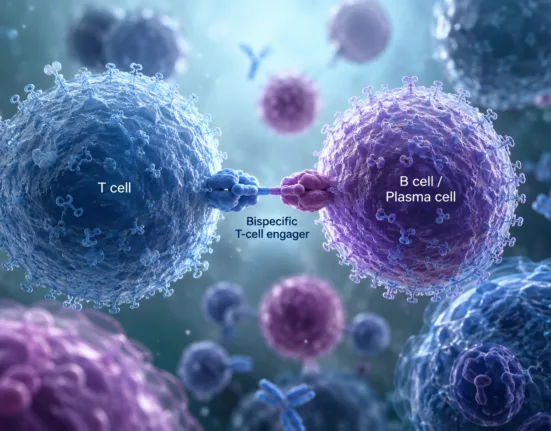
Twist Bioscience Corporation has entered into a licensing and commercial collaboration with Invenra Inc. to become a co-exclusive provider of the B-Body bispecific antibody discovery platform, expanding its antibody discovery services at a time when bispecific therapeutics are gaining clinical and commercial momentum across oncology, immunology, and rare diseases.
The agreement positions the South San Francisco based synthetic biology company not as a drug developer, but as a deeper infrastructure provider to the next wave of complex biologics discovery, where bispecific design, manufacturability, and scalability are emerging as critical bottlenecks rather than optional enhancements.
Why this deal matters more than it first appears for the antibody discovery ecosystem
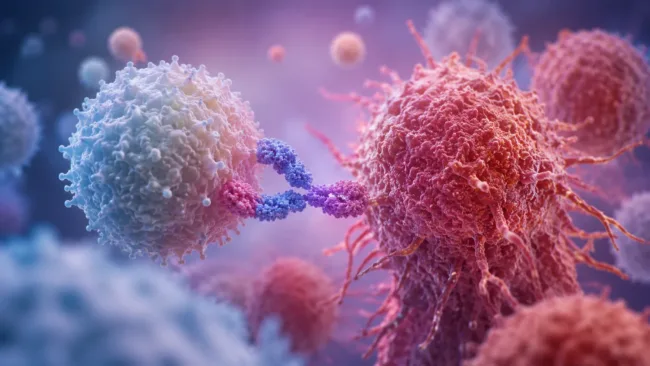
At face value, the transaction extends Twist Bioscience Corporation’s existing antibody discovery menu. Strategically, it signals a sharper pivot toward owning enabling layers in next-generation biologics rather than competing in crowded therapeutic pipelines. Bispecific antibodies are no longer experimental novelties. Multiple products are now approved or late stage, validating the modality’s ability to engage multiple targets, recruit immune effector functions, or overcome resistance mechanisms that limit monospecific antibodies.
Industry observers note that as bispecific programs scale, the discovery bottleneck is shifting away from target biology and toward developability constraints. Issues such as expression yield, stability, viscosity at high concentrations, and predictable assembly have become gating factors. Platforms that can standardize these variables are becoming disproportionately valuable to both traditional pharma research groups and AI-driven discovery efforts.
By licensing the B-Body platform, Twist Bioscience Corporation gains access to a system designed specifically to address these pain points. The move reinforces Twist’s strategy of selling speed, precision, and scalability rather than scientific novelty.
What is genuinely new versus incremental in the B-Body platform integration
Twist Bioscience Corporation already operates across in vivo, in vitro, and AI-enabled antibody discovery workflows. The incremental step would have been adding another screening or expression service. The genuinely new element here is the co-exclusive commercial positioning around a bispecific-native architecture rather than retrofitting bispecific design onto monospecific frameworks.
The B-Body platform allows customers to plug in existing monospecific antibodies and convert them into bispecific formats with more predictable biophysical behavior. This matters because many bispecific failures occur not due to lack of efficacy but due to poor manufacturability or formulation challenges that emerge late in development.
Clinicians tracking bispecific adoption trends increasingly see subcutaneous delivery, dosing convenience, and tolerability as commercial differentiators. Platforms that can engineer low viscosity at high concentration directly influence whether a molecule can move beyond intravenous administration, impacting both patient access and healthcare system burden.
How this reshapes Twist Bioscience Corporation’s competitive positioning
Twist Bioscience Corporation has historically competed on scale, cost, and speed of synthetic DNA production. Over time, it has layered higher-margin discovery services on top of that foundation. The B-Body licensing deal accelerates this transition by embedding Twist deeper into customer workflows rather than remaining a transactional supplier.
From a competitive standpoint, the move differentiates Twist from pure-play DNA synthesis peers and places it closer to platform companies that monetize infrastructure rather than assets. Industry watchers suggest this reduces exposure to single-program risk and smooths revenue volatility tied to individual customer success or failure.
The co-exclusive structure also matters. Twist receives all revenue generated from bispecific discovery services it conducts, as well as all license revenue irrespective of whether deals are signed by Twist or Invenra. The 20 percent royalty paid back to Invenra preserves alignment while allowing Twist to scale distribution using its existing commercial reach.
Financial structure signals confidence but not excess risk appetite
The financial terms reflect a balance between strategic commitment and capital discipline. The upfront consideration combines cash and equity, while the preferred stock purchase gives Twist Bioscience Corporation approximately six percent ownership in Invenra without assuming full integration risk.
Regulatory watchers note that this structure avoids the complexities of a full acquisition while still locking in long-term platform access. The use of equity rather than cash-heavy payments also preserves Twist’s operational flexibility at a time when many mid-cap biotech service providers are prioritizing balance sheet resilience over aggressive expansion.
Importantly, Twist is not betting on downstream drug royalties tied to specific therapeutic successes. Instead, it is monetizing discovery access and licensing infrastructure, a lower-risk revenue model that aligns with its role as an enabling technology provider.
Comparison with other bispecific antibody discovery approaches
The bispecific landscape includes a wide range of formats, from dual variable domain antibodies to fragment-based constructs and fusion proteins. Many platforms require bespoke engineering or extensive downstream optimization. The appeal of the B-Body platform lies in its promise of predictability rather than maximal novelty.
Industry observers comparing platforms emphasize that drug developers increasingly favor modular systems that reduce iteration cycles. In an environment where AI-driven target discovery can generate large candidate sets quickly, the limiting factor becomes the ability to express, characterize, and de-risk those candidates at scale.
Twist’s high-throughput expression and characterization capabilities, when combined with a bispecific-native architecture, directly address this mismatch. This is particularly relevant for companies training large language models on antibody sequence-function relationships, where standardized data quality is essential.
Regulatory and clinical relevance beyond early discovery
While Twist Bioscience Corporation does not operate in clinical development, the design characteristics emphasized by the B-Body platform intersect directly with regulatory and clinical considerations. Regulators increasingly scrutinize manufacturability, formulation robustness, and delivery feasibility early in development to reduce late-stage attrition.
Clinicians tracking bispecific trials note that toxicity management, dosing schedules, and route of administration play a significant role in real-world adoption. Platforms that engineer these considerations upstream influence not only regulatory success but also commercial viability.
Regulatory watchers suggest that tools enabling predictable developability could indirectly shorten timelines by reducing the need for extensive reformulation or post hoc engineering fixes during clinical development.
Adoption dynamics and customer demand signals
Twist Bioscience Corporation framed the deal around growing demand for bispecific discovery across both traditional and AI-enabled workflows. This aligns with broader industry signals. Pharmaceutical companies are under pressure to increase pipeline productivity without proportionally increasing R&D spend.
Infrastructure providers that can compress discovery timelines while reducing technical risk are well positioned in this environment. The plug-and-play nature of the B-Body platform lowers switching costs for customers who already possess validated monospecific antibodies but want to explore bispecific formats without rebuilding programs from scratch.
From a market perspective, this expands Twist’s addressable customer base beyond early discovery groups to include later-stage programs seeking optimization rather than ideation.
Risks and unresolved questions that remain
Despite the strategic logic, execution risks remain. Co-exclusive arrangements require careful coordination to avoid channel conflict or customer confusion. The success of the model depends on Twist’s ability to integrate the B-Body platform seamlessly into its existing workflows without creating friction or elongating turnaround times.
There is also competitive risk. Other platform providers may respond with alternative bispecific architectures or bundled offerings tied to downstream development support. The value proposition must remain clearly differentiated on speed, predictability, and scalability rather than marketing claims.
Additionally, while the infrastructure model reduces clinical risk exposure, it does not fully insulate Twist from macro-level R&D spending cycles. A prolonged downturn in biotech funding could temper demand for discovery services, even for advanced modalities like bispecifics.
What industry observers are likely to watch next
Industry observers will track early customer uptake and the mix between service revenue and licensing income to assess whether the platform is driving incremental demand or simply shifting existing workflows. Another focus will be how prominently the B-Body platform features in AI-enabled discovery collaborations, where standardized bispecific engineering could unlock new training datasets.
Regulatory watchers may also look for indirect signals, such as whether programs originating from Twist-enabled workflows show improved downstream success rates, even if Twist itself remains upstream.
For Twist Bioscience Corporation, the deal reinforces a long-term identity shift. The company is positioning itself less as a tools vendor and more as a foundational layer in the biologics discovery stack. If successful, this approach could provide durable relevance even as individual therapeutic modalities rise and fall.