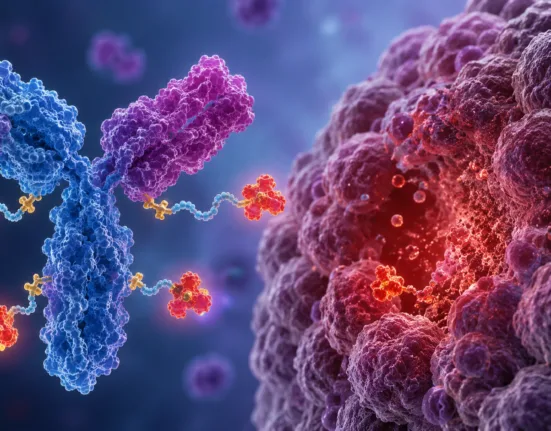
Soley Therapeutics used the American Association for Cancer Research Annual Meeting 2026 to present preclinical data on STX-6398, an oral small-molecule modulator of cytoskeleton-associated protein 2, or CKAP2, positioning the program as a first-in-class attempt to drug a pathway long viewed as difficult to reach with conventional small molecules. The South San Francisco biotechnology company said the data showed biomarker-linked anti-tumor activity, in vivo efficacy across xenograft models, and a tolerability profile that supports continued development in CKAP2-expressing cancers.
Why STX-6398 is drawing attention beyond a routine AACR 2026 preclinical poster
What makes this announcement more interesting than a routine AACR poster is not simply that another preclinical oncology asset showed tumor growth inhibition in mice. It is that Soley Therapeutics is trying to build a therapeutic case around CKAP2, an intrinsically disordered protein involved in malignant progression and cytoskeletal regulation, a category of biology that the industry has often described as scientifically compelling but commercially frustrating. Drug developers have historically gravitated toward enzymes, receptors, and better-structured targets because those are easier to bind, characterize, and optimize. If STX-6398 can reliably modulate CKAP2-associated signaling with a small oral molecule, the significance extends beyond a single asset and into the broader question of whether more undruggable stress-response and structural pathways can be converted into practical oncology programs.
How biomarker-linked activity could improve the clinical positioning of STX-6398 in cancer
That is the strategic hook, but the scientific details matter. Soley Therapeutics said sensitivity to STX-6398 across a 300-tumor cell line panel correlated with CKAP2 protein abundance across both hematologic and solid tumors. In practical terms, that gives the program something many early oncology assets lack, namely a plausible biomarker framework before entering the clinic. Biomarker-linked activity does not guarantee clinical success, but it can sharpen patient-selection logic, improve early trial design, and reduce the risk of testing a mechanistically novel asset in an overly broad population. In an era when oncology investors have become more skeptical of undifferentiated first-in-human stories, any signal that points toward a cleaner enrichment strategy matters.

What STX-6398’s mechanistic profile may reveal about CKAP2 pathway vulnerability in tumors
The mechanistic story is also more layered than a standard cytotoxicity claim. Soley Therapeutics said STX-6398 modulated CKAP2-associated pathways including focal adhesion kinase signaling, while also reducing cell migration, disrupting microtubule dynamics, and inducing cell cycle arrest. That combination matters because it hints at a multi-dimensional anti-cancer effect rather than a narrow proliferation readout. A compound that can influence tumor cell division, migratory behavior, and the signaling architecture that supports structural adaptation may have broader relevance across aggressive tumor phenotypes. At the same time, that breadth creates its own challenge. The more pleiotropic the mechanism looks in preclinical systems, the more carefully developers will have to separate genuine tumor-selective pharmacology from broader cytoskeletal stress that could narrow the therapeutic window in humans.
Why the angiogenesis and hypoxia data could matter, but still leave key translational questions open
The angiogenesis and hypoxia findings add another layer of interest. Tumors that preserve growth under hypoxic conditions or exploit vascular remodeling tend to be harder to control with single-pathway therapies, particularly in advanced solid tumors where the microenvironment becomes part of the disease engine. Soley Therapeutics said STX-6398 maintained activity under hypoxic conditions and inhibited angiogenesis in preclinical studies. That may strengthen the argument that CKAP2 modulation is not merely a cell culture curiosity. However, preclinical microenvironment claims often look cleaner before clinical translation. Hypoxia-adapted and angiogenesis-relevant effects can be highly model-dependent, and the field has seen many compounds produce impressive in vivo biology without generating durable benefit in patients once tumor heterogeneity, drug exposure variability, and resistance pathways enter the picture.
How much weight should oncology watchers place on the in vivo efficacy of STX-6398 today
The in vivo efficacy package will likely be the headline feature for many readers. Soley Therapeutics said oral STX-6398 produced dose-dependent tumor growth inhibition and regression across multiple xenograft models, including lung and colon cancer, while remaining well tolerated in efficacy studies and showing a favorable preclinical safety profile. The oral route is commercially meaningful because it supports the possibility of simpler chronic dosing, outpatient administration, and combination flexibility if the molecule reaches later-stage development. In oncology, oral agents that show credible anti-tumor activity often attract added attention because they fit more easily into modern treatment pathways than complex infused products. Still, xenograft regression is not the same as clinical durability, and tolerance in short preclinical studies does not fully address cumulative toxicity, off-target effects, or the consequences of chronic exposure in normal proliferative tissues.
What Soley Therapeutics still needs to prove before CKAP2 modulation can become a clinical thesis
This is where the program’s real test begins. Early-stage oncology is crowded with compounds that produced elegant biology before meeting the harder realities of translational medicine. For STX-6398, the next questions are obvious. Can Soley Therapeutics define the most responsive tumor settings with enough confidence to support a rational first-in-human plan? Will CKAP2 expression hold up as a clinically actionable biomarker across real patient samples rather than curated preclinical panels? Can the biotechnology company demonstrate that pathway modulation leads to meaningful tumor control without unacceptable effects on mitotic machinery and tissue homeostasis? And perhaps most importantly, will the pharmacology remain differentiated when compared with existing microtubule-directed agents, focal adhesion pathway strategies, or broader anti-proliferative regimens already known to oncologists?
Why novelty alone will not be enough for STX-6398 in a crowded oncology development market
Those comparison points matter because novelty alone is no longer enough in oncology capital markets. A new target class must eventually prove not just that it works, but that it offers something existing therapeutic categories do not. STX-6398 may have a chance to do that if CKAP2 modulation opens a tumor-selective vulnerability linked to expression status and stress biology rather than simply recreating the liabilities of older cytoskeletal drugs. If the molecule’s selectivity profile proves robust, it could carve out relevance in biomarker-defined subsets where standard cytotoxic approaches or pathway inhibitors leave residual unmet need. If not, the program risks being viewed as an interesting biology story with an unclear competitive position.
How Soley Therapeutics’ AI-enabled discovery platform is now being tested by STX-6398
The broader company backdrop also matters. Soley Therapeutics has been framing itself as a science-first, technology-enabled drug discovery company built around integrated cell stress biology, and the STX-6398 story fits that identity closely. The biotechnology company has also highlighted its use of Oracle cloud infrastructure and NVIDIA Blackwell GPU-backed AI tooling to support discovery across oncology, neurodegeneration, and metabolic disease. That matters less as a branding exercise than as a signal about operating model. In a market where many biotechnology firms claim artificial intelligence capabilities, the real question is whether those tools generate assets that look mechanistically distinctive and experimentally credible. STX-6398 is now one of the first visible tests of whether Soley Therapeutics can translate that platform narrative into a development candidate with enough depth to interest future partners, investors, or clinical investigators.
Why STX-6398 may become an early indicator of whether CKAP2 is truly druggable in oncology
For now, the AACR 2026 presentation does not validate CKAP2 modulation as a clinical strategy, but it does move the concept from theoretical curiosity into the category of watchable oncology programs. That alone is meaningful. Intrinsically disordered proteins have long occupied an uncomfortable place in drug discovery, important enough to attract scientific attention but difficult enough to keep most programs on the sidelines. Soley Therapeutics is now arguing that this barrier may be more practical than absolute. The company still needs to prove that argument in the clinic, and the path from impressive poster data to real oncology relevance is littered with casualties. Even so, STX-6398 is exactly the kind of preclinical asset industry observers should track closely, because if it works, it could expand both the target map and the vocabulary of small-molecule cancer drug discovery.