Pillar Biosciences has launched the oncoReveal Rapid AML Panel, a research-use-only next-generation sequencing assay designed to generate targeted genomic insights for acute myeloid leukemia in under 8.5 hours of laboratory workflow time. Separately, Creatv Bio has announced that its LifeTracDx blood-based liquid biopsy test will be used as an exploratory biomarker in a Phase 2 clinical trial evaluating CytoDyn’s CCR5-targeting antibody leronlimab in combination therapy for relapsed or refractory metastatic colorectal cancer.
Taken together, the two developments reflect a broader shift across oncology diagnostics toward faster genomic triage and continuous biomarker monitoring during clinical trials. While the technologies operate in different segments of the oncology workflow, both illustrate how diagnostics companies are positioning themselves not merely as testing providers but as enablers of trial decision-making and therapy selection.
Why rapid genomic triage tools are becoming essential in acute myeloid leukemia research workflows
Acute myeloid leukemia represents one of the most genomically complex hematologic malignancies, and its clinical course can progress rapidly. This makes genomic characterization an operational bottleneck for laboratories conducting research or supporting investigational studies.
Traditional comprehensive genomic profiling panels often require batching of samples and longer turnaround times. While they offer broad genomic coverage, the workflow constraints can delay the availability of early genomic signals that researchers use to stratify samples, select follow-up tests, or prioritize deeper analysis.
The oncoReveal Rapid AML Panel is designed to address that operational gap. Rather than competing directly with comprehensive genomic profiling assays, the panel functions as a fast first-pass sequencing tool capable of identifying key genomic alterations associated with AML classification.
Industry observers note that this triage model is increasingly being adopted in hematologic malignancies. Rapid targeted panels allow laboratories to generate actionable genomic signals early in the workflow while reserving more comprehensive sequencing for samples that require deeper investigation.
In practice, such a workflow can help laboratories allocate sequencing resources more efficiently while accelerating research timelines. This is particularly relevant for translational studies in AML, where researchers often need early genomic insight before deciding whether a sample should proceed to whole-panel profiling or functional studies.
How guideline-informed gene selection reflects the evolving classification frameworks for acute myeloid leukemia
The gene content of the rapid AML panel reflects modern disease classification frameworks, particularly those introduced by the World Health Organization and the International Consensus Classification in 2022, along with the European LeukemiaNet risk stratification guidelines.
These frameworks emphasize the role of molecular genetics in defining AML subtypes and risk categories. Mutations in genes such as FLT3, IDH1, IDH2, NPM1, TP53, and CEBPA have become central to disease classification and therapeutic decision-making in research and clinical settings.
By focusing on these guideline-informed targets, the assay attempts to balance speed and biological relevance. Laboratories using the panel can rapidly detect mutations that are known to influence AML biology, prognosis, and treatment response.
Clinicians tracking the field believe that such focused panels have become particularly important as AML drug development accelerates. The growing pipeline of targeted therapies, including FLT3 inhibitors and IDH inhibitors, has made molecular classification increasingly important for both clinical trials and biomarker-driven research.
However, the focused design also introduces limitations. Because the panel concentrates on a defined set of genes and hotspots, it does not capture the broader genomic landscape that comprehensive sequencing platforms can reveal. As a result, its utility depends on whether the laboratory workflow integrates it as an early screening tool rather than a definitive genomic test.
Why sequencing workflow efficiency is becoming a competitive battleground in oncology diagnostics platforms
Beyond gene content, much of the value proposition of the rapid AML panel lies in workflow efficiency.
Many sequencing assays require laboratories to batch multiple samples before initiating sequencing runs. While batching improves cost efficiency, it can introduce delays that are incompatible with time-sensitive research workflows.
The Pillar Biosciences assay removes this batching requirement, enabling laboratories to process individual samples and move them to the sequencer more quickly. The company reports a workflow time to sequencer of less than 8.5 hours.
Industry analysts note that workflow optimization has become a key competitive differentiator in the next-generation sequencing diagnostics market. As sequencing technologies mature, improvements in analytical sensitivity alone are no longer sufficient to differentiate products.
Instead, diagnostic manufacturers increasingly focus on laboratory efficiency, sample throughput, and turnaround time. These operational metrics influence whether laboratories adopt a platform, particularly in settings where testing volume fluctuates or where rapid sample processing is critical.
For hematologic malignancy research laboratories, the ability to move from sample preparation to sequencing within a single workday could meaningfully alter laboratory scheduling and sample triage strategies.
How liquid biopsy biomarkers are expanding their role in oncology clinical trials and translational research
While rapid sequencing panels focus on genomic characterization of tumor DNA, liquid biopsy technologies address a different challenge in oncology research: monitoring tumor biology over time.
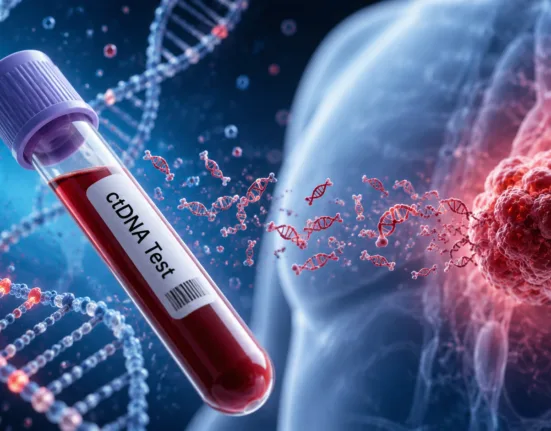
Creatv Bio’s LifeTracDx blood test will be used in the Phase 2 clinical study evaluating leronlimab in combination therapy for metastatic colorectal cancer. The test will be collected at multiple time points to assess changes in PD-L1 expression across the patient population.
The trial is evaluating leronlimab alongside trifluridine and tipiracil, marketed as TAS-102, and bevacizumab in patients with CCR5-positive metastatic colorectal cancer that is microsatellite stable and resistant to prior therapies.
Liquid biopsy tools such as LifeTracDx allow researchers to track biological changes in tumors without requiring repeated tissue biopsies. This is particularly valuable in metastatic disease settings, where obtaining tissue samples repeatedly can be difficult or risky.
The LifeTracDx platform combines two circulating biomarker signals: circulating tumor cells and cancer-associated macrophage-like cells. These markers provide a window into both tumor burden and immune interactions within the tumor microenvironment.
Industry observers note that the growing interest in liquid biopsy monitoring reflects a broader transformation in oncology trial design. Instead of relying solely on imaging endpoints or late clinical outcomes, researchers increasingly seek molecular signals that can indicate early treatment response.
What the CytoDyn colorectal cancer trial reveals about biomarker-driven immunotherapy strategies
The Phase 2 trial evaluating leronlimab illustrates another emerging trend in oncology research: combining immunotherapy with biomarker monitoring to better understand treatment mechanisms.
Leronlimab is a humanized monoclonal antibody that targets the CCR5 receptor, a key regulator of immune cell trafficking and inflammation. In oncology research, CCR5 inhibition is being explored as a strategy to reshape the tumor microenvironment.
The exploratory biomarker component of the trial focuses on PD-L1 expression, a protein that plays a central role in immune checkpoint signaling. Monitoring PD-L1 dynamics may help researchers understand whether CCR5 blockade alters tumor immune signaling pathways.
Researchers studying the immune microenvironment have increasingly recognized that tumors classified as immunologically cold often respond poorly to checkpoint inhibitors. Strategies that convert these tumors into hot, immune-active environments are therefore of significant interest.
Industry observers tracking CCR5-targeting therapies believe that monitoring PD-L1 expression in circulating tumor cells and macrophage-like cells could provide early insight into whether such immune modulation is occurring.
However, the exploratory nature of the biomarker analysis means its predictive value remains uncertain. Biomarker findings from small Phase 2 studies often require validation in larger trials before they can influence regulatory decisions or clinical practice.
Why research-use-only genomic and liquid biopsy diagnostics still play a critical role in oncology innovation
Both the rapid AML sequencing panel and the LifeTracDx liquid biopsy test are positioned primarily within research contexts rather than routine clinical diagnostics.
The oncoReveal Rapid AML Panel is explicitly designated for research use only. Similarly, the LifeTracDx assay is being used as an exploratory biomarker within a clinical trial rather than as a validated companion diagnostic.
Despite these limitations, research-use-only diagnostics often serve as the proving ground for technologies that later transition into clinical use.
Many of the genomic tests now used in routine oncology practice began as research assays that were refined through clinical studies. Over time, these tools can evolve into validated diagnostic tests once their analytical performance and clinical utility are established.
Regulatory watchers note that the pathway from research assay to clinical diagnostic can be lengthy. Developers must demonstrate analytical accuracy, clinical validity, and clinical utility before regulators allow tests to guide patient treatment decisions.
What clinicians, regulators, and industry observers will watch as these oncology diagnostic technologies evolve
The long-term impact of these diagnostic developments will depend on several factors.
For rapid genomic panels, adoption will hinge on whether laboratories view them as complementary to comprehensive sequencing rather than redundant. If rapid triage workflows prove efficient and cost-effective, they could become a standard feature of hematologic malignancy research pipelines.
For liquid biopsy biomarkers, the key question will be whether molecular monitoring signals correlate with meaningful clinical outcomes. Demonstrating that circulating biomarker changes predict treatment response or survival remains one of the central challenges in liquid biopsy research.
Clinicians tracking the field will also watch whether biomarker insights from studies like the leronlimab trial translate into improved patient selection strategies. If liquid biopsy monitoring can identify which patients are most likely to respond to immunotherapy combinations, it could help address one of the major limitations of current oncology treatments.
More broadly, both announcements underscore a common theme in cancer diagnostics: speed and biological insight are increasingly valued alongside analytical precision. Laboratories and drug developers alike are seeking tools that deliver actionable genomic or biomarker information quickly enough to influence real-time research decisions.