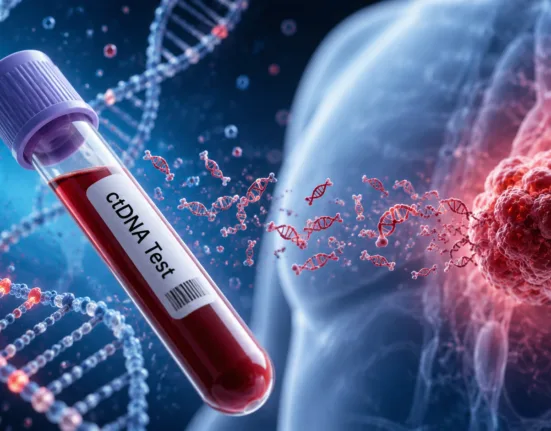
Caris Life Sciences has submitted Caris Assure, its blood-based molecular profiling test, to the New York State Department of Health’s Clinical Laboratory Evaluation Program for authorization to test specimens originating from New York State. The filing places the Nasdaq-listed precision oncology diagnostics developer into one of the most closely watched state review pathways for laboratory-developed tests, at a time when blood-based cancer profiling is becoming more central to therapy selection, biomarker detection and clinical decision-making.
Why New York authorization could become a credibility test for Caris Assure rather than just a geographic expansion step
The immediate commercial readout is straightforward: Caris Life Sciences is trying to close a state-level access gap for Caris Assure. The deeper issue is that New York is not an ordinary add-on market for laboratory-developed tests. Its Clinical Laboratory Evaluation Program, administered through the Wadsworth Center, is widely treated by diagnostics developers as a demanding validation checkpoint because it reviews laboratory permits, test performance, quality systems and personnel qualifications before laboratories can test specimens from New York patients.
That makes the submission more meaningful than a routine filing. Caris Assure is already positioned as a broad liquid biopsy platform, but authorization in New York would signal that the diagnostics-focused company has cleared a state oversight structure known for deeper scrutiny of laboratory-developed tests. In precision oncology, where clinicians increasingly depend on molecular results to identify actionable alterations, the confidence attached to a test can matter almost as much as the size of its gene panel.

The limitation is that the filing does not equal approval. Caris Life Sciences has made clear that Caris Assure is not currently authorized for use on blood-based specimens from New York unless and until the Clinical Laboratory Evaluation Program grants authorization. That matters commercially because any delay, additional data request or restriction could slow the broader access story. For industry observers, the question is not whether Caris Life Sciences can submit a strong package, but whether the analytical validation and quality-system evidence will satisfy New York’s expectations for a complex blood-based sequencing assay.
How Caris Assure fits into the shift from tissue-only testing to broader liquid biopsy use in oncology
Caris Assure is designed to analyze circulating nucleic acids from a blood sample, covering whole exome DNA and whole transcriptome RNA across 22,000 genes. The test is intended to identify tumor alterations, clonal hematopoiesis, inherited variants, pharmacogenomic alterations, microsatellite instability and tumor mutational burden. That breadth places it in the more ambitious segment of liquid biopsy, where the goal is not simply to detect a narrow mutation panel, but to generate a more comprehensive molecular profile when tissue availability is limited or when a less invasive testing route is clinically useful.
The clinical context is important. Tissue biopsy remains deeply embedded in cancer diagnosis and treatment planning, but tissue can be difficult to obtain, insufficient for broad sequencing, or impractical for repeated profiling. Blood-based testing can reduce friction when clinicians need molecular information quickly, especially in advanced cancers where therapy selection may depend on genomic markers. A broad assay such as Caris Assure is therefore competing not only on technical coverage, but on its ability to fit into real-world oncology workflows.
The unresolved issue is how much breadth converts into clinical utility. A 22,000-gene assay sounds powerful, but clinicians and payers ultimately care about whether the test produces actionable, accurate and reimbursable findings that change treatment decisions. Liquid biopsy also faces biological limitations, including tumor shedding variability and the challenge of distinguishing tumor-derived signals from clonal hematopoiesis. Caris Assure explicitly reports clonal hematopoiesis, which is valuable, but the regulatory review must still assess whether the assay’s performance characteristics support reliable use on New York specimens.
Why the CLEP pathway matters as laboratory-developed test oversight becomes more demanding
New York’s Clinical Laboratory Evaluation Program has become especially relevant because the broader regulatory climate for laboratory-developed tests has been shifting toward greater oversight. For complex next-generation sequencing assays, state-level review can create a more demanding evidentiary environment than the traditional federal laboratory certification framework alone. In practical terms, developers are being pushed to show not only that a laboratory is certified, but that the specific assay has been analytically validated for its intended clinical use.
For Caris Life Sciences, this creates both opportunity and risk. Authorization would strengthen Caris Assure’s positioning in a large oncology market and could support the diagnostics-focused company’s broader narrative that its platform is built on rigorous validation, quality controls and scalable lab operations. It could also help the firm as precision oncology buyers, health systems and biopharma partners increasingly separate broad molecular profiling platforms on evidence quality rather than marketing reach.
However, the same pathway can expose weaknesses if regulators ask for additional support or if review timelines become longer than investors expect. Blood-based multi-omic profiling is complex because it combines sample handling, sequencing chemistry, bioinformatics, variant interpretation and reporting logic. Each layer introduces validation questions. For a company trying to scale a comprehensive liquid biopsy offering, the New York review is therefore not just an administrative box to tick. It is a stress test of operational maturity.
What Caris Life Sciences’ filing reveals about the commercial race in precision oncology diagnostics
The filing also reflects a larger commercial race in oncology diagnostics. Cancer care is moving toward more molecularly defined treatment pathways, while drug developers are increasingly designing therapies around biomarkers and resistance mechanisms. This has created a growing need for platforms that can identify relevant alterations at scale, support therapy selection and feed clinico-genomic datasets useful for research and drug development.
Caris Life Sciences has tried to differentiate itself by combining molecular profiling with artificial intelligence, machine learning and a large clinico-genomic database. That strategy matters because the long-term value in precision oncology diagnostics may not come only from per-test revenue. It may also come from the data asset created when molecular results are linked with clinical outcomes, treatment patterns and real-world evidence. Caris Assure fits into that model because blood-based testing can potentially expand the volume and frequency of molecular profiling.
The risk is that the field is crowded and increasingly evidence-driven. Guardant Health, Foundation Medicine, Tempus AI and other diagnostics players have already trained clinicians, payers and biopharma partners to expect not only technical sophistication, but strong clinical utility claims, reimbursement clarity and workflow integration. Caris Life Sciences therefore needs more than authorization in New York. It needs evidence that Caris Assure can win trust against established liquid biopsy and comprehensive genomic profiling platforms.
Why reimbursement and clinician adoption may decide the real value of Caris Assure
Even if New York authorization is granted, commercial adoption will depend on more than regulatory clearance. Molecular profiling tests must fit into payer policies, oncology pathways and physician ordering habits. For a broad blood-based assay, the reimbursement question can be particularly sensitive because payers may differentiate between tests that identify guideline-linked biomarkers and tests that generate broader exploratory information.
Caris Life Sciences already operates in a market where comprehensive profiling is better understood than it was a decade ago. Clinicians are more familiar with biomarker-guided therapy selection, and cancer centers increasingly use molecular boards and genomic reports to guide complex decisions. That creates a stronger adoption backdrop for Caris Assure than earlier generations of broad profiling tests faced.
Still, adoption will likely vary by setting. Academic cancer centers may value the breadth of whole exome and transcriptome analysis, especially when treating patients with advanced, rare or refractory tumors. Community oncology practices may place more weight on turnaround time, report usability, payer coverage and whether results clearly point to approved therapies or relevant clinical trials. For Caris Life Sciences, the commercial challenge is to make Caris Assure feel comprehensive without making it feel complicated.
How investors may read the New York submission after Caris Life Sciences’ public-market debut
For public-market investors, the filing lands in a broader story about Caris Life Sciences’ attempt to scale as a precision oncology diagnostics and AI TechBio company. Caris Life Sciences trades under the Nasdaq ticker CAI, and the stock was recently around $16.15, with heavy trading volume and modest intraday weakness. That performance suggests investors are still weighing growth potential against execution risk, reimbursement uncertainty and the cost of building a differentiated diagnostics platform.
The New York submission is unlikely to be a near-term earnings catalyst by itself. It does not create immediate authorization, and it does not confirm revenue from New York specimens. However, it can support investor sentiment if the market sees it as part of a disciplined expansion strategy for Caris Assure. In diagnostics, credibility compounds slowly. Each regulatory, reimbursement and clinical validation milestone can strengthen the commercial case, but the payoff is rarely instant.
The flip side is that public investors can be impatient with diagnostics companies that promise platform value without converting it into durable revenue growth and margin improvement. Caris Life Sciences will need to show that Caris Assure can expand access, support payer adoption and contribute to the larger data-driven precision medicine strategy. New York authorization, if granted, would help. It would not, by itself, settle the larger debate over whether Caris Life Sciences can turn a sophisticated molecular platform into a consistently scalable public-company model.
What clinicians, regulators and diagnostics competitors are likely to watch next
The next watchpoint is the Clinical Laboratory Evaluation Program review itself. Regulators will focus on analytical validation, quality systems, laboratory processes and compliance with New York requirements. Clinicians will watch whether authorization, if granted, improves practical access to Caris Assure for New York patients who may benefit from blood-based molecular profiling. Competitors will watch whether Caris Life Sciences can use state authorization as a credibility marker in a market where trust, evidence and report quality are major differentiators.
The larger strategic question is whether broad liquid biopsy platforms can become routine infrastructure in oncology rather than specialized tools used only when tissue is unavailable. Caris Assure is built for that more expansive future, but the future will be shaped by evidence, reimbursement and regulatory confidence. New York’s review process now becomes one of the clearest near-term tests of that ambition.
For Caris Life Sciences, the submission is an incremental regulatory step with broader symbolic weight. It shows the diagnostics-focused company is trying to expand Caris Assure under a demanding state framework rather than relying only on general market availability. If authorization follows, the story becomes one of expanded access and stronger validation credibility. If review proves slower or more complex, it will remind the market that liquid biopsy scale still depends on the hard, unglamorous work of regulatory proof.