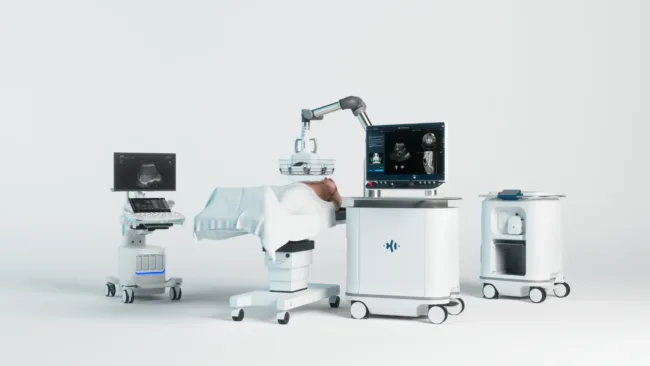
RenovoRx, Inc. said the Japan Patent Office has issued a first Notice of Allowance covering the RenovoCath device and its method for targeted local drug delivery via the vasa vasorum, extending protection for the company’s Trans-Arterial Micro-Perfusion platform into one of the most strategically important oncology and medical device markets globally. For a United States-based life sciences company commercializing an FDA-cleared drug-delivery device while advancing a broader oncology platform thesis, this is materially more than a routine intellectual property disclosure. The update potentially strengthens the long-term commercial defensibility, licensing optionality, and regional expansion narrative surrounding RenovoCath at a point when the company is seeking to transition from platform promise to sustained clinical and commercial relevance.
How RenovoRx’s Japanese patent expansion could strengthen the RenovoCath oncology device moat and global commercialization thesis
What is genuinely new in this development is not simply the numerical expansion of RenovoRx’s patent portfolio. The more analytically important shift is that the technological architecture underlying RenovoCath’s dual-occlusion catheter system is now receiving formal legal protection in Japan, a market where medtech innovation, oncology device reimbursement, and hospital adoption frameworks are among the most sophisticated globally.
For senior medtech executives, clinicians, and sector investors, intellectual property around delivery platforms often functions as a proxy for long-term strategic durability. Unlike a single-drug development story, device-enabled oncology platforms derive a substantial portion of their long-term value from repeat procedural use, geographic scalability, hospital workflow integration, and the ability to support partnership and licensing structures. This means protection around the mechanism itself, including pressure-guided infusion, localized vascular delivery, and tissue-targeting functionality, becomes central to the investment case.
Industry observers may therefore increasingly interpret this as moat construction rather than administrative housekeeping. The RenovoCath system’s differentiation lies in its ability to localize therapeutic delivery through the vasa vasorum, microscopic vessels that supply the walls of large arteries and provide potential access pathways to surrounding tumor tissue. In oncology, where systemic toxicity remains one of the most persistent limitations of intravenous chemotherapy and biologic administration, the ability to potentially improve local concentration while minimizing whole-body exposure remains commercially and clinically meaningful. This patent allowance therefore reinforces not only legal protection but also the strategic narrative that RenovoRx is building a defensible oncology delivery infrastructure.
Why the RenovoCath Japan patent milestone could change RenovoRx’s medtech platform valuation story beyond a routine IP update
The larger strategic question now is whether RenovoRx is beginning to evolve beyond a small-cap medtech story into a platform company with credible international expansion pathways. A device with United States clearance and early commercialization activity can still remain trapped in an execution-risk narrative. By contrast, a platform with growing protection across multiple jurisdictions begins to look more like a scalable infrastructure story, particularly if management eventually converts that intellectual property into commercial partnerships, regional licensing arrangements, or strategic collaborations with hospital networks and oncology-focused device distributors.
Japan is especially important in this framework because it remains one of the most advanced global healthcare markets for oncology devices, interventional radiology systems, and procedure-based treatment innovation. Patent protection in this geography can materially improve negotiating leverage with distributors, strategic investors, and commercial partners evaluating regional entry.
In practical commercial terms, this may strengthen RenovoRx’s position in future discussions involving distribution rights, territory-specific licensing, and Asia-Pacific rollout sequencing. The importance of this update therefore lies not only in legal coverage but in what it may enable commercially over the next 12 to 24 months.
Why clinicians and regulatory observers may still focus on oncology clinical validation and workflow adoption risks
Despite the stronger intellectual property footing, the clinical and commercial burden of proof remains substantial. Clinicians following the targeted oncology drug-delivery space are unlikely to assign durable significance to the patent expansion alone. Their focus will remain on whether RenovoCath’s localized delivery mechanism continues to demonstrate a clinically differentiated therapeutic rationale in solid tumor settings.
The theoretical proposition remains compelling. Targeted infusion near tumor tissue could improve drug concentration at the disease site while reducing systemic toxicity and improving tolerability. However, theoretical logic alone rarely drives adoption in the oncology device market.
What clinicians, hospital administrators, and regulatory watchers will continue to assess is evidence quality.
Trial design strength, endpoint robustness, reproducibility across tumor settings, and procedural consistency remain central. Endpoints such as local response durability, progression metrics, safety outcomes, and real-world workflow feasibility are likely to matter significantly more than intellectual property metrics.
If future clinical evidence continues to support differentiated outcomes, the intellectual property moat becomes strategically meaningful. If the clinical evidence remains mixed or commercially difficult to operationalize, even a broad patent estate may not materially alter long-term adoption.
Which commercialization, reimbursement, and scalability risks could still limit the RenovoCath oncology growth thesis
A stronger patent estate does not automatically convert into physician uptake, reimbursement clarity, or sustainable procedural economics. Hospital systems evaluating oncology delivery devices typically assess workflow burden, specialist training requirements, integration with existing interventional oncology teams, and reimbursement visibility.
Even highly differentiated technologies can experience slow commercial adoption if they introduce operational friction. For catheter-based oncology systems, the need for specialist procedural expertise can itself become a barrier. Adoption often depends on multidisciplinary alignment among oncology teams, interventional radiology specialists, and hospital administration leadership.
Manufacturing and supply chain execution remain equally important pressure points. Device platforms frequently face margin compression as commercialization expands because scaling production while maintaining quality standards and regulatory consistency is operationally demanding.
Competitive risk also remains material. The oncology delivery space continues to attract innovation across catheter systems, locoregional therapies, infusion platforms, and minimally invasive intervention technologies. RenovoRx’s moat will therefore depend not only on legal protection but on how difficult it is for competing technologies to replicate similar clinical outcomes through adjacent methods.
What clinicians, regulators, and industry investors are likely to watch next in the RenovoRx and RenovoCath platform roadmap
The next major catalyst will be whether this intellectual property expansion begins to translate into visible commercial actions. Industry observers are likely to watch for signs of Japan-specific licensing discussions, Asia-Pacific distribution partnerships, or broader regional commercialization sequencing, as these developments would materially strengthen the case that RenovoRx is moving from patent expansion into market execution. Just as important will be continued clinical validation of the broader oncology platform, particularly whether RenovoCath’s localized delivery thesis continues to demonstrate differentiated outcomes, procedural consistency, and practical integration into hospital oncology workflows.
The strategic significance of this patent milestone therefore lies less in the legal notice itself and more in whether it improves partnership leverage, accelerates commercial scale, and reinforces long-term platform defensibility in targeted oncology drug delivery. What remains unresolved is whether execution, physician adoption, reimbursement visibility, and clinical outcomes can scale quickly enough to justify that expanding global intellectual property footprint.