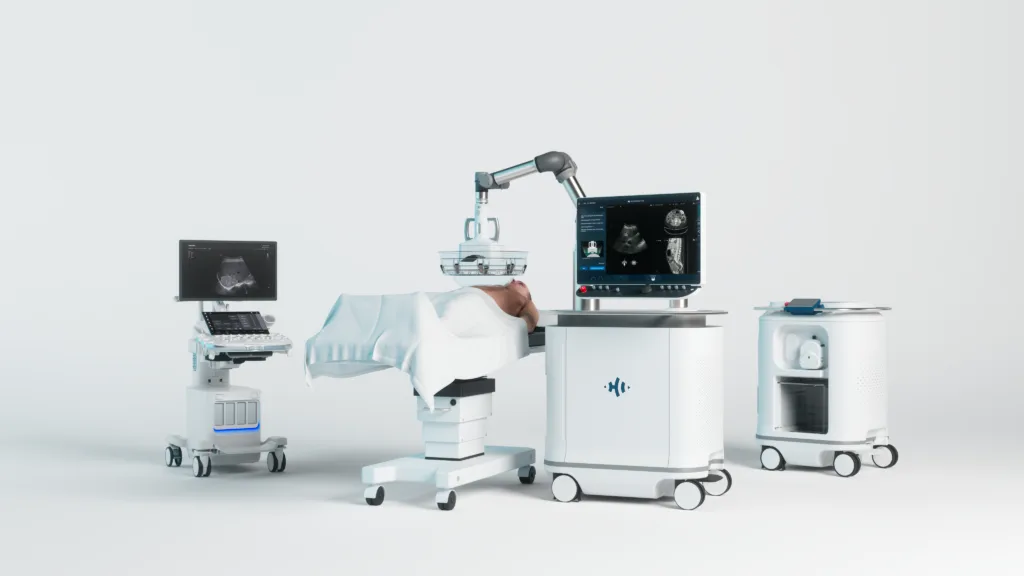
HistoSonics has received Taiwan Food and Drug Administration approval for the Edison Histotripsy System, giving the medical device developer a key regulatory foothold in one of Asia’s more advanced healthcare technology markets. The approval supports the non-invasive destruction of liver tumors, including unresectable liver tumors, using histotripsy, a focused ultrasound approach designed to mechanically destroy targeted tissue without surgery, radiation, or thermal ablation.
The significance is not limited to another country-level clearance. Taiwan approval gives HistoSonics a strategically useful Asian reference market where sophisticated physicians, academic hospitals, and regulators are already familiar with advanced interventional oncology tools. For a platform technology such as histotripsy, that matters because the early commercial story is not just about selling systems. It is about building clinical confidence, training physicians, generating evidence, and proving that a novel procedure can move from research enthusiasm into repeatable hospital workflows.
Why does TFDA approval strengthen HistoSonics’ Asia strategy for histotripsy?
Taiwan offers HistoSonics a useful bridge between early clinical adoption and broader regional expansion. The medical device manufacturer has already established a clinical presence at National Taiwan University Hospital, its first installation site in the country, where physicians treated patients under research protocols before the regulatory clearance. That early use gives the approval more weight because it is not arriving in a market with no hands-on experience. It is arriving after a leading institution had already begun testing how histotripsy fits into real clinical practice.
That creates a stronger launch position than a purely paper-based approval. Physicians at National Taiwan University Hospital had already treated liver tumors and explored broader tumor types, including kidney tumors, pancreatic tumors, and sarcoma cases, under research protocols. Those early experiences do not automatically establish approved indications beyond liver tumors, but they do give HistoSonics valuable clinical learning that can shape future study design, physician education, and regulatory conversations.
The unresolved issue is how far early enthusiasm can travel. A small number of pioneering centers can adopt advanced platforms quickly because they have specialist expertise, motivated clinicians, and institutional research infrastructure. Scaling that experience across more hospitals is harder. HistoSonics will need to show that histotripsy can be taught consistently, integrated into tumor board decision-making, and supported by evidence that satisfies clinicians who are already comfortable with surgery, radiation therapy, thermal ablation, and interventional radiology techniques.
What makes histotripsy different from existing tumor destruction technologies?
Histotripsy’s core distinction is that it uses focused ultrasound to mechanically liquefy targeted tissue rather than relying on heat, ionizing radiation, or surgical removal. That gives HistoSonics a potentially differentiated position in interventional oncology because many tumor treatment approaches carry limitations tied to invasiveness, collateral tissue injury, heat-sink effects, anatomical access, or patient eligibility. A non-invasive, non-thermal approach offers a compelling clinical narrative, especially for tumors that are difficult to treat surgically or where patients have limited options.
However, the strength of that narrative depends on evidence depth. For liver tumors, the Edison Histotripsy System now has an approved indication in Taiwan, and HistoSonics is commercializing the system in the United States and selected global markets. The next challenge is proving where histotripsy fits within the broader treatment sequence. Clinicians will want clarity on which patients benefit most, how outcomes compare with ablation or resection in specific tumor settings, how recurrence patterns evolve, and whether the procedure changes downstream treatment options.
The technology’s non-invasive profile may help adoption, but it does not eliminate the burden of proof. Hospitals still have to assess capital cost, training requirements, room scheduling, imaging integration, procedural throughput, and reimbursement pathways. A technology can be elegant and still face slow adoption if it requires complex workflow changes or if payers remain cautious. That is why the Taiwan approval is a meaningful milestone, but not yet a full commercial validation event.
How could National Taiwan University Hospital influence broader clinical adoption?
National Taiwan University Hospital is important because early institutional champions often shape how novel medical technologies are interpreted by the wider market. In this case, physicians at the hospital generated early research-protocol experience across several tumor types, giving HistoSonics a clinically credible anchor in Taiwan. HistoSonics leadership has indicated that the hospital’s work has been especially encouraging because of both the speed of adoption and the range of cases treated.
For HistoSonics, this creates a pathway to build more than a sales network. The medical device developer can use Taiwan as a regional training and evidence hub, particularly if National Taiwan University Hospital continues to contribute data, physician education, and procedural learning. In Asia, where leading academic hospitals often influence adoption across neighboring markets, a strong reference center can shorten the trust-building cycle for a novel platform.
The risk is that early research experience may not translate neatly into routine use. Research protocols often involve carefully selected cases, highly engaged clinicians, and close monitoring. Commercial adoption requires broader physician participation and more standardized criteria. HistoSonics will need to demonstrate that histotripsy can be reproduced outside elite centers and that clinical teams can identify appropriate patients without turning the technology into either an overused novelty or an underused niche tool.
Why is the liver tumor indication commercially important for HistoSonics?
The liver tumor indication gives HistoSonics a focused commercial entry point in oncology. Liver cancer and liver metastases represent a significant treatment burden, and many patients are not candidates for surgical resection. Technologies that can expand local treatment options in unresectable or difficult-to-access lesions naturally attract clinician interest, particularly when they offer a less invasive procedural profile.
For HistoSonics, beginning with liver tumors is commercially logical because interventional oncology already has an established procedural culture around image-guided treatment. Hospitals that use ablation, embolization, radiation oncology tools, and surgical oncology pathways may be more receptive to a platform that offers another local tumor destruction option. The key is whether histotripsy is viewed as complementary to existing modalities or as a potential replacement in selected settings.
The commercial limitation is that liver tumor treatment is not a single uniform market. Tumor size, location, number of lesions, underlying liver function, prior therapy, and multidisciplinary decision-making all affect patient selection. HistoSonics will need strong data that identifies where histotripsy has the clearest advantage. Without that clarity, adoption could remain concentrated among innovation-focused centers rather than moving into broader hospital procurement cycles.
What future indications could expand the value of the Edison Histotripsy System?
HistoSonics is evaluating the Edison Histotripsy System for additional applications in kidney, pancreas, prostate, and other anatomical locations. That pipeline matters because platform medical devices often generate their largest strategic value when they move beyond one indication. If histotripsy can demonstrate safety, efficacy, and workflow feasibility across multiple organ systems, HistoSonics could position Edison as a broader non-invasive tumor treatment platform rather than a liver-specific device.
The early research activity in Taiwan supports that wider ambition, especially because National Taiwan University Hospital physicians have already explored kidney tumors, pancreatic tumors, and sarcoma cases under research protocols. Pancreatic and certain soft-tissue tumor settings are particularly challenging because anatomical complexity and limited treatment options can increase interest in less invasive approaches. Prostate applications could also attract attention if histotripsy proves capable of precise tissue destruction with acceptable safety and functional outcomes.
However, indication expansion is where regulatory and clinical complexity rises quickly. Each organ system brings different anatomy, endpoints, comparator standards, safety concerns, and reimbursement logic. A procedure that works well in liver tumors does not automatically transfer to pancreas, prostate, kidney, or sarcoma treatment. HistoSonics will need indication-specific evidence rather than relying on platform enthusiasm. Regulators and clinicians are likely to ask for clear patient-selection criteria and outcome measures that match each disease area.
What could slow HistoSonics’ global expansion despite Taiwan approval?
The largest near-term challenge is not whether histotripsy is intriguing. It clearly is. The tougher question is whether HistoSonics can convert regulatory momentum into scalable clinical adoption. Medical device expansion requires capital equipment placement, hospital budget approval, physician training, service infrastructure, and procedural volume. In advanced markets, approval opens the door, but hospital economics decide how quickly systems are installed and used.
Reimbursement will also matter. Hospitals may be cautious if payment pathways are uncertain or if histotripsy procedures compete with reimbursed alternatives that are already embedded in oncology workflows. Even if clinicians support the technology, hospital administrators will evaluate utilization, cost per case, patient throughput, and expected return on investment. For emerging platforms, that commercial math can determine whether adoption accelerates or stalls.
Another risk is expectation management. HistoSonics’ platform is being discussed across several difficult-to-treat tumor types, but the approved indication in Taiwan is currently liver tumors, including unresectable liver tumors. The broader promise of histotripsy should not be confused with approved use across all tumor types. HistoSonics will benefit if it keeps the commercial story disciplined, builds evidence methodically, and avoids letting platform excitement outrun regulatory reality.
What should clinicians and industry observers watch after the TFDA decision?
The next phase will likely focus on how quickly HistoSonics expands beyond National Taiwan University Hospital into additional Taiwanese institutions and whether those centers generate consistent procedural experience. Physician training programs will be critical because histotripsy is not just another device placement. It requires confidence in targeting, patient selection, procedural planning, and follow-up interpretation.
Industry observers will also watch whether Taiwan becomes a regional evidence engine for Asia. If HistoSonics can use the market to generate high-quality clinical evidence, build physician education programs, and support additional indication research, the TFDA approval could become more than a local regulatory milestone. It could become part of a wider Asia-Pacific commercialization strategy.
For now, the approval strengthens HistoSonics’ position in non-invasive tumor therapy and gives the Edison Histotripsy System another credible regulatory endorsement. The bigger story is whether histotripsy can move from a promising focused ultrasound innovation into a durable interventional oncology category. Taiwan gives HistoSonics a strong stage. The next test is whether the medical device manufacturer can turn that stage into repeatable adoption, broader evidence, and eventually a larger clinical footprint across Asia.