Galderma has highlighted interim findings from two investigator-initiated trials examining how Sculptra and the Restylane range may address aesthetic changes linked to menopause and medication-driven weight loss. The datasets, both supported by the dermatology-focused company, point to improved skin hydration and barrier function in menopausal patients treated with Restylane Skinboosters and Sculptra, while also suggesting biological changes in abdominal fat tissue among patients experiencing aesthetic effects after prescription weight-loss treatment.
What matters here is not simply that Galderma has new data, but that it is trying to define two emerging demand pools before competitors fully lock in the language, protocols, and clinical framing. Aesthetic medicine has already begun responding to visible facial and body changes associated with rapid weight loss, particularly in the era of glucagon-like peptide-1 drug use, while menopause is increasingly being treated as a distinct biologic stage with specific skin-quality consequences rather than just another chapter of chronological aging. By backing research in both areas, the Swiss dermatology company is effectively broadening the addressable market for injectable aesthetics beyond traditional anti-aging narratives and toward need states that clinicians can identify more precisely.
How the menopause sequencing data may influence future treatment protocols in aesthetic practice
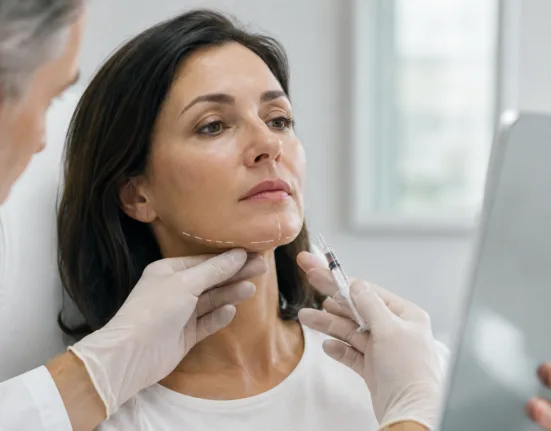
The more commercially and clinically relevant of the two updates may be the menopause-focused sequencing study. According to the interim findings, women in menopause treated with a combination of Restylane Skinboosters and Sculptra showed progressive improvements in hydration, skin-barrier function, and patient satisfaction, with the strongest hydration gains observed when Restylane Skinboosters were used first. That point is important because sequencing, not just product selection, is what could eventually shape clinical practice patterns.
In aesthetic medicine, many products are already used in combination, but protocols often remain highly practitioner-dependent and only lightly standardized. A study that begins to suggest an order of use may therefore have greater downstream value than another dataset showing that two premium injectables work well together. Restylane Skinboosters are positioned as faster-acting support for extracellular matrix and hydration, while Sculptra is framed as a slower regenerative biostimulator working across multiple skin layers. If that logic holds up in fuller datasets, the sequence-first approach could become a more structured treatment pathway for perimenopausal and postmenopausal patients, especially those presenting with dryness, laxity, and declining skin quality rather than simply volume loss.
That said, interim data are not practice-changing evidence by default. The company disclosed that these were investigator-initiated studies and described the menopause trial as ongoing. Without full peer-reviewed methods, statistical detail, comparator clarity, and long-term durability data, clinicians are likely to view the findings as hypothesis-strengthening rather than definitive. The aesthetic field has long been rich in before-and-after enthusiasm and relatively light on rigorous, reproducible protocol science. This is precisely why such data attract interest and skepticism at the same time.
Why GLP-1-related volume loss is becoming a new commercial and clinical battleground
The second interim dataset addresses a topic that has been building rapidly across dermatology and aesthetic clinics: patients reporting face and body changes that seem more dramatic, or at least biologically different, after medication-driven weight loss. Galderma-supported investigators reported a statistically significant four-fold reduction in adipose-derived stem cells in abdominal tissue among female patients with mild-to-moderate skin laxity who were taking prescription weight-loss medication, while fibroblasts were preserved.
This finding matters because it attempts to give scientific backing to what many clinicians have been describing anecdotally. If medication-driven weight loss alters the regenerative composition of adipose tissue, then the resulting aesthetic changes may not be fully addressed by a simple volume-replacement mindset. That opens more space for products positioned around tissue quality, biologic stimulation, and regenerative support rather than only filler correction. In commercial terms, that is exactly the territory Galderma wants to own with Sculptra.
There is also a broader industry reason this matters. The rise of obesity and metabolic therapies has created a secondary market in appearance management, one that spans facial volume loss, skin laxity, body contour changes, and patient dissatisfaction after successful weight reduction. This has become one of the most important new growth narratives in aesthetics. Companies that can move quickly from vague clinician talk to biologically framed treatment rationale may gain an edge in physician education, protocol development, and premium product positioning.
Why the data are interesting but still far from clinically settled
Even so, the weight-loss dataset is early and should be treated carefully. The company said the abdominal study involved 20 female patients. For an exploratory cellular analysis, that may be enough to generate signal, but it is not enough to settle how widely these findings generalize across patient groups, drug classes, treatment durations, age ranges, body sites, or baseline tissue characteristics. The abdomen is also only one anatomic region, and the field’s most commercially sensitive concern often centers on facial changes.
Another limitation is that the company’s framing leans toward product relevance rather than broad mechanistic neutrality. That is not unusual in industry-supported research, but it does mean external observers will want to see whether independent groups replicate the finding and whether different interventions, not just Sculptra-based approaches, show meaningful benefit in these patients. Reimbursement is unlikely to help here either. These are aesthetic indications, which means uptake will depend on out-of-pocket willingness, clinician confidence, and how convincingly practices can explain value to patients who may already be spending heavily on weight-loss therapy itself.
What these interim studies reveal about the future direction of aesthetic medicine
Taken together, the two studies suggest the next phase of injectable aesthetics may be less about chasing broad youthfulness and more about treating biologically distinct transitions. Menopause and medication-driven weight loss are not fringe concerns. They are large and growing patient realities, and both come with visible skin and soft-tissue effects that are increasingly entering clinical conversation. Galderma appears to understand that the winning strategy is not only to sell products, but to help define the categories in which those products become the default answer.
That strategy also fits the company’s portfolio structure. Restylane can address hydration and hyaluronic acid-based correction, while Sculptra occupies the regenerative biostimulator lane. The combination allows Galderma to argue for a layered treatment philosophy rather than a single-product intervention. In a market where clinicians often combine technologies and injectables anyway, a company that offers a biologically framed sequence may have a stronger story than one offering only standalone correction.
Still, the burden of proof will rise from here. Industry observers are likely to watch for complete study readouts, stronger patient numbers, clearer endpoint reporting, durability beyond six or nine months, and evidence that improvements are clinically meaningful outside company-supported settings. They will also watch whether these findings alter training content, conference discourse, and real-world protocol adoption among aesthetic dermatologists and plastic surgeons. In this field, commercial momentum often arrives before consensus science, but it does not stay secure unless evidence eventually catches up.
For now, Galderma’s interim data do not close the case on menopause-focused sequencing or GLP-1-related tissue change. What they do accomplish is arguably more strategic. They help shift two fast-emerging patient concerns from anecdotal complaint to research-backed clinical conversation. In a competitive aesthetics market, that may be the first step toward shaping the next premium treatment category before everybody else starts calling it obvious.