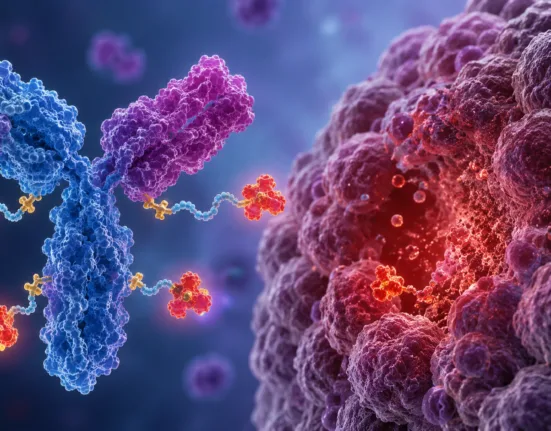
NiKang Therapeutics Inc. has introduced preclinical findings for its investigational therapy NKT5097, a first-in-class, orally bioavailable small molecule designed to selectively degrade both CDK2 and CDK4. The data were presented at the 2025 San Antonio Breast Cancer Symposium and accompany the launch of an open-label Phase 1 dose escalation study assessing the compound’s safety, pharmacokinetics, pharmacodynamics, and preliminary antitumor activity in patients with advanced or metastatic solid tumors, including hormone receptor positive breast cancer and CCNE1-amplified cancers.
What this signals about the emerging shift beyond CDK4/6 inhibition
The preclinical profile of NKT5097 positions it as a differentiated contender in a space increasingly focused on overcoming resistance to CDK4/6 inhibitors. While drugs such as palbociclib, ribociclib, and abemaciclib have become foundational therapies in hormone receptor positive breast cancer, acquired resistance through upregulation of CDK2 and cyclin E is a well-characterized limitation. NiKang Therapeutics Inc. appears to be addressing this challenge with a degrader approach that goes beyond traditional kinase inhibition, instead eliminating both CDK2 and CDK4 proteins through proteasomal degradation pathways.
Unlike conventional inhibitors, which block enzymatic activity via binding at the active site, NKT5097 is designed to harness selective degradation mechanisms to remove the target proteins from the cell entirely. This strategy is intended to achieve a deeper and more sustained inhibition of the cell cycle progression pathways associated with tumor proliferation and therapeutic escape. By sparing CDK1, CDK6, CDK7, and CDK9, the compound may also reduce hematologic and gastrointestinal toxicities that are often observed with broader cyclin-dependent kinase inhibition.
Industry analysts are increasingly watching the degrader space as a means to improve efficacy without amplifying off-target effects, and NiKang Therapeutics Inc. is clearly targeting that intersection with a candidate specifically built to reduce resistance-driven relapse in solid tumors.
Why dual degradation of CDK2 and CDK4 matters for resistant tumors
The clinical significance of NKT5097 lies not just in its target profile, but in the therapeutic niche it seeks to define. Endocrine therapies paired with CDK4/6 inhibitors have prolonged progression-free survival in many patients with HR-positive breast cancer. However, secondary resistance frequently emerges, with molecular analyses pointing to CDK2 activation and cyclin E amplification as key drivers of relapse. NiKang Therapeutics Inc. is aiming directly at this escape mechanism.
By simultaneously degrading CDK2 and CDK4, NKT5097 may offer a consolidated therapeutic strategy to suppress both the initial oncogenic driver and the resistance pathway. This contrasts with emerging combination strategies that propose CDK2 inhibition as an add-on to existing CDK4/6 regimens, which may present compounding toxicity or logistical limitations in dosing. In theory, NKT5097 could streamline this dual targeting into a single-agent approach, thereby simplifying the treatment paradigm for late-line HR-positive breast cancer patients.
Clinicians familiar with the limitations of current endocrine combinations will likely view this approach with cautious optimism. However, the transition from preclinical selectivity to in-human pharmacodynamic efficacy is rarely linear. The true test for NKT5097 will come from the ability to demonstrate degradation in tumor tissue, modulation of relevant biomarkers such as phosphorylated retinoblastoma protein, and tolerability across dose levels.
How regulators are likely to interpret the early development strategy
Regulatory clarity around novel degrader molecules remains an evolving landscape. The U.S. Food and Drug Administration has shown openness to first-in-class degradation mechanisms, as seen with approvals in hematology and oncology for similar technologies. However, for a molecule like NKT5097 to progress meaningfully toward registrational studies, regulators will expect robust mechanistic validation. This includes evidence of on-target degradation, a manageable safety profile, and ideally, early signs of clinical benefit in biomarker-enriched populations.
The current Phase 1 design focuses on dose escalation and safety as a monotherapy. While this is standard for first-in-human trials, observers note that the absence of a dose expansion component or combination arm may slow the path toward accelerated programs. Should tolerability and early pharmacodynamics prove favorable, NiKang Therapeutics Inc. may need to swiftly pivot toward combination trials with endocrine therapies or even antibody-drug conjugates to maximize the clinical utility of its degrader platform.
There is also a broader regulatory question around the therapeutic index of degraders targeting multiple kinases. While the compound is marketed as sparing non-target CDKs, regulators will likely seek comprehensive kinase selectivity panels, tissue distribution studies, and longitudinal safety data to confirm this claim. Any unexpected hematologic or off-target effects could delay development or trigger requests for more extensive toxicology profiling.
What competitors and platform investors will scrutinize in NiKang’s strategy
The success of NKT5097 will serve as an indirect proxy for the broader value proposition of NiKang Therapeutics Inc.’s degrader discovery platform. The company’s structure-guided approach to small molecule design, paired with its strategic focus on resistance biology, mirrors the trajectory of other degradation-first biotech firms that have attracted significant partnership or acquisition interest.
Competitors in the CDK space, including companies advancing selective CDK2 inhibitors or broader cyclin-dependent kinase programs, will be closely watching how NKT5097 performs clinically. A clean safety profile combined with early activity in cyclin E–amplified tumors could set a new bar for dual-targeted approaches in breast cancer. On the other hand, if NKT5097 struggles with tolerability or fails to achieve durable target suppression, it may reinforce the notion that CDK2 is inherently more difficult to drug due to its role in normal cell cycle processes.
Platform-focused investors are also evaluating the scalability of NiKang Therapeutics Inc.’s approach. If NKT5097 validates the degrader modality for CDK2/4, there is potential to expand the platform to other resistance-driven pathways in solid tumors. However, clinical readouts will need to substantiate that degradation adds meaningful therapeutic advantage beyond what conventional inhibitors can achieve.
Why biomarker development will become central to clinical progress
Beyond safety and efficacy, the ability to stratify patients for NKT5097 will determine the efficiency of the development program. The clinical trial is currently enrolling a broad population of patients with advanced solid tumors, with specific interest in breast cancers and tumors harboring CCNE1 amplification. As drug development shifts further into precision oncology, companion diagnostic development may become necessary to support regulatory filings and payer uptake.
Cyclin E amplification, encoded by the CCNE1 gene, has been implicated in resistance to both endocrine therapy and CDK4/6 inhibition. If NiKang Therapeutics Inc. can demonstrate that NKT5097 is effective specifically in this subgroup, it may unlock an accelerated regulatory path through biomarker enrichment. However, identifying and validating this subgroup in clinical practice will require investments in diagnostic infrastructure and retrospective analyses of trial data.
Additionally, degradation-resistant mutations or compensatory upregulation of alternative CDKs could present resistance mechanisms to degraders themselves. Long-term durability will hinge not only on initial biomarker selection but also on the evolution of molecular escape pathways under degrader pressure.