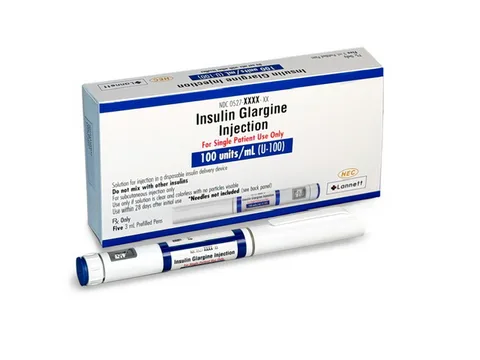
Lannett Company, Inc., Lanexa Biologics LLC and Sunshine Lake Pharma Co., Ltd. have secured U.S. Food and Drug Administration approval for LANGLARA, an interchangeable biosimilar to Lantus for insulin glargine-based diabetes treatment. The approval gives the basal insulin product a potentially important commercial pathway in the United States because pharmacists may substitute LANGLARA for Lantus without prescriber intervention where state law permits, placing the product directly inside the cost, access and formulary debate around diabetes care.
Why LANGLARA’s interchangeable insulin approval matters beyond another biosimilar launch
The FDA approval of LANGLARA is not merely another addition to the insulin glargine category. Its real significance lies in the interchangeable designation, which can reshape how the product moves through pharmacies, payer formularies and prescribing workflows. In U.S. biosimilar markets, the gap between scientific approval and commercial adoption can be wide, especially when physicians, patients, pharmacists and payers all need confidence that switching does not create avoidable clinical or administrative friction.
For LANGLARA, interchangeability gives Lannett Company, Inc. and Lanexa Biologics LLC a stronger commercial argument than a standard biosimilar launch would have offered. Pharmacy-level substitution can reduce the need for prescriber intervention, making the product more usable in real-world dispensing environments. That matters in diabetes, where basal insulin is a chronic therapy, affordability pressures are persistent, and substitution decisions often intersect with insurance coverage rather than purely clinical preference.
The limitation is that interchangeability does not automatically guarantee market share. State pharmacy laws, payer contracting, pharmacy benefit manager decisions, wholesaler access and patient out-of-pocket costs will decide whether LANGLARA becomes a meaningful alternative or simply another approved insulin product fighting for shelf space. The approval opens the door. Commercial execution decides how far that door actually swings open.
How LANGLARA changes the competitive insulin glargine market for Lannett and Lanexa
Insulin glargine is already a competitive space, with Lantus long established as the reference product and other lower-cost alternatives having entered the U.S. market. That makes LANGLARA’s approval strategically useful but not automatically disruptive. Lannett Company, Inc. and Lanexa Biologics LLC are entering a category where payer access can matter as much as clinical comparability, and where incumbent products have had years to build relationships across health plans, pharmacy chains and diabetes care channels.
LANGLARA’s interchangeable status gives Lanexa Biologics LLC a clearer access story for commercial channels. The subsidiary has been positioned as the commercial platform for Lannett Company, Inc.’s biosimilar portfolio, which suggests that the company is not treating this approval as a one-off product event. Instead, LANGLARA appears to be the entry point for a broader biologics strategy in which Lannett Company, Inc. attempts to move beyond its traditional generic drug identity into a more complex, higher-barrier market.
The challenge is that insulin biosimilars are not easy-margin products. Manufacturing scale, cold-chain discipline, payer rebates, formulary placement and contracting economics all influence whether a biosimilar can compete sustainably. Lannett Company, Inc. has framed affordability and availability as central to the product’s value proposition, but in the insulin market, lower cost must still survive the commercial realities of rebates and payer negotiations. The clever part of the strategy is that LANGLARA enters with interchangeability. The difficult part is converting that designation into actual prescription volume.
Why Sunshine Lake Pharma’s manufacturing role gives LANGLARA strategic weight
Sunshine Lake Pharma Co., Ltd.’s role as manufacturer is central to the LANGLARA story because insulin is not a simple generic tablet opportunity. Large-scale biologics production requires technical consistency, regulatory compliance, analytical comparability and supply reliability. In insulin, the manufacturing story is part of the commercial story because payers and pharmacies need confidence that supply can be maintained once formulary access is granted.
The partnership also illustrates how Chinese biopharmaceutical manufacturers are seeking deeper roles in regulated Western markets. Sunshine Lake Pharma Co., Ltd. is not merely supplying an active ingredient in the background. It is the manufacturing engine behind a U.S.-approved interchangeable insulin biosimilar, which gives the Chinese pharmaceutical group a stronger position in the global complex biologics conversation. For a company listed in Hong Kong, this approval may also support investor interest in its ability to convert manufacturing scale into international regulatory credibility.
However, the risk profile is not trivial. U.S. biologics manufacturing tied to overseas facilities can face heightened scrutiny around inspections, quality systems, geopolitical sensitivity and supply chain resilience. The FDA approval confirms that the product passed the regulatory threshold, but long-term confidence will depend on uninterrupted supply, consistent batch quality and continued compliance. For Sunshine Lake Pharma Co., Ltd., LANGLARA is both a validation point and a live test of whether its biologics infrastructure can support competitive U.S. commercialization.
What the approval reveals about biosimilar adoption barriers in U.S. diabetes care
The LANGLARA approval highlights a familiar contradiction in U.S. biosimilars. The regulatory system can approve highly similar and interchangeable products, but savings for patients depend on how the health care payment system behaves afterward. Diabetes is one of the clearest examples of this tension because insulin affordability has been a public policy and patient access issue for years, yet lower-cost alternatives do not always translate cleanly into lower out-of-pocket costs.
For clinicians, the key question is not whether insulin glargine biosimilars can work in principle. That question has already been addressed by the broader biosimilar framework and previous market entrants. The practical question is whether each new product can simplify therapy access without creating confusion at the pharmacy counter. Interchangeability helps because it supports substitution, but patients may still face plan-specific coverage rules, prior authorization requirements or changes in preferred products.
For regulators and industry observers, LANGLARA adds another data point to the evolution of insulin competition after insulins moved into the biologics framework. It shows that the interchangeable pathway remains commercially relevant, especially for companies trying to differentiate products in crowded categories. The unresolved question is whether additional interchangeable products will create genuine price pressure or whether contracting dynamics will limit visible savings for patients.
How Aurobindo Pharma’s Lannett deal adds another strategic layer to LANGLARA
The pending Aurobindo Pharma Limited acquisition context makes LANGLARA more interesting than a standalone product approval. Lannett Company, Inc. had already disclosed that Aurobindo Pharma Limited intended to acquire it, while Lanexa Biologics LLC is expected to become a stand-alone company after the transaction closes. That structure suggests that LANGLARA may sit at the intersection of two strategic tracks: Aurobindo Pharma Limited’s expansion in U.S. manufacturing and Lannett Company, Inc.’s attempt to build a focused biosimilar commercialization vehicle.
For Aurobindo Pharma Limited, the broader Lannett transaction has been viewed through the lens of U.S. manufacturing capacity, generics diversification and portfolio expansion. LANGLARA adds a biologics-adjacent layer to that narrative, even if Lanexa Biologics LLC is set to operate separately. The timing is notable because U.S. pharmaceutical supply chains are under closer policy and investor scrutiny, and companies with domestic manufacturing footprints may receive more attention as procurement and tariff risks evolve.
The uncertainty lies in execution after corporate restructuring. Biosimilar launches require continuity in leadership, contracting, quality oversight and payer strategy. If Lanexa Biologics LLC becomes a stand-alone entity, investors and industry partners will watch whether it has enough commercial muscle, capital support and management focus to compete in a difficult insulin market. A good approval can be diluted by a messy launch. That is the part everyone in pharma knows, but nobody puts on the poster.
Why investor sentiment may stay cautious despite the regulatory win
For Sunshine Lake Pharma Co., Ltd., the approval offers a positive regulatory signal, but the stock market may not immediately price it as a clean breakout catalyst. Recent Hong Kong market data showed Sunshine Lake Pharma shares trading well below the upper end of their 52-week range, suggesting that investors remain selective despite the company’s international progress. That kind of market response is not unusual in pharma, where approvals are important but investors still ask whether the product can generate visible revenue, margin expansion and repeatable global registrations.
The sentiment setup is therefore constructive but cautious. LANGLARA demonstrates that Sunshine Lake Pharma Co., Ltd. can support a U.S. interchangeable biosimilar approval, which may improve confidence in its manufacturing and regulatory capabilities. Yet the insulin market is competitive, price-sensitive and heavily mediated by payers. Until the launch timeline, pricing strategy, formulary wins and early uptake are clearer, investors may treat the approval as a credibility milestone rather than an immediate earnings reset.
For Lannett Company, Inc. and Lanexa Biologics LLC, the same logic applies. The approval strengthens the biosimilar strategy and gives Lanexa Biologics LLC a more credible reason to exist as a dedicated commercial platform. But the commercial proof will arrive only when LANGLARA moves from regulatory success to pharmacy-level substitution, payer adoption and durable supply performance. In biosimilars, approval is the opening chapter. Reimbursement is where the plot starts getting spicy.
What clinicians, payers and regulators will watch after LANGLARA enters the U.S. market
Clinicians will likely focus on substitution confidence, patient communication and continuity of glycemic control when patients move between reference insulin glargine and interchangeable alternatives. Since insulin therapy is individualized, even products deemed biosimilar and interchangeable can require careful patient education to avoid confusion around devices, dosing routines or refill expectations. The approval supports confidence at a regulatory level, but implementation still depends on pharmacy workflows and clinician comfort.
Payers will watch a different set of variables. The real commercial test will be whether LANGLARA can offer enough economic value to win formulary placement without weakening supply reliability. In a mature insulin category, payer decisions are rarely sentimental. They are driven by net cost, rebate positioning, supply security and the ability to reduce member disruption. If Lanexa Biologics LLC can align those factors, LANGLARA could become a practical access tool. If not, the product may struggle to move beyond symbolic competition.
Regulators and industry observers will also track whether additional interchangeable insulin products deepen confidence in the biosimilar pathway. The FDA approval of LANGLARA reinforces the idea that complex biologics competition is possible in diabetes, but it also keeps attention on post-approval pharmacovigilance, manufacturing consistency and substitution policy. The next phase will reveal whether the approval changes insulin access in practice or simply adds another name to a market that still depends heavily on payer mechanics.
Why LANGLARA is a stronger access story than a simple biosimilar approval
LANGLARA’s approval is strategically important because interchangeability gives it a practical route into pharmacy substitution, not just a regulatory label. That is the difference between being clinically comparable on paper and being commercially actionable at the point of dispensing. For a chronic disease category such as diabetes, where treatment persistence, affordability and refill reliability matter, that distinction can carry real market value.
The stronger long-term story may be Lanexa Biologics LLC rather than LANGLARA alone. If Lannett Company, Inc. can use Lanexa Biologics LLC to build a repeatable biosimilar commercialization model, this approval could become the first proof point in a broader platform. The company’s short-acting insulin aspart development effort adds to that possibility. Still, the market will not reward ambition forever without evidence. The next proof points are pricing, formulary access, launch timing and whether the product can become visible in prescription channels.