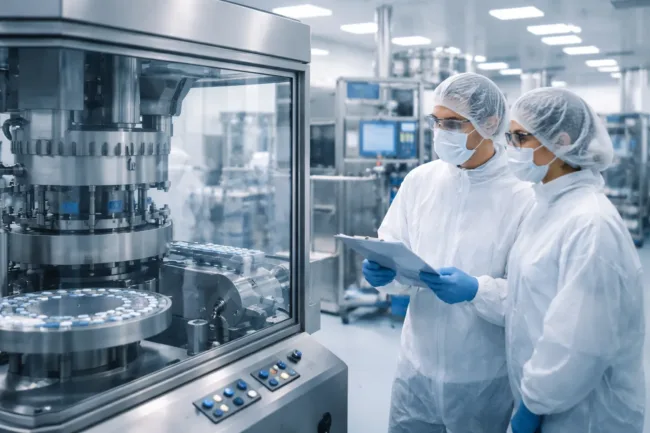
Vetter Pharma International GmbH has broken ground on a new Saarlouis production site for the commercial manufacturing of injectable medicines, advancing a major sterile fill-finish expansion in Germany. The first construction phase will create a roughly 50,000-square-metre facility for complex drug products, including pre-sterilized syringes and vials, in a market where biologics, specialty therapies, and outsourcing demand are reshaping manufacturing strategy.
Why Vetter’s Saarlouis site changes the sterile injectable manufacturing equation
The Saarlouis project matters because it is not simply another factory announcement in the contract development and manufacturing organization sector. It is a capacity signal at a time when injectable drug manufacturing has become one of the more strategically sensitive areas of pharmaceutical production. Sterile fill-finish remains technically demanding, capital intensive, and difficult to scale quickly, particularly for biologics and other complex drug products that require strict contamination control, validated processes, and high reliability across commercial supply.
For Vetter Pharma International GmbH, the move strengthens a business model built around aseptic filling, visual inspection, packaging, and lifecycle support for injectable medicines. The new site gives the German pharmaceutical service provider more room to serve global customers whose pipelines increasingly depend on injectable formats. It also gives Vetter a longer-term answer to a constraint that many established European manufacturers face: existing sites can be optimized, expanded, and modernized, but they cannot always absorb the next decade of growth without new physical infrastructure.
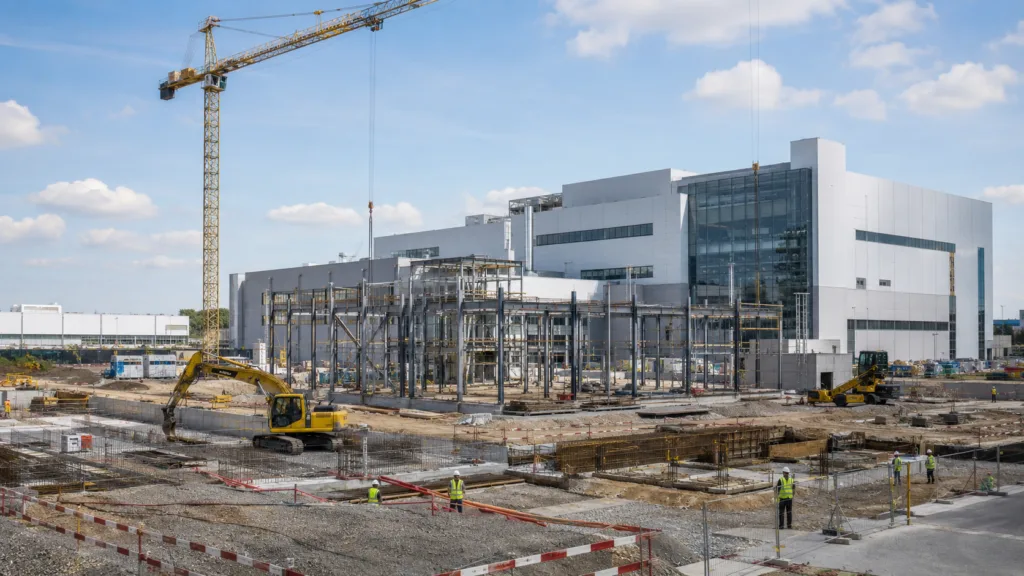
The limitation is timing. A site expected to support commercial manufacturing from 2031 will not solve immediate capacity bottlenecks for customers seeking near-term slots. The value of Saarlouis is strategic rather than tactical. It improves Vetter’s future capacity optionality, but the next several years will still test how well the pharmaceutical service provider manages demand through its existing network, technology transfers, customer prioritization, and ongoing investments in other locations.
How the project reflects the changing economics of complex injectable drugs
The deeper story is that injectable drug manufacturing is becoming more central to pharmaceutical competition. Oncology, immunology, rare disease, metabolic disease, and specialty care pipelines continue to rely heavily on injectable formats, while prefilled syringes, vials, and increasingly device-linked presentations are pushing CDMOs to invest in more flexible, validated, and scalable production systems. For sponsors, manufacturing quality is no longer a back-office issue. It can influence launch timing, regulatory confidence, supply continuity, and commercial execution.
Vetter’s Saarlouis facility is therefore aligned with a structural shift in the outsourcing market. Large and mid-sized pharmaceutical companies increasingly want partners that can support commercial-scale sterile manufacturing without requiring them to build every capability internally. That is particularly relevant for drug developers moving from clinical success to market launch, where fill-finish readiness can become a critical path item. In this context, a large European facility dedicated to commercial injectable medicines gives Vetter a stronger position in conversations with customers planning late-stage and post-approval supply strategies.
The risk is that capacity alone does not guarantee differentiation. The CDMO market is competitive, and rivals are also investing in sterile manufacturing, biologics support, and advanced delivery formats. Vetter will need to prove that Saarlouis can deliver not just volume, but reliability, regulatory execution, workforce depth, and process flexibility. Customers will look closely at how the new site fits into Vetter’s broader network, how tech transfers are managed, and whether the added scale reduces operational risk or introduces fresh complexity.
Why Germany and Saarland gain from a high-value pharma manufacturing anchor
For Germany, the Saarlouis project lands in a broader debate about industrial resilience. Pharmaceutical manufacturing, especially sterile injectable production, is increasingly viewed through the lens of supply security, skilled employment, and regional industrial policy. A large commercial manufacturing site in Saarland gives the region a high-value life sciences anchor at a time when many European industrial regions are trying to rebalance away from legacy manufacturing models and attract advanced production platforms.
The location is also symbolically important. Saarlouis has industrial depth, but the shift toward pharmaceutical services represents a different kind of long-cycle investment. Instead of short-term production relocation, the project involves regulatory-grade infrastructure, specialized workforce development, and a customer base tied to global healthcare demand. If executed well, it could help Saarland position itself as more than a traditional industrial hub, adding a stronger life sciences manufacturing identity to its economic base.
However, regional transformation is never automatic. A sterile injectable facility depends on qualified operators, engineers, quality professionals, laboratory staff, maintenance specialists, and regulatory talent. Creating jobs is one part of the equation; building a deep and durable talent pipeline is another. The long ramp to 2031 gives Vetter and regional stakeholders time to develop that workforce, but it also creates execution risk if recruitment, training, housing, infrastructure, or local supplier capacity lag behind the construction timetable.
What this reveals about Vetter’s global expansion strategy in injectable medicines
The Saarlouis groundbreaking should also be read alongside Vetter’s wider global footprint strategy. The pharmaceutical service provider is not expanding in Germany in isolation. It has also been investing in the United States, reinforcing a model that balances European manufacturing depth with international customer access. For injectable drug sponsors, geographic diversification matters because supply chains must withstand regulatory inspections, transport constraints, geopolitical disruptions, and demand fluctuations.
A stronger German base may help Vetter offer customers greater long-term continuity for commercial injectable programs. The benefit is not only extra square metres of production space. It is the ability to place products across a network, align clinical and commercial manufacturing pathways, and support lifecycle changes after approval. For biologics and high-value specialty medicines, that network effect can become more important than headline capacity numbers.
Still, global expansion raises its own management challenge. The more geographically distributed a CDMO becomes, the more it must maintain consistent quality systems, harmonized operating standards, and disciplined capital allocation. Customers may welcome additional capacity, but they will also examine whether rapid expansion stretches management attention or creates uneven maturity across sites. Vetter’s reputation will depend on how seamlessly Saarlouis integrates into its commercial manufacturing platform rather than how impressive the groundbreaking looks today.
Why the 2031 timeline matters for pharma customers planning future launches
The planned timeline places Saarlouis in the next wave of pharmaceutical manufacturing strategy rather than the current cycle. For drug developers with assets entering late-stage trials in the second half of the decade, the facility could become relevant when they are planning approval, launch, and post-launch scaling. That makes Saarlouis potentially important for customers making manufacturing decisions years before market entry, especially where injectable presentations require early process planning and regulatory alignment.
This is where the project could become commercially meaningful for Vetter. Pharma sponsors often need to secure reliable manufacturing partnerships well before regulatory approval. Late changes in fill-finish strategy can create comparability questions, delay validation work, and complicate launch readiness. A future site with defined syringe and vial capabilities gives Vetter more room to support customers whose products may move from clinical supply to commercial production over a multi-year horizon.
The unresolved question is how much demand will shift by 2031. Drug formats, device preferences, regulatory expectations, and biologics pipelines could evolve materially before the site begins commercial manufacturing. Prefilled syringes and vials are central today, but future demand may also involve more complex combinations of devices, cartridges, autoinjectors, dual-chamber systems, or alternative delivery models. Vetter will need to ensure the Saarlouis build is flexible enough to remain relevant in a market where product presentation can change quickly.
Can Vetter convert construction scale into regulatory and customer confidence?
For clinicians and patients, the direct impact of a CDMO construction project is not immediate. The more relevant healthcare implication is whether added sterile manufacturing capacity can support more reliable access to approved injectable medicines in the future. Manufacturing delays, quality issues, and constrained fill-finish slots can affect product availability, particularly for complex therapies where few qualified sites can handle commercial production.
For regulators, a new sterile manufacturing site will eventually need to demonstrate robust quality systems, validated processes, contamination control, documentation discipline, and inspection readiness. That is where the real test begins. In sterile manufacturing, capital expenditure creates the shell, but regulatory credibility is earned through systems, people, data integrity, and repeated operational performance. The Saarlouis site may strengthen Vetter’s long-term market position, but only if it moves from construction milestone to validated, inspection-ready manufacturing asset without avoidable delays.
Industry observers are likely to watch three issues most closely: whether construction and qualification stay on schedule, whether Vetter can recruit and train enough specialized staff, and whether customers commit meaningful commercial programs to the site before it becomes operational. The groundbreaking is therefore important, but it is only the opening act. The real value will be measured later, when Saarlouis begins converting infrastructure into dependable injectable drug supply.