Eli Lilly and Company has committed an additional $4.5 billion across two Indiana manufacturing sites, including Lilly Lebanon Advanced Therapies and Lilly Lebanon API, as the U.S. pharmaceutical major expands capacity for genetic medicines, active pharmaceutical ingredients and high-demand metabolic therapies. The investment comes as Eli Lilly and Company scales production for obesity, diabetes and pipeline assets, including Foundayo and retatrutide, while strengthening domestic manufacturing at a time when supply reliability has become a core commercial and regulatory issue for the sector.
Why Eli Lilly’s Indiana investment changes the manufacturing equation for obesity and diabetes medicines
The most important part of Eli Lilly and Company’s Indiana move is not simply the size of the capital commitment. The bigger signal is that manufacturing has moved from the back office of pharma strategy to the center of competitive advantage. For years, drugmakers could treat production scale as a downstream execution problem after clinical and regulatory success. The GLP-1 market has made that model look dangerously outdated. When demand for obesity and diabetes medicines expands faster than fill-finish networks, active pharmaceutical ingredient capacity and device-linked supply chains can respond, manufacturing becomes a revenue governor.
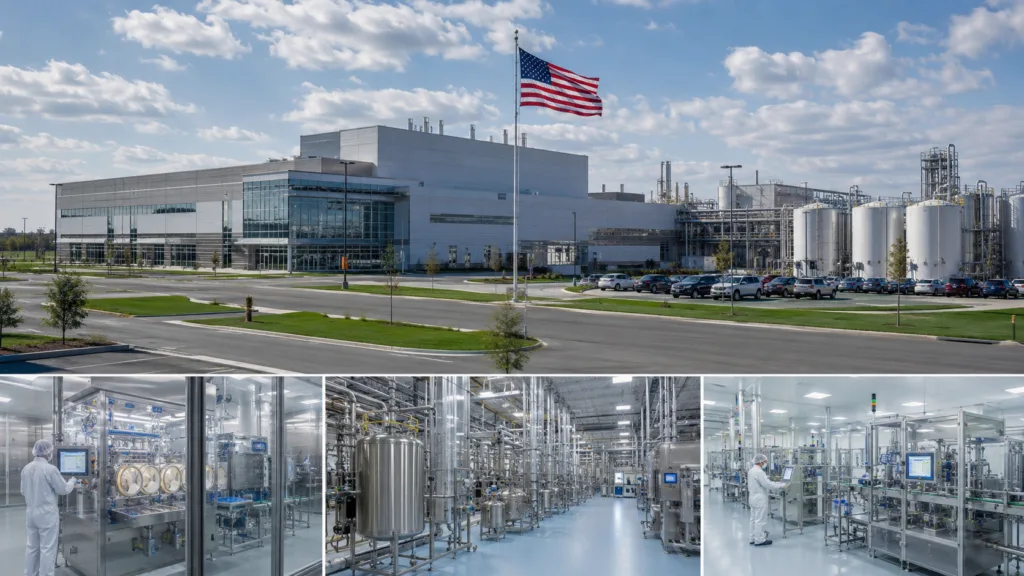
That matters because Eli Lilly and Company is no longer investing only to support today’s marketed portfolio. Its Indiana expansion is also an attempt to build optionality across several product classes that may define its next growth cycle. Foundayo and retatrutide bring obvious commercial urgency because oral and next-generation obesity medicines could expand the treated population beyond patients willing or able to use injectable therapies. However, that opportunity creates a sharper capacity challenge. Oral obesity drugs may improve convenience and broaden uptake, but broader uptake can also create a larger manufacturing burden if demand becomes less constrained by delivery format.
The unresolved question is whether capital intensity can stay ahead of market intensity. Eli Lilly and Company has already committed more than $21 billion to Indiana manufacturing since 2020 and more than $50 billion to U.S. capital expansion over the same period, according to the latest company disclosure and Reuters reporting. That is a striking number even for a company with one of the strongest growth profiles in global pharma. It also raises a harder investor question. If obesity demand remains explosive, the market may reward scale. If pricing pressure, payer restrictions or safety concerns slow adoption, the industry may eventually scrutinize whether the sector is building too much specialized capacity too quickly.
How domestic API capacity could become a strategic moat for Eli Lilly and Company
The Lilly Lebanon API site is central to the strategic logic of this investment because active pharmaceutical ingredient production is one of the least forgiving bottlenecks in drug manufacturing. Finished product capacity can sometimes be supplemented through contract manufacturing, but complex API scale-up often requires process depth, technical transfer discipline and long validation timelines. By investing in one of its future API sites in Indiana, Eli Lilly and Company is effectively trying to control more of the supply chain where delays can be most expensive.
This is particularly relevant for high-volume metabolic medicines, where commercial success depends on consistent supply across large patient populations. In obesity and diabetes, shortages do not merely create missed quarterly sales. They can weaken prescriber confidence, complicate payer relationships and open space for competitors, compounders or alternative therapeutic approaches. Reuters reported that the investment supports production tied to Foundayo and retatrutide, which places the expansion directly inside one of the most commercially watched areas in pharma.
The risk is that API manufacturing is not a plug-and-play solution. New process designs and technologies can improve efficiency, but they also bring execution risk, especially when processes have limited commercial precedent. The more advanced the manufacturing architecture becomes, the more heavily the investment depends on workforce capability, quality systems, validation discipline and regulatory inspection outcomes. For Eli Lilly and Company, the Indiana buildout strengthens control. It also concentrates greater operational expectations inside a domestic manufacturing network that must perform at global commercial scale.
Why the genetic medicine facility gives Eli Lilly a second manufacturing growth track
Lilly Lebanon Advanced Therapies adds a different layer to the story because it opens as the first dedicated genetic medicine manufacturing facility for Eli Lilly and Company. This matters because genetic medicines require a manufacturing mindset that is very different from conventional small-molecule or peptide scale-up. Clinical promise in genetic medicine can be undermined by complex production workflows, batch variability, high cost of goods and limited commercial manufacturing experience. A dedicated facility gives Eli Lilly and Company a stronger platform to support both clinical and commercial production.
The confirmed development is therefore not just a capacity addition. It is a signal that Eli Lilly and Company wants internal manufacturing capability for modalities that may become strategically important even if they do not yet match the revenue scale of GLP-1 therapies. In the current industry cycle, many large pharmaceutical companies are trying to balance near-term cash engines with longer-term modality bets. Obesity medicines can fund expansion. Genetic medicines may define future differentiation if scientific, regulatory and reimbursement barriers become more manageable.
The limitation is that genetic medicine manufacturing does not automatically translate into commercial success. Many programs in the field face uncertainty around durability, safety monitoring, patient identification and payer acceptance. A facility can reduce dependence on external suppliers and improve development control, but it does not remove clinical risk. Industry observers are likely to watch whether Eli Lilly and Company can use the site to compress development timelines, improve process reproducibility and support programs that can justify the infrastructure behind them.
What this reveals about the new politics of U.S. pharmaceutical manufacturing
The Indiana investment also lands in a politically sensitive period for the pharmaceutical industry. Reuters linked the broader U.S. manufacturing push to trade policy concerns, including potential tariffs on branded drugs made abroad. That does not mean Eli Lilly and Company’s investment is only a tariff hedge. The commercial logic around obesity, diabetes and genetic medicines is strong on its own. However, domestic manufacturing now carries policy value as well as operational value.
For regulators and policymakers, large domestic manufacturing commitments can support arguments around supply security, skilled employment and reduced dependence on overseas production. For pharma executives, the same investments can create a strategic buffer against trade friction, pandemic-style disruption and geopolitical risk. This dual logic is why domestic manufacturing capacity is increasingly framed as both industrial policy and shareholder strategy.
The unresolved question is whether political incentives and commercial incentives remain aligned. Domestic facilities can reduce exposure to certain supply risks, but they may also come with higher construction costs, workforce constraints and long ramp-up periods. If U.S. policy continues to reward domestic production, Eli Lilly and Company’s early scale could look prescient. If policy pressure changes or pricing reform tightens margins, the return profile may depend more heavily on utilization rates and manufacturing efficiency.
How investors may read Eli Lilly’s manufacturing spend after the latest stock move
For public market investors, Eli Lilly and Company’s latest manufacturing pledge reinforces the central bull case around capacity-led growth. Eli Lilly and Company shares recently traded at $948.45, giving the drugmaker a market capitalization of about $849.7 billion, based on the latest available market data. The stock was down slightly in the latest session, but the valuation still reflects high expectations for obesity, diabetes and broader pipeline execution.
The investor sentiment layer is important because capital expenditure can be interpreted in two very different ways. In a company struggling for growth, a $4.5 billion manufacturing commitment could look defensive or burdensome. In Eli Lilly and Company’s case, the market is more likely to view the spend as an attempt to remove a constraint on demand. That is why the Indiana expansion may be read less as cost inflation and more as infrastructure for future revenue conversion.
However, the bar is high. A premium valuation means investors are not merely asking whether Eli Lilly and Company can build facilities. They are asking whether those facilities can support profitable supply expansion, defend market share against Novo Nordisk and other competitors, and accommodate future regulatory scrutiny around pricing, access and safety. Manufacturing scale is a moat only if the products moving through that capacity continue to show clinical relevance, payer acceptance and durable demand.
What clinicians, regulators and industry observers are likely to watch next
Clinicians are likely to watch whether expanded capacity improves real-world availability of obesity and diabetes medicines. Supply constraints can influence prescribing behavior, especially when physicians are unsure whether patients can reliably start or remain on therapy. A more resilient manufacturing network could reduce friction in treatment adoption, but it will not resolve broader questions around patient selection, long-term adherence, tolerability or payer coverage.
Regulators will watch quality execution. Large and technically advanced manufacturing networks attract scrutiny because scale magnifies the consequences of deviation. For genetic medicines, that scrutiny can be even sharper because product characterization and consistency are central to confidence in the modality. Eli Lilly and Company’s Indiana facilities therefore carry a dual burden. They must expand supply while demonstrating that innovation in manufacturing does not outrun quality control.
Industry observers will also watch whether Eli Lilly and Company’s domestic manufacturing strategy triggers further escalation among rivals. If GLP-1 demand remains strong, manufacturing capacity could become one of the clearest dividing lines between leaders and laggards. Companies with constrained supply may lose commercial momentum even with strong clinical profiles. Companies with better control over API, advanced therapy production and commercial scale-up may have more flexibility on launches, geography and payer negotiations.
Why Eli Lilly’s Indiana buildout is more than a supply chain story
The strategic takeaway is that Eli Lilly and Company is treating manufacturing as a platform, not a utility. The Indiana investment supports immediate needs in high-demand metabolic therapies, but it also creates infrastructure for advanced modalities and domestic supply resilience. That combination makes the $4.5 billion commitment a revealing snapshot of where large-cap pharma is heading.
The opportunity is clear. If Eli Lilly and Company executes well, Indiana could become a critical base for converting scientific and commercial momentum into reliable product availability. The risk is just as clear. Manufacturing scale cannot compensate for clinical setbacks, payer resistance, pricing pressure or quality failures. In the next phase of the obesity and advanced therapy race, the winners will not be determined only by trial data or brand strength. They will also be determined by who can manufacture complex medicines at scale, repeatedly, reliably and without giving regulators, clinicians or investors a reason to pause.