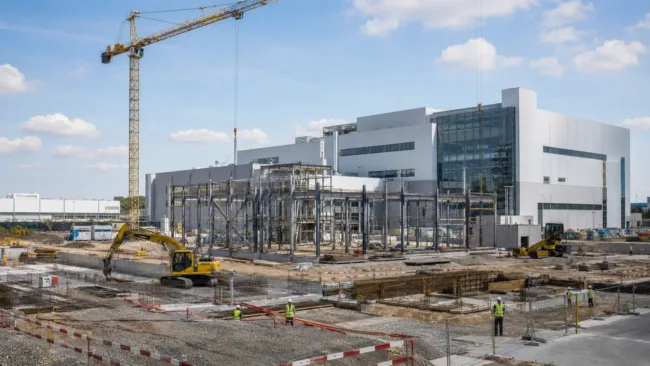
Forma Life Sciences has launched as an independent United States-based contract development and manufacturing organization focused on oral solid dosage formulation development, clinical manufacturing, and commercial drug product manufacturing. The Irvine, California-based company emerged after BioSelective Capital Investments acquired the U.S. drug product development and manufacturing operations of BioDuro, including two established GMP facilities supporting clinical and commercial oral solid dosage programs.
The emergence of Forma Life Sciences highlights a broader shift underway in pharmaceutical manufacturing strategy. Over the past two decades, drug production steadily migrated toward lower-cost regions, particularly across Asia, where contract manufacturing infrastructure expanded rapidly. That model delivered significant efficiency advantages, but it also created structural dependencies that became increasingly visible during global supply disruptions. Pharmaceutical manufacturers and policymakers have since placed greater emphasis on domestic production capabilities that can support both clinical development and commercial drug supply.
Industry observers note that contract development and manufacturing organizations operating within the United States may benefit from this evolving policy and commercial environment. Governments have introduced various initiatives aimed at strengthening pharmaceutical supply chains, while drug developers have become more cautious about overreliance on geographically distant manufacturing partners. Within this context, the launch of a U.S.-based CDMO platform such as Forma Life Sciences reflects both market demand and investor confidence in reshoring trends.
What the emergence of new U.S.-based CDMOs reveals about pharmaceutical supply chain restructuring
The pharmaceutical industry increasingly views manufacturing resilience as a strategic priority rather than merely an operational consideration. Drug supply interruptions during recent global disruptions highlighted the vulnerability of heavily concentrated manufacturing networks. These concerns have prompted pharmaceutical companies to reconsider how manufacturing capacity is geographically distributed.
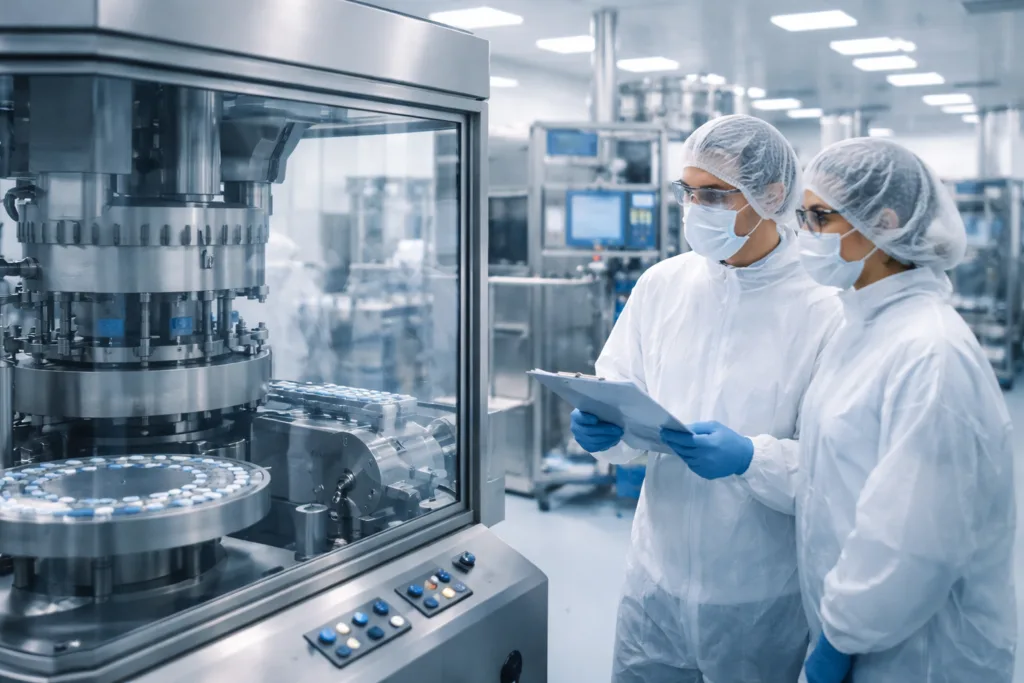
Contract manufacturing partners play a critical role in this rebalancing process. Many biotechnology companies lack internal production infrastructure and depend entirely on external manufacturing partners to advance drug candidates through clinical development and into commercial supply. As a result, reliable CDMOs have become essential intermediaries connecting scientific innovation with scalable production.
Observers tracking the sector suggest that smaller domestic CDMOs can occupy an important niche within the broader manufacturing ecosystem. While large multinational contract manufacturers operate extensive global networks, regional platforms often provide flexibility and closer collaboration with emerging biotechnology clients.
Why oral solid dosage manufacturing continues to dominate global pharmaceutical production
Despite the rapid growth of biologics and advanced therapies, oral small-molecule drugs remain the most widely used form of pharmaceutical treatment worldwide. Tablets and capsules continue to represent a large share of prescription medicines used to manage chronic diseases such as hypertension, diabetes, cardiovascular disorders, and psychiatric conditions.
Manufacturing infrastructure dedicated to oral solid dosage therefore retains considerable strategic value. Pharmaceutical pipelines continue to produce new small-molecule therapies that require formulation expertise and scalable manufacturing capacity. The ability to convert early-stage compounds into stable, effective oral medicines often determines whether a drug candidate can advance successfully through clinical trials.
Forma Life Sciences focuses on this long-established but technically demanding manufacturing segment. The Irvine facilities operated by the company include more than 100,000 square feet of production space and 27 GMP manufacturing suites capable of supporting development programs across multiple clinical phases as well as commercial-scale manufacturing.
How integrated formulation and manufacturing platforms can accelerate drug development timelines
One feature that differentiates many modern CDMO platforms is the integration of formulation development and manufacturing capabilities. Historically, drug developers often relied on separate partners for formulation work, clinical manufacturing, and commercial-scale production. Each transition between providers introduced technical transfer risks and regulatory complexity.
Integrated platforms seek to streamline that process by maintaining continuity from early development through commercial launch. Industry analysts note that technical transfer between manufacturing facilities can introduce delays and variability that complicate regulatory submissions. When formulation scientists and manufacturing engineers operate within the same organization, communication and process optimization may become more efficient.
For emerging biotechnology companies operating with limited internal manufacturing expertise, integrated CDMO partnerships can be particularly valuable. These organizations frequently depend on external partners not only for production but also for formulation strategy, process optimization, and regulatory documentation support.
Why formulation technologies such as amorphous solid dispersions are becoming increasingly important
The pharmaceutical industry has seen a growing proportion of drug candidates with poor water solubility. These compounds often exhibit promising biological activity but present significant formulation challenges that can limit absorption and therapeutic effectiveness.
Technologies such as spray-dried dispersion and amorphous solid dispersion systems have emerged as key tools for addressing these limitations. By altering the physical state of the drug compound and improving its dissolution characteristics, these approaches can enhance bioavailability and enable oral delivery of molecules that might otherwise require alternative administration routes.
Forma Life Sciences has emphasized expertise in spray-dried dispersion systems, fluid bed granulation, and modified-release coating technologies. These capabilities are commonly used to develop controlled-release or delayed-release formulations that improve dosing convenience and therapeutic consistency.
Observers tracking pharmaceutical formulation trends note that manufacturing partners capable of solving solubility and stability challenges often gain strategic relevance within the drug development ecosystem. As pharmaceutical pipelines become increasingly complex, formulation expertise may prove as valuable as manufacturing scale.
What competitive pressures in the CDMO industry mean for emerging platforms
The global contract development and manufacturing sector has experienced substantial consolidation and expansion over the past decade. Large CDMO organizations have built extensive service portfolios that span small-molecule production, biologics manufacturing, and advanced therapy support.
Within such a competitive landscape, newly launched CDMO platforms must establish clear operational strengths. Reliability, regulatory compliance, and technical expertise often determine whether pharmaceutical clients entrust manufacturing programs to a given partner.
Industry analysts frequently emphasize that CDMO success is less dependent on facility size than on consistent execution. Pharmaceutical companies typically prioritize manufacturing partners with strong regulatory track records, robust quality systems, and the ability to maintain uninterrupted production throughout clinical development and commercial supply.
What regulatory performance and operational discipline will determine for Forma Life Sciences
Regulatory oversight remains one of the most significant operational challenges facing pharmaceutical manufacturers. Facilities producing drug products must maintain strict compliance with Good Manufacturing Practice standards enforced by agencies such as the United States Food and Drug Administration.
Inspection outcomes, process validation, and quality assurance systems therefore play central roles in the long-term viability of any manufacturing platform. Even minor deviations can trigger regulatory observations that require extensive remediation and may delay production schedules.
Industry observers often note that organizations with established regulatory histories possess valuable institutional knowledge. The Irvine facilities now operated by Forma Life Sciences previously supported clinical and commercial manufacturing programs, which may provide a foundation of regulatory experience that supports future client engagements.
What industry observers will watch as Forma Life Sciences establishes its position in the CDMO market
The launch of Forma Life Sciences illustrates the continuing evolution of pharmaceutical manufacturing infrastructure. Private investment groups increasingly view manufacturing platforms as strategic assets capable of generating stable revenue through long-term development partnerships.
Observers tracking the company’s progress will likely focus on several indicators. These include the pace at which new client programs are secured, the company’s ability to support complex formulation challenges, and the conversion of early-stage clinical projects into commercial manufacturing agreements.
For pharmaceutical developers and regulators alike, the emergence of additional domestic manufacturing capacity represents a meaningful development. As the industry seeks to balance global efficiency with supply chain resilience, specialized CDMO platforms such as Forma Life Sciences may play an increasingly important role in ensuring that drug development pipelines translate into reliable commercial supply.