Harbour BioMed has signed a global strategic collaboration and license agreement with Bristol Myers Squibb to discover and develop next-generation multispecific antibodies. The deal could be worth over $1.1 billion across upfront payments, milestones, and royalties. It also signals growing interest in platforms capable of generating novel immunotherapies for complex diseases.
The announcement is not just another platform licensing headline. It points to a broader structural shift in how large pharmaceutical companies are sourcing innovation—prioritizing modular, engineering-ready antibody formats with differentiated cell engagement properties. In this context, Harbour BioMed’s heavy-chain-only antibody and immune cell engager platforms offer something competitors are watching closely.
Why Harbour BioMed’s platform is gaining attention from large pharmaceutical partners
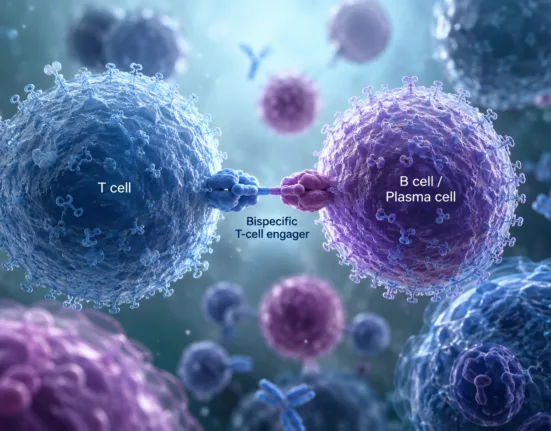
This collaboration puts Harbour BioMed on the map as a serious contender in the multispecific antibody race. Its proprietary technology stack includes Harbour Mice, which generates fully human antibodies in both H2L2 and HCAb formats, and HBICE, which builds on HCAbs to create bispecific immune cell engagers. This dual capability gives the company an edge in designing smaller, more tissue-penetrant molecules that can trigger targeted immune responses.
While many firms claim to have versatile antibody discovery platforms, Harbour BioMed’s ability to deliver high-affinity, human-compatible binders using a single B cell cloning approach is especially attractive to partners like Bristol Myers Squibb. The latter has historically sought innovation from external sources, even while maintaining a robust internal pipeline in immuno-oncology and autoimmune disease.
How this partnership compares to other multispecific antibody licensing deals
Harbour BioMed is entering a competitive field dominated by companies such as Amgen, Roche, Genmab, and Regeneron—each with its own platform approach to multispecifics. Amgen’s BiTE, Genmab’s DuoBody, and Regeneron’s VelociBi have all produced clinical or commercial-stage assets. Harbour BioMed’s HCAb format stands out by offering camelid-like structure with fully human compatibility, sidestepping immunogenicity concerns that can hinder bispecific designs.
The Bristol Myers Squibb deal is structured around optionality and performance. The $90 million in potential upfront payments and over $1 billion in downstream milestones and royalties suggest that multiple programs are in scope, but final progression depends on proof of concept and clinical traction. This aligns with how other large pharmaceutical firms are approaching platform partnerships—keeping cash outlay low until early data validates the risk.
What regulatory and clinical development risks still pose a barrier to progress
While multispecific antibodies hold tremendous potential, they also present some of the thorniest challenges in biologics development. There is no dedicated regulatory pathway tailored to multispecific constructs, meaning sponsors must often negotiate case-by-case standards with agencies such as the U.S. Food and Drug Administration and the European Medicines Agency.
For Harbour BioMed, the ability to conduct early-phase clinical trials in China may accelerate initial readouts, but bridging data across jurisdictions can be difficult. Regulators are still cautious about extrapolating efficacy or safety findings from non-Western populations unless trial design and biomarker strategy are globally aligned.
In addition, multispecifics are structurally more complex than standard monoclonal antibodies. Each additional target adds potential for instability, aggregation, or suboptimal pharmacokinetics. Manufacturing consistency and dosing precision remain critical challenges—and ones that regulators are unlikely to overlook.
Why clinical design and biomarker strategy will determine the value of this alliance
The success of this partnership will not be judged by technology alone. Industry observers note that many multispecific platforms have produced interesting molecules that ultimately failed in clinic due to poorly designed studies or lack of validated biomarkers. In oncology and immunology, functional redundancy and pathway crosstalk often dilute the benefit of multi-target engagement unless patients are tightly selected.
Harbour BioMed’s challenge will be to pair its antibody formats with the right mechanistic hypotheses and clinical endpoints. Bristol Myers Squibb’s involvement may help de-risk some of that process, but operational execution will be critical. Without head-to-head comparisons, clear superiority signals, or companion diagnostics, even well-engineered molecules can get stuck in development.
What this deal suggests about global pharma appetite for platform technologies
There is a growing consensus that large pharmaceutical firms are shifting away from single-asset acquisitions and toward platform licensing models that offer more shots on goal. Harbour BioMed’s deal fits neatly into this pattern, providing Bristol Myers Squibb with the ability to selectively advance programs based on emerging data while maintaining long-term control over commercialization.
This appetite for modularity is driven by both science and economics. Multispecific antibodies offer the possibility of combining mechanisms—such as checkpoint blockade and T cell redirection—without requiring combination therapy. This has implications not only for efficacy but also for safety, cost, and patient compliance.
By structuring deals around platforms rather than molecules, companies like Bristol Myers Squibb hedge against scientific uncertainty while positioning themselves to capture high upside if a single format delivers multiple pipeline candidates.
What could still derail Harbour BioMed’s push toward global visibility
Despite the platform validation implied by this deal, Harbour BioMed remains a pre-commercial company operating in a field where early excitement does not always translate to long-term success. The multispecific antibody space is notorious for its high attrition rate, with many early-stage candidates failing to meet safety or efficacy thresholds during translational development. Harbour BioMed’s long-term viability will depend not just on the number of licensing deals it can secure, but on whether any of its internal or partnered programs achieve clinical proof-of-concept, enter pivotal trials, and ultimately reach commercial markets.
The company’s ability to scale will also be tested by geographic and regulatory complexity. While China offers fast-track regulatory pathways and cost-efficient trial execution, data originating from Chinese patient populations may not be readily accepted by the U.S. Food and Drug Administration or the European Medicines Agency unless accompanied by bridging studies or globally harmonized protocols. This creates an additional development burden that can delay multinational filings and increase trial costs.
On the manufacturing side, Harbour BioMed must also demonstrate that it can produce complex antibody constructs, particularly immune cell engagers derived from its HBICE platform, under global good manufacturing practice standards. These formats pose particular challenges in stability, formulation, and batch-to-batch reproducibility. Many small-to-mid-sized biopharmaceutical companies with similar platforms have faced delays or bottlenecks during technology transfer or scale-up for clinical supply.
Finally, as more competitors crowd the multispecific antibody landscape, Harbour BioMed must contend with market noise and investor skepticism. Without clear differentiation through clinical outcomes, functional superiority, or regulatory breakthroughs, the company risks being perceived as just another platform story. For Harbour BioMed to move beyond that narrative, it will need to demonstrate late-stage readiness, multi-jurisdictional regulatory traction, and robust clinical execution across both internal and partnered programs.