Johnson & Johnson has commercially launched the Dual Energy THERMOCOOL SMARTTOUCH SF Platform in Europe, combining an irrigated contact-force sensing catheter with the TRUPULSE Generator to deliver pulsed field and radiofrequency energy during the same cardiac ablation procedure. The European rollout moves the CE-marked platform into broader clinical use as hospitals reassess atrial fibrillation workflows amid rapidly expanding competition in pulsed field ablation.
Why combining pulsed field and radiofrequency energy changes the European ablation workflow
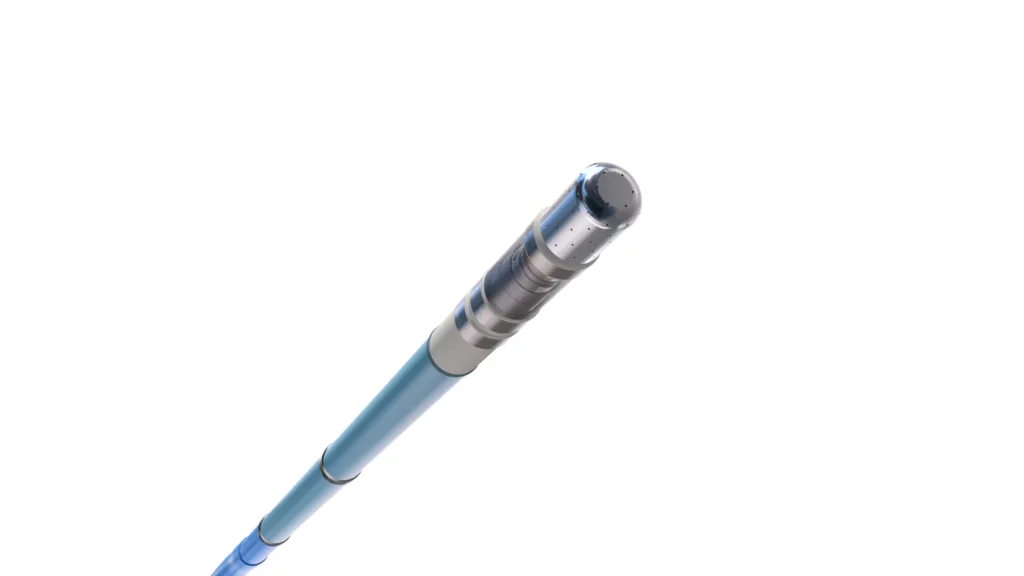
The most important feature of the platform is not simply its use of pulsed field ablation. European electrophysiology laboratories already have access to several PFA systems, and the technology is increasingly moving from an emerging alternative to an established part of atrial fibrillation treatment. Johnson & Johnson is instead offering physicians the ability to select pulsed field or radiofrequency energy from the same focal catheter without replacing the therapeutic device during the procedure.
That flexibility addresses an unresolved question within the PFA transition. Pulsed field energy is attractive because of its relative selectivity for myocardial tissue, particularly when ablating near structures that may be vulnerable to thermal injury. Radiofrequency energy, however, remains familiar, highly controllable and supported by extensive clinical experience when physicians need deeper, targeted or highly localised lesions.
The Dual Energy THERMOCOOL SMARTTOUCH SF Platform attempts to position these energy types as complementary rather than competing technologies. In the SmartfIRE workflow, pulsed field energy was recommended for posterior and inferior pulmonary vein segments, while radiofrequency energy was generally recommended for anterior, ridge and carina regions. This creates a procedural model in which energy selection can reflect anatomy, tissue characteristics and lesion objectives rather than forcing every target into a single energy strategy.
The trade-off is greater decision complexity. A platform that offers two energy types also requires clinicians to determine when each should be used, how lesion indexes should be interpreted and whether switching improves outcomes enough to justify the additional workflow choices. Flexibility becomes clinically valuable only when protocols remain reproducible across physicians and centres.
How SmartfIRE supports clinical adoption while leaving comparative evidence gaps unresolved
The strongest evidence supporting the launch comes from the prospective, multicentre SmartfIRE study in patients with symptomatic, drug-refractory paroxysmal atrial fibrillation. The study enrolled 149 patients, with 140 included in the safety population and 136 treated under the per-protocol effectiveness analysis.
Freedom from documented symptomatic and asymptomatic atrial arrhythmia at 12 months was 71.5 percent under the study’s relatively intensive monitoring strategy. The rate increased to 84.2 percent when analysis was limited to standard-of-care monitoring, while freedom from symptomatic recurrence reached 86.4 percent. Single-procedure success was 81 percent.
These outcomes broadly support the platform’s clinical viability, but they do not establish superiority over PFA-only or radiofrequency systems. SmartfIRE was a single-arm study without a randomised comparator, and the 12-month outcomes were secondary or additional endpoints rather than the original primary effectiveness measure. The population was also limited to paroxysmal atrial fibrillation, leaving persistent atrial fibrillation, repeat procedures and more complex lesion sets insufficiently characterised.
The most commercially attractive SmartfIRE figure may also be the one requiring the greatest caution. Patients with high adherence to recommended inter-tag distance and pulsed field or radiofrequency index targets achieved 86.9 percent freedom from recurrence, compared with 64 percent among the remaining patients. However, this was a post hoc analysis involving 47 highly adherent patients, and the adherence thresholds were not prespecified for confirmatory comparison.
The result suggests that index-guided execution may materially affect performance, which strengthens the rationale for integrating contact-force feedback, electroanatomical mapping and lesion guidance. It also introduces a potential adoption challenge. Outcomes achieved under carefully followed protocols may not be reproduced immediately in laboratories with varying experience, procedural volumes and training resources.
Why established CARTO laboratories may adopt faster without eliminating implementation costs
Johnson & Johnson’s clearest commercial advantage is continuity with an electrophysiology ecosystem already used by many hospitals. The Dual Energy THERMOCOOL SMARTTOUCH SF Catheter is derived from the established THERMOCOOL SMARTTOUCH SF radiofrequency platform and integrates with the CARTO 3 mapping system, contact-force measurements, lesion tagging, intracardiac ultrasound and high-density mapping tools.
For existing CARTO laboratories, this could lower some barriers associated with adopting a new energy modality. Physicians can retain a familiar focal, point-by-point technique rather than moving entirely to a different catheter shape or mapping environment. Familiarity may shorten parts of the learning curve and allow hospitals to introduce PFA while preserving radiofrequency capabilities within the same procedural ecosystem.
However, familiarity should not be confused with a cost-free conversion. Hospitals still require compatible TRUPULSE Generator infrastructure, software configuration, catheter inventory, technical support and clinical training. Procurement teams will also assess whether the platform reduces catheter exchanges, procedure time or repeat ablations enough to offset capital and disposable costs.
The timing of the commercial rollout is relevant. European CE marking for the dual-energy catheter was announced in January 2025, while broader platform availability arrived in June 2026. The gap illustrates how regulatory authorisation does not automatically create immediate commercial scale. Generator compatibility, manufacturing readiness, software integration, training and staged market deployment can be as important as the approval itself.
Where dual-energy ablation could add flexibility beyond a pulsed field only strategy
A focal dual-energy platform may be particularly useful when one procedure contains targets with different anatomical and biophysical requirements. PFA may be preferred near selected vulnerable structures because it avoids relying primarily on heat, while radiofrequency energy may remain useful for precise focal applications or areas where physicians require established lesion-depth controls.
This could become more relevant as electrophysiology moves beyond straightforward pulmonary vein isolation. Persistent atrial fibrillation, atrial flutter, repeat ablations and substrate-based procedures can require lesion sets outside the pulmonary veins. A catheter that maps, senses contact force and delivers either energy type may offer procedural flexibility that single-purpose systems cannot provide as easily.
The present evidence does not yet prove that broader potential. SmartfIRE primarily evaluated pulmonary vein isolation in paroxysmal atrial fibrillation, and the study was not designed to validate every possible lesion set or arrhythmia. Claims of versatility across anatomies and procedural strategies therefore extend beyond the strongest clinical dataset currently available.
Dual-energy capability also does not remove the established risks of catheter ablation. The SmartfIRE safety analysis recorded five serious device-related or procedure-related adverse events among 140 patients, including two cardiac tamponades, two cases of pulmonary vein stenosis and one anaphylactic shock. The pulmonary vein stenosis events were associated with radiofrequency lesion characteristics rather than pulsed field delivery, reinforcing the need for disciplined energy selection and lesion placement.
How competition with Boston Scientific and Medtronic will shape commercial uptake
Johnson & Johnson is entering a European market in which PFA differentiation increasingly depends on workflow, mapping integration and clinical evidence rather than access to the energy modality alone. Boston Scientific has built significant momentum around the FARAPULSE platform, while Medtronic offers the Affera Mapping and Ablation System with the dual-energy Sphere-9 catheter.
The existence of Medtronic’s Sphere-9 platform means Johnson & Johnson cannot define the new product merely as Europe’s first catheter capable of combining radiofrequency and pulsed field energy. Its more specific differentiation lies in the familiar THERMOCOOL focal catheter design, CARTO integration and the use of pulsed field and radiofrequency indexes intended to guide lesion delivery.
Johnson & Johnson is also pursuing a portfolio strategy rather than relying on one PFA architecture. The VARIPULSE Pro Platform provides a variable-loop PFA option designed around pulmonary vein isolation and procedural efficiency, while the Dual Energy THERMOCOOL SMARTTOUCH SF Platform offers focal, point-by-point energy selection. This allows the medical device manufacturer to address laboratories that prefer different procedural philosophies.
The risk is portfolio overlap. Hospitals may question whether they need both platforms, particularly when capital budgets, training capacity and storage space are constrained. Johnson & Johnson will need to demonstrate where each system delivers distinct clinical or operational value rather than presenting multiple devices that compete for the same atrial fibrillation procedures.
What European hospitals will demand on efficiency, safety and total procedure economics
European adoption is likely to depend heavily on evidence that extends beyond acute pulmonary vein isolation. Hospitals increasingly evaluate ablation technologies through total procedure economics, including laboratory time, anaesthesia requirements, mapping efficiency, disposable use, staff training, complications, repeat interventions and patient throughput.
The dual-energy catheter could reduce the need to exchange therapeutic catheters when physicians want to move between pulsed field and radiofrequency applications. Yet focal point-by-point ablation may still require more individual applications than some single-shot or large-footprint PFA systems. The ability to switch energy types will not automatically translate into faster procedures.
SmartfIRE recorded clinically meaningful improvements in atrial fibrillation-related quality of life, while cardiovascular hospitalisation declined from 20.1 percent during the year before ablation to 11.9 percent during follow-up. Class I and Class III antiarrhythmic drug use decreased from 60.3 percent at baseline to 23.9 percent between six and 12 months after treatment.
These findings are encouraging but cannot establish that the platform itself caused the reductions. The study lacked a control group, and successful catheter ablation using other technologies can also reduce symptoms, medicine use and hospital utilisation. Hospitals and payers will therefore need comparative data before assigning an economic premium specifically to dual-energy treatment.
Commercial success may ultimately depend on routine operational metrics that are less dramatic than headline effectiveness rates. Consistent lesion delivery across operators, generator reliability, catheter availability, reduced fluoroscopy exposure, laboratory turnover and technical support could influence purchasing decisions as much as clinical trial outcomes.
Which clinical and regulatory questions must be answered after the European launch
The next evidence phase should determine whether dual-energy ablation performs consistently outside specialised study centres. Real-world registries will need to show how frequently physicians switch between pulsed field and radiofrequency energy, which anatomical targets receive each modality and whether recommended index thresholds are followed in routine practice.
Randomised comparisons would provide greater clarity on whether the combined platform improves arrhythmia control, safety or efficiency relative to PFA-only and conventional radiofrequency strategies. Persistent atrial fibrillation will be especially important because these procedures frequently require more complex lesion patterns and could provide a stronger test of dual-energy flexibility.
Longer follow-up is also needed. Twelve-month freedom from recurrence is a standard and useful measure, but atrial fibrillation can return after the first year. Data on repeat ablations, pulmonary vein durability, late adverse events and performance across operators with different experience levels will determine whether early outcomes remain stable.
Separate regulatory pathways outside Europe will require their own evidence packages. The SmartPulse study in the United States and PulseSmart study in Australia and Canada are intended to broaden the clinical dataset, but enrolment completion alone does not resolve questions surrounding comparative effectiveness, labelling or approval timing.
Why the European launch is strategically important but clinically more evolutionary than revolutionary
The Dual Energy THERMOCOOL SMARTTOUCH SF Platform represents a meaningful expansion of Johnson & Johnson’s electrophysiology portfolio, but its innovation is best understood as intelligent integration rather than a complete reinvention of cardiac ablation. Pulsed field energy, radiofrequency ablation, contact-force sensing and three-dimensional mapping already exist individually. The strategic advance is bringing them together inside a familiar focal workflow with energy-specific lesion guidance.
That approach could appeal to electrophysiologists who want the tissue-selective potential of PFA without abandoning the control and accumulated experience associated with radiofrequency ablation. It also gives Johnson & Johnson a stronger response to competitors offering increasingly integrated PFA and dual-energy systems.
The unresolved issue is whether optionality improves outcomes or merely increases the number of choices available during a procedure. SmartfIRE demonstrates that the system can achieve credible 12-month results, but it also shows that protocol adherence matters and that serious procedural complications remain possible.
European commercial use will now provide the test that clinical development could not fully answer. The platform will succeed if hospitals can translate its flexibility into reproducible lesions, efficient procedures and lower downstream resource use. Without that evidence, dual-energy capability risks becoming an impressive technical feature searching for a clearly measurable clinical advantage.