Nippon Shinyaku Co., Ltd. has entered an option agreement with Elixirgen Therapeutics, Inc. covering EXG-7001, a locally administered full-length dystrophin messenger RNA therapy in preclinical development for Duchenne muscular dystrophy. Elixirgen Therapeutics will lead development, Nippon Shinyaku will fund the programme, and the Japanese drugmaker may secure exclusive worldwide commercialization rights if it exercises the option.
The agreement brings institutional funding and an established Duchenne muscular dystrophy commercial partner into a programme attempting something technically different from most approved genetic treatments. Rather than skipping selected exons or delivering a shortened microdystrophin construct, EXG-7001 is designed to provide messenger RNA that instructs muscle cells to produce the complete human dystrophin protein.
The scientific ambition is substantial. The immediate evidence supporting it, however, remains limited to preclinical experiments involving local muscle administration. The central question is therefore no longer whether full-length dystrophin can be produced in a laboratory model. It is whether the approach can generate safe, durable and clinically meaningful dystrophin expression across enough human muscle tissue to change the course of a systemic disease.
Why full-length dystrophin makes EXG-7001 scientifically different from current Duchenne therapies
Duchenne muscular dystrophy results from mutations that prevent the production of functional dystrophin, a protein that helps protect muscle fibres from damage during contraction. The absence of dystrophin creates repeated cycles of muscle injury, inflammation, fibrosis and progressive loss of skeletal, respiratory and cardiac function.
Several existing treatment strategies address parts of this process without fully recreating natural dystrophin. Exon-skipping medicines alter RNA processing so that selected patients can produce a shorter but potentially functional version of the protein. These medicines are restricted to particular genetic mutations, meaning each exon-skipping product addresses only a subset of the Duchenne population.
Adeno-associated virus gene therapy takes a different approach by delivering a microdystrophin construct small enough to fit inside the viral vector. Microdystrophin retains selected functional regions of the natural protein, but it remains substantially shorter than full-length dystrophin because conventional adeno-associated virus vectors cannot accommodate the complete dystrophin sequence.
EXG-7001 attempts to bypass that payload constraint using Elixirgen Therapeutics’ Bobcat mRNA platform, which is designed to carry unusually large messenger RNA sequences on a single strand. By providing the instructions for full-length dystrophin rather than a shortened substitute, the programme could theoretically preserve more of the protein’s structural domains and biological interactions.
The mutation-independent design also carries commercial and clinical significance. Because EXG-7001 supplies an external dystrophin template, its potential eligibility would not depend on whether a patient has a mutation amenable to skipping exon 44, 45, 50, 51 or 53. That could make the programme relevant to a much broader Duchenne muscular dystrophy population.

Mutation independence does not automatically establish clinical superiority. Full-length dystrophin must still be expressed at sufficient levels, positioned correctly along the muscle-cell membrane and maintained long enough to protect muscle. A complete protein produced inconsistently in a small area may provide less clinical value than a shortened protein delivered effectively across the body.
What the preclinical evidence shows and why local muscle recovery is not yet enough
Elixirgen Therapeutics has generated proof-of-concept data showing that its messenger RNA construct can produce full-length human dystrophin in cultured cells and mouse skeletal muscle. Preclinical experiments also demonstrated correct localization of the protein and improved forearm muscle strength in a Duchenne mouse model after local administration.
The experiments included repeated weekly injections and a separate assessment involving a single injection. Dystrophin produced after administration was detected at the injection site for at least three weeks, suggesting that protein expression may persist beyond the relatively short biological life of the messenger RNA itself.
These findings support the basic mechanism behind EXG-7001. They suggest that a very large dystrophin messenger RNA can be manufactured, delivered into muscle cells and translated into a protein capable of producing a measurable functional effect. This is a necessary threshold for advancing the programme, particularly because the size of the dystrophin sequence has historically been one of the field’s largest engineering barriers.
The results do not yet show body-wide disease modification. Grip strength in an injected mouse forearm is a localized measurement, whereas Duchenne muscular dystrophy progressively affects many skeletal muscles as well as the diaphragm and heart. Restoring function in a selected muscle provides an important experimental signal but does not establish that the same delivery system can reach the muscles most responsible for loss of ambulation, respiratory decline or cardiomyopathy.
Mouse models also cannot fully reproduce the clinical progression, immune environment or physical scale of human Duchenne muscular dystrophy. Early human development will therefore need to determine whether the expression seen in animals translates into predictable protein production in human muscle and whether the treatment remains tolerable when administered repeatedly.
Why local administration creates the biggest translational challenge for EXG-7001
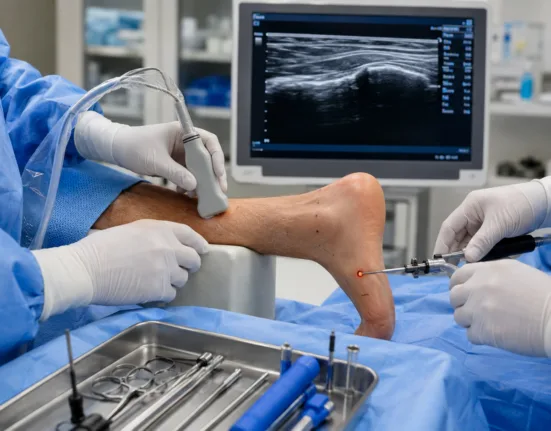
The description of EXG-7001 as locally administered is one of the most important details in the programme. Local delivery may offer a controlled way to establish human proof of concept, limit systemic exposure and obtain tissue biopsies from treated muscle. It could allow investigators to measure messenger RNA uptake, dystrophin expression, membrane localization, durability and dose response before attempting broader delivery.
This strategy may reduce some of the risks associated with systemic viral gene therapy, but it also limits the amount of muscle that can be treated. Duchenne muscular dystrophy is not a localized muscle disorder. A commercially meaningful disease-modifying therapy would eventually need to influence large muscle groups and potentially respiratory and cardiac tissue.
Repeated injections into multiple muscles could become operationally difficult, particularly in children with progressive weakness. The administration burden would depend on the required number of injection sites, treatment frequency, procedure-related discomfort and whether sedation or specialized imaging guidance is necessary. None of those practical requirements has yet been established for EXG-7001.
The local approach could still support a staged development strategy. Elixirgen Therapeutics may first seek evidence that human muscle cells can produce stable full-length dystrophin before optimizing a systemic or wider-distribution formulation. Such a sequence would reduce early clinical uncertainty, but it also means that positive local data would represent the beginning of development rather than validation of the eventual commercial product.
The programme’s long-term value will therefore depend heavily on delivery engineering. A full-length dystrophin messenger RNA platform becomes considerably more important if it can reach broad skeletal muscle and clinically relevant cardiac or respiratory tissue. Without that capability, EXG-7001 may remain an elegant solution to the payload problem that cannot yet solve the distribution problem.
How the option agreement limits Nippon Shinyaku’s risk while expanding its Duchenne strategy
The transaction is structured as an option rather than an immediate acquisition or unconditional global licence. Elixirgen Therapeutics remains responsible for developing EXG-7001, while Nippon Shinyaku will provide development funding and an upfront payment. Additional development and sales-based milestone payments may become payable if Nippon Shinyaku exercises the option, although the financial value and exercise conditions have not been disclosed.
This structure allows Nippon Shinyaku to gain access to a differentiated platform without assuming the full technical risk before human data are available. The Japanese pharmaceutical group can observe progress in manufacturing, toxicology, regulatory preparation and early clinical testing before deciding whether EXG-7001 deserves a larger global commitment.
For Elixirgen Therapeutics, the agreement supplies capital while preserving responsibility for development. It also creates a potential route into an established rare-disease commercial organization. NS Pharma, Inc., Nippon Shinyaku’s wholly owned United States subsidiary, is expected to commercialize EXG-7001 following option exercise and regulatory approval in the United States.
The programme also fits a broader portfolio strategy. Nippon Shinyaku already markets viltolarsen for patients with mutations amenable to exon 53 skipping and is developing additional exon-skipping candidates for other genetic subgroups. Its Duchenne interests also extend to mutation-independent approaches intended to address muscle or cardiac deterioration through mechanisms other than direct dystrophin replacement.
EXG-7001 adds a distinct technology layer to that portfolio. If successful, it could move Nippon Shinyaku from a collection of mutation-defined treatments toward a broader dystrophin restoration platform. If the programme fails to demonstrate scalable delivery or durable expression, the option structure gives the drugmaker a clear point at which it can limit further exposure.
What regulators may require before full-length dystrophin expression becomes a meaningful endpoint
Duchenne muscular dystrophy development has established dystrophin expression as an important biomarker, and several therapies have received accelerated approval based partly on increased production of shortened dystrophin proteins. EXG-7001 may therefore benefit from an existing regulatory framework in which muscle biopsies, protein quantification and localization can support early development.
The programme nevertheless introduces new questions. Regulators will need validated assays capable of distinguishing correctly produced full-length dystrophin from incomplete, degraded or improperly localized protein. The percentage of dystrophin-positive fibres, the amount of protein relative to healthy muscle and the consistency of expression between injection sites are all likely to matter.
Protein expression will also need to be connected with functional relevance. A localized increase in dystrophin could support proof of mechanism, but regulators may expect evidence that the change improves muscle performance or reduces damage. Longer studies would be required to determine whether repeated treatment alters broader clinical outcomes rather than producing temporary biochemical improvement.
The regulatory environment around Duchenne gene therapy has also become more cautious following serious liver injuries associated with systemic adeno-associated virus treatment. EXG-7001 is a nonviral messenger RNA therapy and may have a substantially different risk profile, particularly during local administration. It cannot, however, be presumed safe merely because it avoids a viral vector.
Early trials will need close monitoring for injection reactions, inflammation, innate immune activation, muscle injury and immune responses against newly produced dystrophin. Some patients may have little or no natural dystrophin, raising the possibility that portions of the restored protein could be recognized as unfamiliar by the immune system.
How repeat dosing, manufacturing and immune response could shape clinical scalability
Messenger RNA is generally transient, which may make repeat dosing necessary. Repeat administration could be an advantage over adeno-associated virus gene therapy because pre-existing or treatment-induced antibodies can complicate redosing with viral vectors. A messenger RNA therapy may provide greater control over dose and treatment frequency.
Redosability must still be demonstrated clinically. Repeated exposure to messenger RNA, delivery materials or the expressed protein could produce inflammatory or immune responses that change tolerability over time. The optimal interval must balance the duration of dystrophin protein expression against the burden and risk of additional administration.
Manufacturing presents another significant challenge. EXG-7001 uses an unusually large messenger RNA payload, and commercial production will require consistent transcript integrity, purity, stability and biological potency. Small manufacturing variations could affect delivery efficiency or protein expression, creating a demanding chemistry, manufacturing and controls programme.
Scaling the formulation from laboratory batches to repeatable clinical and commercial production will be particularly important if systemic delivery is eventually pursued. Larger treatment volumes would increase requirements for raw materials, quality control and batch consistency. The delivery component must also protect the large messenger RNA molecule while allowing sufficient uptake by muscle cells.
These issues could determine whether EXG-7001 remains a specialized experimental treatment or becomes a scalable platform. The intellectual appeal of full-length dystrophin will not compensate for a product that is difficult to manufacture, distribute or administer consistently.
Where EXG-7001 could fit alongside gene therapy, exon skipping and mutation-agnostic drugs
EXG-7001 should not yet be viewed simply as a replacement for approved Duchenne muscular dystrophy treatments. The disease is increasingly managed through combinations of therapies addressing inflammation, muscle preservation, specific genetic mutations and broader disease progression. A future full-length dystrophin messenger RNA treatment could become another component of that layered approach.
Patients already receiving corticosteroids, vamorolone, givinostat or mutation-specific exon-skipping therapy may remain candidates for a dystrophin restoration programme if clinical trials permit combination use. Whether EXG-7001 could be administered after viral gene therapy is a separate question that will require data on immune status, residual muscle health and treatment interactions.
The programme may eventually compete most directly with next-generation technologies seeking broader and more complete dystrophin restoration. These include improved exon-skipping platforms, gene-editing programmes, nonviral delivery systems and experimental multi-vector approaches designed to reconstruct larger forms of dystrophin.
Recent animal research has strengthened the biological argument that full-length dystrophin can provide substantial functional rescue. It has not resolved how to deliver the complete sequence safely and efficiently to human muscle. The winner in this emerging category may therefore be determined less by which platform can produce the largest protein and more by which can achieve reliable body-wide delivery at a tolerable dose.
What clinicians and industry observers should watch as EXG-7001 approaches human testing
The first major milestone will be clearance to begin clinical testing in the United States. Trial design will reveal whether the initial programme is focused narrowly on local safety and protein expression or whether Elixirgen Therapeutics is ready to test broader functional effects.
Dose, administration frequency and biopsy strategy will provide early evidence about practical viability. Investigators will need to show that the treatment produces full-length dystrophin at reproducible levels without unacceptable inflammation or muscle injury. The persistence of the protein between doses will influence both clinical benefit and treatment burden.
The next question will be whether Nippon Shinyaku exercises its option before, during or after early clinical development. An early exercise could indicate confidence in manufacturing and regulatory progress, while a decision tied to human dystrophin data would confirm that the agreement was designed primarily to manage translational risk.
The partnership is strategically credible because it combines a differentiated mRNA platform with an organization that already understands Duchenne development and commercialization. It is not yet a clinical breakthrough. EXG-7001 remains a locally administered preclinical therapy confronting one of drug development’s hardest delivery problems.
Its potential importance comes from the target it is trying to reach. Producing intact human dystrophin without restricting treatment to selected mutations could address limitations built into several existing approaches. The programme will become genuinely consequential only when that scientific advantage can be translated from an injected mouse muscle into safe, durable and sufficiently broad dystrophin expression in people with Duchenne muscular dystrophy.