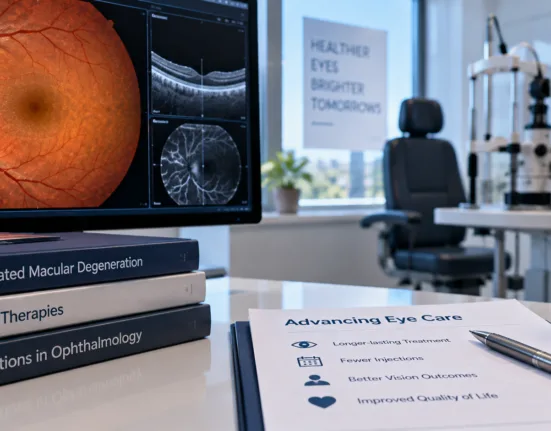
Samsung Bioepis has officially begun direct commercialization of BYOOVIZ, a biosimilar to Lucentis (ranibizumab), across Europe following the complete transfer of rights from Biogen. The move makes BYOOVIZ the fourth biosimilar now independently marketed by Samsung Bioepis in the region, joining EPYSQLI (eculizumab), OBODENCE (denosumab), and XBRYK (denosumab). The company also confirmed that a pre-filled syringe (PFS) formulation of BYOOVIZ, which received a positive recommendation from the European Medicines Agency’s Committee for Medicinal Products for Human Use in late 2025, is expected to enter the European market by the second quarter of 2026.
Why Samsung Bioepis is accelerating internal control over its European biosimilar portfolio
This transition reflects Samsung Bioepis’ broader strategy to establish itself as a fully integrated biopharmaceutical company with capabilities that extend from early development to commercial execution. The decision to bring BYOOVIZ in-house is not simply a logistical reshuffle. It signals growing confidence in the company’s ability to manage regulatory engagement, payer negotiations, supply logistics, and physician outreach in key European markets.
By severing its previous commercialization relationship with Biogen, Samsung Bioepis gains direct access to national and regional reimbursement structures across Europe. This positions the South Korean manufacturer to control pricing strategy, manage tenders without intermediaries, and consolidate product branding under a unified marketing infrastructure. In a biosimilar landscape where margins are narrow and tender dynamics vary widely by country, tighter control over commercial levers may be critical to maintaining competitiveness and ensuring sustainability.
While the original launch of BYOOVIZ in 2021 via Biogen gave the product early access to market channels, Samsung Bioepis now appears to be betting on internal scale and commercial learning from its prior launches of hospital-use biologics to execute a more tailored strategy for BYOOVIZ across outpatient ophthalmology settings.
How BYOOVIZ fits into the evolving ophthalmology biosimilar market in Europe
Ophthalmology biosimilars have historically lagged behind those in oncology and immunology due to a mix of clinical conservatism and operational barriers. For many ophthalmologists, switching stable patients from Lucentis to a biosimilar such as BYOOVIZ has been viewed with caution, particularly when procedural complexity remains unchanged. BYOOVIZ’s upcoming pre-filled syringe presentation could shift that equation.
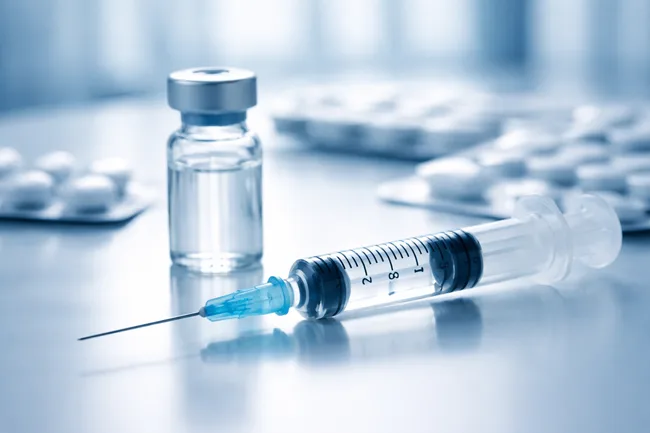
Ease of administration remains one of the key adoption drivers in intravitreal therapies. The standard vial format requires preparation steps that introduce time and contamination risk. A ready-to-use syringe has the potential to simplify workflows, reduce clinic time, and appeal to both clinicians and procurement agencies seeking efficiency without sacrificing outcomes. Samsung Bioepis’ mid-2026 launch of the BYOOVIZ PFS format is thus not just a line extension but a strategic enabler for broader uptake.
Moreover, the biosimilar’s approved indications cover not only neovascular age-related macular degeneration but also diabetic macular oedema, proliferative diabetic retinopathy, choroidal neovascularization, and macular oedema following retinal vein occlusion. This expansive label gives Samsung Bioepis multiple angles to penetrate ophthalmology formularies and position BYOOVIZ as a multi-indication cost-effective alternative to branded ranibizumab.
Why Biogen’s exit marks a new phase of commercialization independence for Samsung Bioepis
The transfer of commercial rights away from Biogen is part of a multi-product shift that Samsung Bioepis has been engineering quietly across Europe. Biogen, once the partner responsible for front-end engagement across several Samsung Bioepis assets, has now exited its role in BYOOVIZ marketing, enabling the Korean manufacturer to unify commercial strategy across its biosimilar lineup.
Industry analysts suggest this move is financially motivated as much as strategically timed. By cutting out partner royalties and building in-house sales teams already active in nephrology and oncology, Samsung Bioepis can amortize its commercial investment across a wider portfolio and realize better unit economics. While Biogen’s exit does create short-term complexity in managing provider relationships and national procurement frameworks, Samsung Bioepis appears willing to absorb this risk in exchange for greater long-term control.
In some respects, BYOOVIZ could become a litmus test for whether ophthalmology biosimilars are ready for direct-to-market strategies on par with immunology and oncology analogs. If Samsung Bioepis succeeds in scaling physician acceptance and payer alignment in a specialty that has historically shown inertia, it may validate the next wave of biosimilar self-commercialization strategies globally.
What clinicians and payers will watch as Samsung Bioepis ramps up deployment
For ophthalmologists, the key shift will not just be cost but confidence. Intravitreal injections are high-stakes procedures where even minor deviations in viscosity, formulation, or administration technique can affect outcomes. As such, the success of BYOOVIZ in its PFS format will depend on rigorous quality assurance, device usability, and post-market surveillance data that supports equivalency not only in clinical trials but also in daily clinical practice.
Payers will focus on procurement stability, pricing dynamics, and Samsung Bioepis’ ability to participate in multi-indication tender processes. National health systems across Europe are increasingly seeking bundled biosimilar packages that reduce per-unit cost through volume guarantees. This could benefit Samsung Bioepis if it can offer multiple biosimilars—such as denosumab and eculizumab variants—through unified contracting, thus improving hospital-level efficiencies and tender competitiveness.
Healthcare institutions will also be watching the consistency of supply chains, especially as the PFS format is launched. Delays or disruptions in the syringe rollout could weaken trust and push clinicians back to originator brands, which have built decades of loyalty and institutional reliability.
Risks and unanswered questions for Samsung Bioepis’ biosimilar trajectory in ophthalmology
Despite the momentum, Samsung Bioepis faces headwinds. The ophthalmology community remains conservative when it comes to drug switching, especially in patients with stable vision under Lucentis or Eylea regimens. Some physicians may remain hesitant to switch without long-term safety and efficacy data from real-world populations, especially elderly patients or those with diabetic complications.
Moreover, market competition is intensifying. Additional biosimilars referencing ranibizumab and aflibercept are moving toward approval in Europe, and newer agents with extended dosing intervals are increasingly favored in clinical guidelines. Even with a differentiated PFS format, Samsung Bioepis will need to justify not just cost savings but clinical equivalence and usability advantages to win formulary space.
Regulatory watchers also note that Samsung Bioepis must now fully own pharmacovigilance, real-world data generation, and adverse event monitoring responsibilities without Biogen’s support infrastructure. These functions are mission-critical in ophthalmology, where even a single vision-related incident can result in significant liability exposure or loss of institutional trust.
As Samsung Bioepis deepens its European presence, success with BYOOVIZ may determine how aggressively it pursues future self-commercialization efforts across ophthalmology and adjacent specialties like rheumatology, dermatology, and endocrinology. Whether this latest step leads to faster biosimilar penetration or reveals the limits of internalization in complex clinical markets will become clearer over the next 12–18 months.