Illumina, Inc. has officially launched Connected Multiomics, a cloud-native software platform designed to unify and analyze complex biological data across multiple omic modalities including genomics, transcriptomics, proteomics, and spatial biology. The tool is now widely available after a year-long early access program involving over 40 research groups. Positioned as a user-friendly yet technically powerful analysis environment, the platform aims to simplify data integration and accelerate discovery in precision medicine, especially for non-programmer biologists working at the translational research interface.
Why Illumina’s Connected Multiomics launch marks a strategic shift in omics infrastructure
The debut of Connected Multiomics reflects a broader transformation underway at Illumina, Inc. as the company pivots toward platform-enabled discovery solutions. While Illumina has long dominated the sequencing hardware and chemistry markets, the company is now clearly moving to capture more downstream analytical value. Connected Multiomics serves as the latest example of this strategy, offering an integrated, cloud-based interface that consolidates analysis pipelines traditionally scattered across multiple tools and departments.
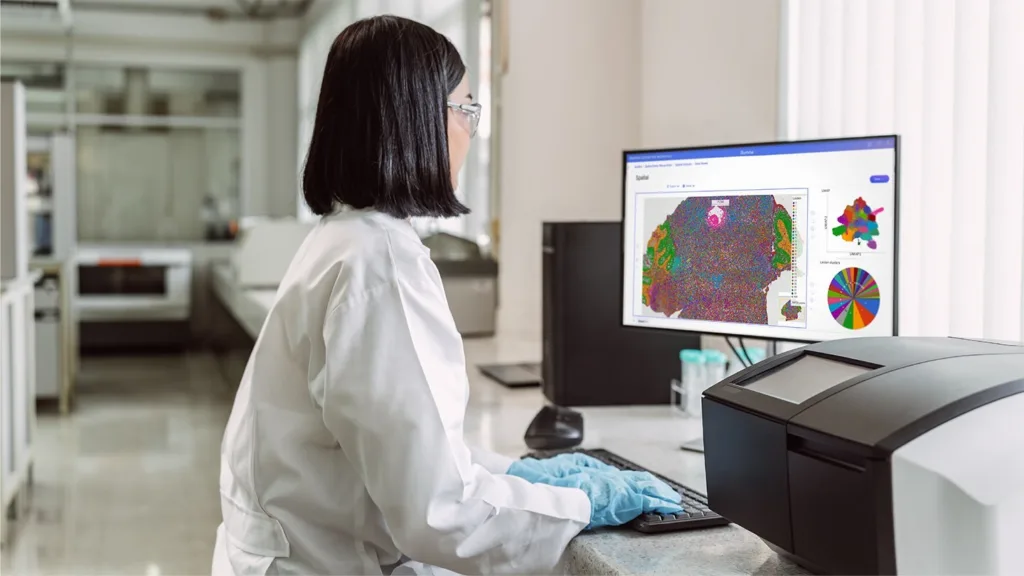
The platform incorporates Illumina’s DRAGEN secondary analysis engine and introduces AI-powered variant prioritization through proprietary models such as PrimateAI and PromoterAI. These algorithms are designed to distinguish biologically meaningful mutations from background noise early in the analytical process. The result is a more streamlined workflow that supports faster interpretation of multiomic datasets without requiring deep coding experience.
This is especially significant for translational researchers and clinicians operating in oncology, rare disease, and biomarker discovery, where the bottleneck is often not data generation but the computational overhead of processing and interpreting multi-layered datasets. The platform’s promise lies in reducing that barrier while maintaining scientific rigor and reproducibility.
What this software unlocks for non-bioinformaticians and data-constrained institutions
One of the most consequential features of Connected Multiomics is its explicit focus on usability. The software interface has been built with the goal of making advanced multiomic workflows accessible to biologists without programming expertise. According to early access users, including researchers at the University of Colorado Anschutz Medical Campus, the tool enables exploration of spatial proteomic and transcriptomic data with minimal technical onboarding.
This user-first design represents a departure from most existing multiomic analysis frameworks, which typically require scripting knowledge, server infrastructure, or dedicated computational staff. By abstracting the technical complexity and offering a visual, interactive workspace, Illumina is positioning the product not just as a software tool, but as an accelerator for hypothesis-driven discovery across research settings.
Such capabilities could prove critical in enabling smaller research centers, under-resourced hospital labs, and public health institutions to engage meaningfully with multiomic data without needing to develop or license bespoke analysis pipelines. That expanded access could in turn democratize participation in complex biological investigations, including early-stage drug target identification and patient stratification efforts.
How Connected Multiomics builds competitive pressure in the growing spatial and single-cell data ecosystem
The integration of single-cell and spatial modalities within the Connected Multiomics environment directly challenges existing leaders in the spatial biology space. Companies like 10x Genomics and NanoString Technologies have built their platforms around single-modality dominance. Illumina’s approach instead fuses these data layers into a common workspace, offering marker gene identification, cell typing, and spatial overlays that align gene expression data with tissue imagery.
By offering these features within a single cloud-native system, Illumina appears to be making a deliberate move toward horizontal platform integration. This could give the company a competitive edge in the market for high-dimensional data tools, particularly as academic and pharmaceutical institutions increasingly demand interoperable solutions that reduce analytical silos.
The open architecture of the platform, which supports data from both Illumina assays and compatible third-party sources, further enhances its appeal to enterprise users. Institutions that have built hybrid data infrastructures can plug in without wholesale migration, which could help Illumina grow adoption across R&D labs, CROs, and biopharma settings where flexibility and compatibility are non-negotiable.
Why AI capabilities may determine the platform’s long-term value proposition
Illumina’s emphasis on artificial intelligence as a foundational layer within Connected Multiomics reflects a broader strategic investment in AI-enabled discovery. The inclusion of tools like PrimateAI and PromoterAI is not merely about automating variant filtering, but about building a discovery engine that can scale alongside growing data volumes.
These capabilities are designed to assist researchers in identifying high-value targets earlier in the analysis cycle, particularly in datasets with extensive background variation such as tumor samples, rare disease cohorts, or genetically diverse populations. In doing so, the platform shortens the distance between sequencing and insight, which could be a critical differentiator in both research and commercial biomedicine.
Illumina has signaled that additional AI capabilities will be layered into the platform over time, potentially allowing for more advanced pattern recognition, pathway analysis, or predictive modeling. If executed effectively, this could place the software in direct competition with more specialized bioinformatics platforms offered by startups and cloud providers, many of whom are racing to integrate generative AI and real-time analysis into their own multiomic solutions.
What risks and unanswered questions remain for platform adoption
Despite its technical strengths and user-focused design, Connected Multiomics enters a market crowded with players offering modular and scalable multiomic analysis tools. Firms such as DNAnexus, Terra.bio, and NVIDIA through its Clara platform are also pushing for dominance in the bioinformatics ecosystem. Many of these platforms already have deep enterprise penetration and offer competitive customization features tailored to individual institutional needs.
Illumina’s adoption trajectory will depend on several factors, including cost transparency, cloud data governance, and regulatory clarity. Pricing models for cloud-based software in biomedical contexts can be a barrier, particularly for publicly funded labs and international partners with data sovereignty requirements. Additionally, while the current version of Connected Multiomics is intended for research use only, regulatory watchers will likely scrutinize its feature evolution to ensure it does not drift toward clinical decision-making functionality without appropriate certification.
Another open question concerns interoperability at scale. While Illumina supports third-party assay input, institutions with heavily customized pipelines may still face data conversion or workflow alignment challenges. The real-world test will be how seamlessly the platform performs within multi-vendor, multi-format research environments where standardization is limited.
There is also the question of clinical relevance. As multiomic analysis begins to inform diagnostic development, clinical trial design, and even therapeutic decisions, tools like Connected Multiomics will need to build trust among regulatory agencies and clinical stakeholders. Without formal validation pathways or peer-reviewed evidence supporting clinical-grade output, the platform’s adoption may remain bounded to research settings in the short term.
Will this platform define Illumina’s post-hardware identity?
The launch of Connected Multiomics represents more than a product expansion for Illumina. It marks a key step in the company’s evolution from a sequencing hardware manufacturer to a full-service platform provider for life sciences discovery. This transformation is not happening in isolation. With growing investor pressure to diversify revenue streams, a rapidly advancing AI stack, and intensifying competition from emerging bioinformatics providers, Illumina is reasserting its stake in the full omics value chain.
If Connected Multiomics succeeds in simplifying integrative analysis while meeting the evolving expectations of translational researchers and biopharma partners, it could become a cornerstone of Illumina’s software-forward identity. But the company will need to manage platform scale-up, enterprise support, and regulatory boundaries with precision to avoid overstretching its brand promise or cloud capabilities.
As omics data generation outpaces most institutions’ capacity to interpret it meaningfully, platforms like Connected Multiomics may prove essential not only to accelerating research timelines but also to redefining what scientific insight looks like in the post-sequencing era.