
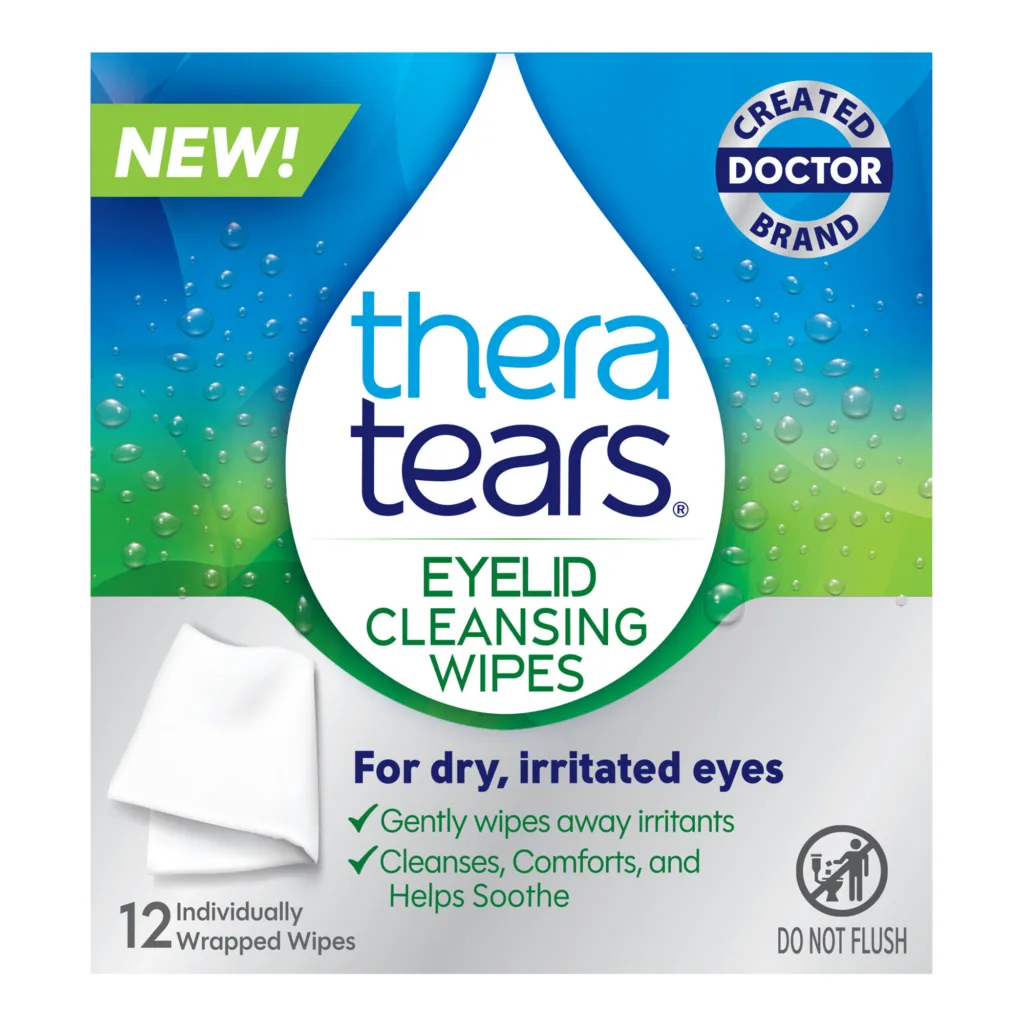
TheraTears, a Prestige Consumer Healthcare brand, has announced the upcoming nationwide launch of two new products in February 2026: Eyelid Cleansing Wipes and Dry & Tired Preservative Free Lubricant Eye Drops. The new solutions aim to support consumers dealing with screen-induced eye fatigue, offering a preservative-free, hydration-forward formulation and a lid hygiene format targeted at daily symptom relief.
Why screen fatigue has become a driver for product innovation in dry eye care
The rise in dry eye prevalence over the past decade has been steadily linked to prolonged digital device usage, with screen fatigue now recognized as a clinically significant trigger for ocular discomfort. TheraTears’ move to explicitly position one of its products around screen-induced dryness signals a strategic pivot toward younger, device-heavy demographics. This contrasts with legacy dry eye marketing, which often skews toward post-menopausal or aging consumers.
By naming “Dry & Tired” as the product variant, the brand is reframing dry eye not just as a chronic medical condition but also as an everyday digital wellness concern. This reframing could help drive category growth in the non-prescription space, particularly as telehealth, remote work, and hybrid education continue to reinforce near-constant screen engagement.
What this reveals about OTC trends toward preservative-free formulations
The preservative-free positioning of the new lubricant eye drops reinforces a broader trend in ophthalmic product development. Preservatives like benzalkonium chloride (BAK), while historically used to extend shelf life, have increasingly come under scrutiny for their potential to exacerbate ocular surface inflammation with repeated use. Industry observers note that this shift parallels recent prescription-to-OTC transitions, where preservative-free options are not just preferred but expected by informed consumers.
TheraTears’ decision to introduce the new formulation in single-use vials is also aligned with this trajectory. Although less convenient for on-the-go users, single-use packaging mitigates the contamination risks associated with multi-dose bottles and simplifies the messaging for those with sensitive eyes. In addition, this format is increasingly seen in clinical environments, which could lend the product greater credibility among optometrists and ophthalmologists who advise patients on over-the-counter options.
What the inclusion of eyelid wipes signals about lid hygiene and broader dry eye care
The addition of Eyelid Cleansing Wipes to the TheraTears portfolio reflects a growing recognition of meibomian gland dysfunction (MGD) and lid margin inflammation as key contributors to dry eye symptoms. While artificial tears remain the default first-line OTC intervention, the inclusion of lid hygiene products points to a more holistic, maintenance-oriented strategy that mimics clinical dry eye treatment pathways.
Historically, lid hygiene has been poorly adopted in the consumer space due to its perceived complexity and lack of product awareness. By bundling eyelid wipes into its mainstream dry eye line, TheraTears may help normalize this practice for everyday users. The wipes’ non-stinging formula and single-use wrapping suggest a conscious effort to make lid cleansing as accessible and unintimidating as possible.
Clinicians tracking the field believe that such offerings can bridge the gap between sporadic symptom relief and long-term ocular surface management. This could eventually expand the OTC category beyond hydration and into broader preventative care, especially if supported by clinician-driven education and pharmacy shelf visibility.
What this expansion changes for Prestige Consumer Healthcare’s eye care portfolio
For Prestige Consumer Healthcare, which also owns Clear Eyes, the TheraTears expansion strengthens its higher-end, science-forward dry eye positioning. While Clear Eyes traditionally targets redness relief and general irritation, TheraTears now appears to be doubling down on the medical-grade over-the-counter space, targeting informed consumers who are more likely to seek out symptom-specific and lifestyle-aligned products.
This differentiation could prove important for pharmacy shelf strategy. As regulators and consumer advocacy groups continue to scrutinize eye drop efficacy and safety—especially following preservative-related recalls in the U.S.—brands that emphasize clinical origin stories and science-based formulation stand to gain trust. TheraTears, founded by a Harvard-trained ophthalmologist and often cited by dry eye specialists, is likely to benefit from this perception.
The launch timing also aligns with Prestige Consumer Healthcare’s broader push to diversify its therapeutic category reach. While its portfolio spans women’s health, motion sickness, and oral care, eye care represents a unique convergence of daily health maintenance, aging demographics, and digital lifestyle challenges. The inclusion of “screen fatigue” as a target symptom strengthens this convergence, potentially unlocking a more lifestyle-adjacent user base.
What could challenge adoption and growth of these new formulations
Despite the clear alignment with consumer trends, product success will depend heavily on retail placement, price sensitivity, and user education. Preservative-free eye drops typically command a higher unit price, and while justified by safety and comfort, they remain underpenetrated in price-sensitive markets. Single-use packaging may also generate more waste, which could alienate environmentally conscious consumers unless sustainability messaging is integrated into the product narrative.
Furthermore, while eyelid wipes are increasingly recommended by eye care professionals, many users still do not associate eyelid hygiene with dry eye relief. Without strong pharmacy signage or clinician referral, the wipes could be overlooked in favor of more familiar drop-based treatments. Reimbursement is not a concern in OTC eye care, but volume growth will require consistent user engagement—something harder to achieve for “maintenance” products without a clear symptomatic reward.
Industry observers suggest that success in this segment hinges less on direct-to-consumer advertising and more on embedding the products within eye care professional recommendations. Co-marketing strategies with optometrists and eye clinics, or inclusion in pre- and post-procedure regimens (e.g., LASIK or cataract surgery recovery), could accelerate clinical validation and repeat use.
What this means for the broader direction of the OTC ophthalmic market
If the new TheraTears variants gain traction, the launch could signal a wider shift toward multi-product OTC eye care regimes. Rather than standalone eye drops, consumers may increasingly be guided toward routines that include hydration, lid hygiene, and potentially dietary supplements—mirroring professional treatment pathways for chronic dry eye.
Other brands in the OTC space may follow suit, creating bundles or “starter kits” that guide users through a comprehensive care routine. This could also open the door for digital health tie-ins, such as mobile apps reminding users to apply drops or cleanse lids—especially relevant given the screen fatigue positioning.
The challenge for TheraTears and its peers will be sustaining user engagement in a condition that is intermittent, underdiagnosed, and often self-managed. But with dry eye prevalence rising alongside digital lifestyles, the market dynamics appear to support a more proactive, routine-driven approach.
