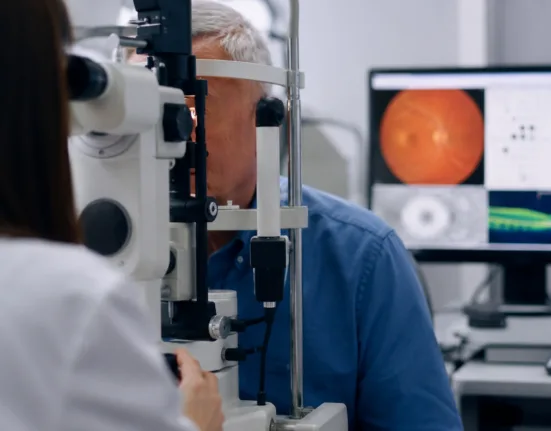
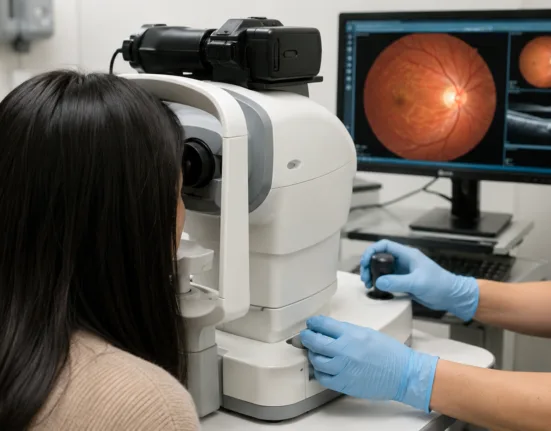
Lupin Limited has completed its acquisition of VISUfarma B.V., a European specialty pharmaceutical company focused on ophthalmology, marking the close of a transaction first announced in September 2025. The completed deal gives the Mumbai-headquartered drugmaker a larger branded eye-care portfolio in Europe and folds VISUfarma’s commercial infrastructure into Lupin Limited’s specialty expansion strategy at a time when ophthalmology remains one of the more attractive therapy areas for differentiated, physician-led prescribing.
What makes this announcement more important than a routine cross-border portfolio expansion is that it sharpens Lupin Limited’s identity. The Indian pharmaceutical company has long been associated with generics, complex generics, respiratory therapies, and scale manufacturing, but the VISUfarma acquisition pushes it more decisively into a branded specialty-care model in Europe. That matters because ophthalmology is not simply another adjacent therapy category. It is one of the few segments where product differentiation, physician trust, brand persistence, and commercial specialization can still carry meaningful weight even in mature markets. VISUfarma brings that commercial logic with it, including a portfolio spanning dry eye, glaucoma, blepharitis, eyelid hygiene, retinal health, and ophthalmic nutraceuticals across Italy, the United Kingdom, Spain, Germany, and France.
Why Lupin Limited’s VISUfarma deal signals a deeper move into branded specialty ophthalmology
The real story is not that Lupin Limited bought more than 60 products. The real story is that it bought access to a therapy area where distribution, field execution, and specialist relationships often matter as much as molecule ownership. In ophthalmology, especially outside the highest-profile retinal biologics segment, many markets remain fragmented and local. That means a company with a ready-made regional commercial network can defend value more effectively than in broader primary-care categories. By acquiring VISUfarma rather than building from scratch, Lupin Limited has effectively bought time, market familiarity, and physician access.
That shortcut matters because Europe is not an easy market to scale in specialty pharmaceuticals. National reimbursement structures vary. Prescribing cultures differ. Distribution pathways can be country-specific. Ophthalmology, in particular, depends heavily on trust within specialist communities. A greenfield strategy would have required Lupin Limited to build local sales teams, market access know-how, and physician credibility piecemeal. VISUfarma gives it a platform that is already shaped for those realities. From an execution standpoint, that is the most commercially meaningful part of the transaction.
How the completed acquisition changes Lupin Limited’s growth mix beyond traditional generics
The acquisition also reinforces a broader strategic shift visible in many mid-to-large pharmaceutical companies coming from price-sensitive generic backgrounds. Pure generics remain structurally valuable, but margin pressure, tender competition, and periodic regulatory disruptions make them less reliable as long-term growth engines on their own. Specialty care, by contrast, offers higher barriers to entry and a potentially better margin profile, provided the commercial model is disciplined and the assets are well chosen.
That backdrop helps explain why Lupin Limited was willing to pay an enterprise value of €190 million for VISUfarma, using cash on hand, for a business that it previously said was expected to generate about €54 million in 2025 revenue with EBITDA margins around 30%. Those numbers suggest the buyer was not merely shopping for scale. It was paying for profitability, therapeutic focus, and a platform that could be integrated into a broader specialty story. The acquisition presentation also framed the deal as accretive to sales growth and EBITDA margin, which suggests management sees more than defensive diversification here. It sees an earnings-quality upgrade.
That does not automatically make the price cheap. On the numbers Lupin Limited disclosed in 2025, the transaction implied a valuation of roughly 3.5 times sales and around 11.7 times EBITDA, levels that signal a strategic premium rather than a bargain-bin purchase. But specialty ophthalmology assets with an existing European footprint do not come along every day, and the willingness to pay up indicates that Lupin Limited values the operating platform, not just the product shelf.
Why ophthalmology remains commercially attractive even without a headline-making pipeline asset
A useful way to understand the VISUfarma acquisition is to separate glamour from durability. Ophthalmology often attracts attention for breakthrough retinal therapies, gene therapies, or high-value biologics, but the day-to-day economics of eye care are also driven by chronic, recurring, specialist-managed conditions that may not dominate headlines. Dry eye, glaucoma support, ocular surface disease, eyelid hygiene, and adjunctive nutritional products can create repeat prescribing behavior and long-lived practitioner relationships if commercial execution is strong.
In that sense, VISUfarma appears less like a moonshot pipeline bet and more like a platform asset with operational resilience. That may actually be a strength. Rather than depending on a binary readout or a single regulatory catalyst, Lupin Limited is buying into a marketed ophthalmology infrastructure with current revenue and broad therapeutic exposure. For a company looking to rebalance toward specialty care without taking excessive clinical development risk, that is a fairly disciplined move.
The flip side is that marketed portfolios without a major breakthrough asset can struggle to generate narrative excitement unless integration produces visible acceleration. In other words, VISUfarma may be strategically sensible, but Lupin Limited will still need to prove that the platform can be used to launch more products, deepen specialist engagement, or expand beyond Europe in a coherent way. Otherwise the deal risks being seen as incremental rather than transformative.
What clinicians, regulators, and investors are likely to watch as integration begins in Europe
For clinicians, the immediate watchpoint is continuity. Acquisitions in specialty care can unsettle supply chains, sales coverage, and medical affairs engagement if integration is handled too aggressively. Ophthalmology is not especially forgiving on that front. Physician loyalty can shift if service levels slip or local relationships are diluted. Lupin Limited therefore inherits not just a portfolio, but a commercial culture that has to be preserved while being scaled.
For regulators, the transaction itself appears to have crossed its necessary closing threshold, but post-close execution still matters in subtler ways. Product lifecycle management, pharmacovigilance, promotional compliance, and country-level commercial practices all become more complex when a multinational owner integrates a regionally established specialist company. The risks here are not spectacular, but they are real. Specialty acquisitions often fail not because the assets are weak, but because integration weakens the very field intimacy that made the target attractive in the first place.
For investors and industry observers, the watchpoint is whether this deal remains a single-asset expansion or becomes the base of a broader ophthalmology franchise. Lupin Limited’s earlier materials described VISUfarma as a cornerstone for ophthalmology operations across Europe, India, and other markets. That wording implies platform ambition, not just portfolio addition. The next phase will show whether the buyer uses VISUfarma to build a connected global eye-care business or simply treats it as a revenue-bearing European unit.
The market reaction around the completion itself was not euphoric. On April 2, 2026, Moneycontrol’s live markets coverage noted Lupin Limited trading lower intraday even as the acquisition completion was reported. That should not be overinterpreted, because single-day price movement rarely settles the strategic case for a pharma acquisition. Still, it suggests the Street may already have priced in much of the transaction when it was first announced in 2025, and is now waiting for proof of integration quality rather than rewarding the close as a fresh catalyst.
Why the success of this deal will depend less on closing and more on commercial discipline after closing
The easiest part of this transaction was the press release. The harder part starts now. Lupin Limited has acquired a commercially credible ophthalmology business with meaningful European reach, real revenue, and a specialty focus that aligns with where many diversified pharmaceutical companies want to go. But acquisitions like this are judged less by the logic at signing and more by the discipline after closing.
If Lupin Limited can preserve VISUfarma’s local execution strengths, use the platform to introduce new ophthalmic assets, and demonstrate that branded specialty care can become a durable contributor to growth and margins, the deal could become an important case study in how an Indian pharmaceutical company moves up the value chain in Europe. If integration turns bureaucratic, if portfolio momentum stalls, or if the acquired infrastructure proves harder to scale than expected, then the transaction will look like a sensible but limited bolt-on.
For now, the balance of evidence suggests this is a strategically coherent move. It is revenue-backed rather than speculative, focused rather than sprawling, and tied to a therapy area with defensible specialist economics. The question is no longer whether Lupin Limited wanted a bigger place in ophthalmology. The question is whether it can convert VISUfarma from a completed acquisition into a repeatable specialty-care engine.