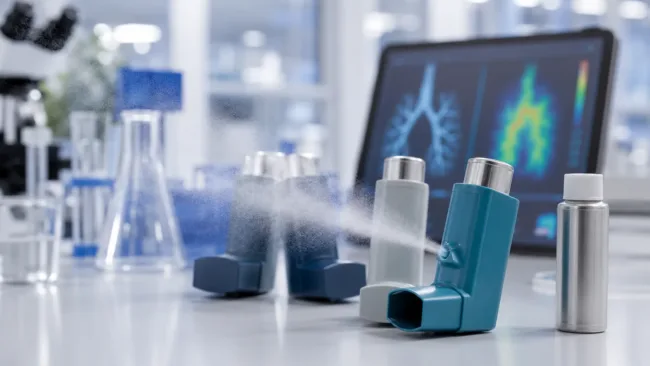
Aptar Pharma, the drug delivery and dosing technology division of AptarGroup Inc, has announced a technical collaboration with COVIRIX Medical Pty Ltd, an Australian biotechnology company focused on broad-spectrum antiviral therapeutics, to assess the feasibility of combining Aptar Pharma’s Orbital dry powder inhaler platform with COVIRIX Medical’s antiviral compound for potential use against pandemic-potential respiratory viruses including Covid-19, influenza strains, and respiratory syncytial virus.
Why feasibility-stage partnerships carry disproportionate strategic weight in pandemic preparedness
The collaboration sits firmly in pre-development territory, structured under a letter of intent and limited in scope to a feasibility study. That framing matters considerably for how the announcement should be read. No integrated product has been developed, no clinical programme has been initiated, and the partnership explicitly does not guarantee commercialisation outcomes. Yet in the broader context of post-pandemic infrastructure building, the structural intent of the deal reflects a deliberate and increasingly common approach among drug delivery specialists: locking in platform access agreements with early-stage biotechs before clinical viability is established, in exchange for positioning within potential future supply chains.

For Aptar Pharma, which reports over three decades of experience in respiratory drug delivery and hosts formulation capabilities through its Nanopharm subsidiary, the arrangement offers relatively low-risk exposure to a pipeline asset that, if the compound advances, could justify earlier platform customisation. The company’s Orbital device, positioned as suitable for high payload powder formulations and adaptable between single-use and reusable configurations, is an obvious candidate for a broad-spectrum inhaled antiviral if COVIRIX Medical’s compound demonstrates meaningful in vivo activity following its reported positive virology results in preclinical settings.
What the COVIRIX Medical compound stage reveals about development risk and timeline uncertainty
COVIRIX Medical’s public disclosures describe a portfolio of patented broad-spectrum antiviral compounds that have shown positive results against several pandemic-potential viruses in virology studies. The company describes its approach as repurposing and developing antiviral therapeutics, a development strategy that, in principle, can compress timelines compared with first-in-class discovery programmes. However, the disclosure stops well short of describing clinical data. No phase designation, no enrolled patient population, no primary or secondary endpoints, and no regulatory interaction has been publicly confirmed.
That gap between positive virology results and an inhaled finished product suitable for regulatory submission is substantial. Dry powder inhalation presents specific formulation challenges that are distinct from oral or injectable delivery. Particle engineering, aerosol behaviour, regional lung deposition, and device-formulation interaction all require extensive characterisation, and the Nanopharm involvement suggests Aptar Pharma is already anticipating non-trivial formulation development work. The feasibility study will effectively determine whether COVIRIX Medical’s antiviral compound can be engineered into a respirable powder with acceptable aerodynamic properties, before any assessment of whether the combined product performs as expected in relevant respiratory tissue.
How inhaled delivery changes the antiviral development calculus for broad-spectrum candidates
The strategic rationale behind pursuing inhaled delivery for a broad-spectrum antiviral is scientifically grounded. Targeting the respiratory tract directly allows for higher local drug concentrations at the site of viral replication, while the ambition of minimising systemic exposure addresses one of the more persistent safety concerns associated with broad-spectrum antivirals, which by their nature engage conserved viral mechanisms that can have off-target effects on host cell biology. Whether COVIRIX Medical’s compound achieves a sufficiently clean safety profile at inhaled doses that are therapeutically relevant will be a central question for any eventual clinical programme.
The comparison set for inhaled antivirals in respiratory disease is thin but meaningful. Zanamivir, the neuraminidase inhibitor delivered by dry powder inhalation for influenza treatment, demonstrated that the inhaled route can achieve therapeutic concentrations in respiratory tissue, though its market performance was limited by usability issues with its delivery device relative to the oral oseltamivir formulation. The lessons from that development arc are instructive: device design, patient usability, and dosing regimen interact in ways that substantially influence real-world adoption even when the underlying pharmacology is sound.
Regulatory pathway complexity for broad-spectrum antivirals targeting multiple indications
One of the more complex dimensions of this collaboration is the multi-indication ambition embedded in the partnership framing. Developing an antiviral for potential use against Covid-19, seasonal influenza, avian influenza, and RSV within a single programme implies either a regulatory strategy built around a platform claim or separate indication-specific submissions with shared manufacturing and device infrastructure. Regulators in major markets, including the US Food and Drug Administration and the European Medicines Agency, evaluate indication-specific efficacy and safety data. A broad-spectrum label claim requires compelling evidence across the intended viral targets, not simply positive activity in preclinical virology assays.
Industry observers tracking respiratory antiviral development note that the regulatory environment for pandemic preparedness products has evolved considerably since 2020, with emergency use authorisation frameworks providing potential accelerated pathways for qualified pandemic-relevant candidates. However, such frameworks typically require more than early-stage virology data. Demonstrating clinical benefit in a relevant patient population, or at minimum a strong and reproducible preclinical package, would be a prerequisite before regulatory engagement at that level becomes meaningful.
What the Aptar Pharma platform choice signals about inhalation technology competition
The selection of the Orbital device as the target platform for this collaboration is notable in the context of competitive dry powder inhaler development. The device is positioned by Aptar Pharma as suited to high payload delivery, which matters for antiviral applications where therapeutic doses may require substantial drug mass per inhalation compared with low-dose inhaled biologics or corticosteroids. The adaptability between single-use and reusable configurations is commercially significant: single-use devices simplify supply chain management for outbreak response scenarios where cold chain integrity and device reuse compliance cannot be assumed, while reusable configurations reduce per-dose costs in chronic or seasonal treatment settings.
Clinicians and device developers tracking the inhaled drug delivery field will note that this type of early-stage platform feasibility work is increasingly common as device manufacturers seek to extend platform utilisation across multiple therapeutic areas. For Aptar Pharma, which operates across pharmaceutical, consumer, and beauty dispensing markets, embedding its respiratory platform in pandemic preparedness infrastructure represents a clear diversification of its pharma-facing device portfolio. The commercial upside is conditional on clinical and regulatory success, but the reputational and technical value of demonstrating Orbital’s suitability for a novel antiviral application has standalone relevance for future business development.
Adoption, manufacturing, and scalability questions that feasibility work will not resolve
Even a successful feasibility study would leave several material questions unanswered. Manufacturing at pandemic scale for an inhaled powder product requires a different infrastructure consideration than small-batch clinical supply. Controlled particle size distribution, powder stability under variable humidity and temperature conditions, and aseptic processing requirements for the active compound all factor into the total cost of goods and the scalability ceiling for any eventual commercial product. COVIRIX Medical’s status as an early-stage Australian biotech without publicly confirmed manufacturing partnerships suggests these questions will depend substantially on future collaborations or out-licensing arrangements rather than internal capability.
Reimbursement and market access present a separate layer of complexity. An inhaled broad-spectrum antiviral targeting pandemic-potential viruses would likely compete for health system budget against existing antiviral standards of care, influenza vaccines, and RSV prophylactic antibodies in relevant populations. Demonstrating superior or complementary clinical value relative to these established options, rather than simply demonstrating antiviral activity, will be the threshold question for payers in any major market. Neither the current collaboration framework nor the disclosed compound data addresses that commercial readiness question.
What regulators, clinicians, and industry observers will watch as the partnership develops
The immediate marker to watch is whether the feasibility study produces a formulation candidate that meets the aerodynamic performance criteria required to enter formal development. That outcome, if positive, would likely trigger a more substantive development agreement between the two companies and potentially attract co-development or licensing interest from larger pharmaceutical groups with pandemic preparedness mandates. If the feasibility work does not yield a viable formulation, the collaboration is structured to limit downside exposure for both parties.
Beyond the technical milestone, the collaboration’s trajectory will depend on COVIRIX Medical’s ability to generate additional preclinical data establishing the antiviral compound’s mechanism of action, selectivity, and in vivo efficacy in relevant respiratory infection models. Regulatory watchers suggest that any partnership of this type ultimately needs to converge on an investigational new drug or clinical trial application within a credible timeline to maintain the commercial interest of a device partner with a broader portfolio to manage. For now, the announcement establishes a credible technical relationship between a well-resourced device and formulation platform and an early-stage antiviral developer, with the material unknowns firmly on the compound side of the equation.