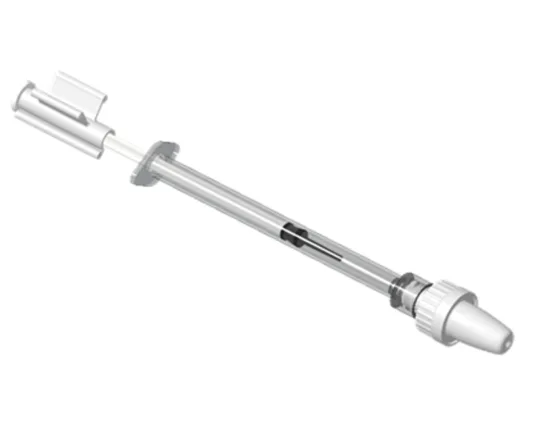
AptarGroup (NYSE: ATR) has confirmed that its Unidose (UDS) Powder Nasal Spray System is the delivery platform selected for the Phase II POSITS community study of INNA-051, the investigational once-weekly dry powder nasal spray developed by Melbourne-based clinical-stage company ENA Respiratory. The study, which began dosing participants in January 2026, is evaluating the safety, tolerability, and potential efficacy of INNA-051 in up to 1,100 adults at increased risk of viral respiratory infection during the 2025-2026 North American respiratory virus season. The Aptar announcement formalises what has been a device-critical collaboration: without a validated dry powder intranasal delivery platform capable of protecting a moisture-sensitive formulation, INNA-051’s Phase II would not be clinically executable.
Why the device selection matters as much as the drug in this trial
INNA-051 is a TLR2/6 agonist, a class of innate immune activators that work by stimulating pattern recognition receptors lining the nasal epithelium to trigger antiviral host defence responses. The formulation is a dry powder, a format chosen deliberately for its stability advantages over the liquid formulations that dominated earlier clinical phases. A dry powder with a projected shelf life of over two years at room temperature requires a container closure system that can reliably exclude moisture across the storage and administration window, while the delivery device itself must actuate precisely and consistently in community settings where participants will not be trained clinicians.
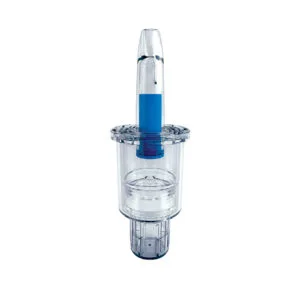
Aptar’s contribution to the POSITS study is therefore not peripheral. The UDS Powder system is positioned as the primary means of dose reliability, and the integration of Aptar CSP Technologies’ 3-Phase Activ-Polymer container closure system, designed to maintain a moisture-controlled microenvironment around the powder, addresses the formulation’s principal commercial and clinical vulnerability. Premature actuation during device handling, a risk in community trials where participants are neither medicalised nor supervised, is managed through internal mechanical features the company says were built specifically to prevent discharge during insertion, removal, or accidental dropping. These are design decisions that will matter at scale, and their performance in the POSITS study will be as closely watched by device developers as by respiratory clinicians.
What the POSITS trial design reveals about ENA Respiratory’s commercial ambitions
The POSITS study is a randomised, double-blind, placebo-controlled, multicentre design, the gold standard framework for community-based infection prevention trials. The decision to target young adults living or working in crowded environments is strategically calculated. This population offers a higher natural exposure rate to respiratory viruses, compressing the time needed to accumulate infection events, which in turn reduces the sample size required to achieve statistical power on incidence, duration, and severity endpoints.
The choice of the University of Maryland’s Center for Vaccine and Global Health (CVDGH) as clinical partner, with Dr. Justin Ortiz as Principal Investigator, reflects ENA Respiratory’s need for US institutional credibility ahead of potential regulatory dialogue with the FDA. The company has previously received a US$13.1 million contract from the US Department of Defense and is a BARDA Blue Knight alumnus, both of which signal government-level interest in a platform that could respond to novel respiratory threats without the lag inherent in vaccine development. Top-line data is anticipated in Q3 2026, placing any potential Phase III decision squarely in line with the post-pandemic surge of interest in pandemic preparedness platforms.
How INNA-051 differs from existing respiratory prevention approaches and where the gaps remain
The fundamental proposition of INNA-051 is virus-agnostic innate immune priming. Rather than generating adaptive immunity to a specific pathogen, as a vaccine does, or blocking viral replication once infection has commenced, as a direct-acting antiviral does, INNA-051 activates the body’s non-specific nasal mucosal defences at the site of viral entry. Prior Phase IIa data from a controlled human influenza challenge model showed accelerated viral clearance and stimulation of interferon Type I and Type III responses, a meaningful mechanistic signal that the innate pathway is being engaged as intended. The Phase I extension in adults aged 66 to 80 confirmed the approach is tolerable in older populations and produces detectable biomarker activation within eight hours of dosing.
What remains unresolved is the translation from controlled challenge models to community infection conditions. In a challenge study, participants are inoculated with a known viral dose under monitored conditions, which is an environment that amplifies the signal of any intervention. The POSITS trial faces the considerably harder problem of detecting an effect against naturally occurring, multi-virus infection exposure across a heterogeneous population over a compressed seasonal window. If INNA-051 reduces infection incidence, duration, or severity across influenza, RSV, rhinovirus, and coronaviruses simultaneously, the result would be a landmark for the field. If the signal is only detectable for one or two viral classes, the regulatory and commercial calculus becomes significantly more complex.
What the Aptar partnership signals about the intranasal drug delivery device market
For AptarGroup, the INNA-051 collaboration is commercially meaningful beyond a single clinical programme. The company reports over 280 nasal spray and powder market references globally, and the UDS platform has FDA and EMA-approved drug-device combination products across multiple therapeutic categories. The selection of UDS Powder for a prophylactic, community-administered, once-weekly dry powder programme is a visible extension into a category that did not meaningfully exist at commercial scale five years ago.
Device developers in the respiratory space are watching the POSITS trial partly as a stress test of community-use powder delivery. Nasal powder systems have historically been confined to acute emergency use cases, such as naloxone delivery, and CNS applications where the nose-to-brain pathway offers pharmacokinetic advantages. A successful prophylactic programme delivered via a once-weekly powder device would open a substantially larger addressable market and would likely attract other innate immune agonist programmes currently exploring liquid formulations to reconsider their delivery strategy.
Regulatory pathway and commercialisation risks that the Phase II result will not resolve
INNA-051 does not fit neatly into existing FDA regulatory categories. It is not a vaccine, not a direct-acting antiviral, and not a traditional prophylactic in the mould of antivirals approved for influenza prevention. The regulatory pathway for an innate immune host defence enhancer used seasonally across multiple viral indications simultaneously is, at this stage, undefined. ENA Respiratory has not publicly disclosed whether it has received any formal feedback from the FDA regarding the development pathway, and the absence of a clear regulatory designation introduces meaningful uncertainty about what package of evidence would be required to support a marketing application.
Reimbursement presents a separate challenge. Payers are conditioned to evaluate respiratory prevention through the lens of vaccination, where established cost-effectiveness frameworks and immunisation programmes create a structured market. A weekly self-administered nasal powder sitting outside both the vaccine and antiviral categories will require health technology assessment bodies to develop new comparator frameworks before meaningful coverage decisions can be made. Manufacturing scalability for a dry powder formulation, while technically more tractable than some biologics, will also require substantial capital investment if Phase II data supports Phase III progression.
What clinicians and regulators will be watching most closely in Q3 2026
Industry observers tracking innate immunity-based respiratory platforms will scrutinise the POSITS top-line data for three things: the breadth of antiviral effect across pathogen classes, the consistency of safety and tolerability data in a real-world community population versus the controlled clinical settings seen so far, and the durability of the host defence response across the three-month dosing window. A weekly dosing regimen that maintains meaningful antiviral readiness throughout an entire respiratory season would represent a significant step beyond what current influenza vaccines, which require annual reformulation and generate peak immunity within weeks of administration, can offer for a broad viral spectrum.
The funding syndicate backing the programme, which includes the Gates Foundation, Flu Lab, the Minderoo Foundation, and the US Department of Defense, is not assembled behind a narrow commercial bet. It reflects a strategic assessment that broad-spectrum mucosal immunity has pandemic preparedness applications that extend well beyond the seasonal respiratory burden that current vaccines and antivirals address. Whether INNA-051 can deliver on that assessment in a community trial setting is the core question that the POSITS data, expected in Q3 2026, will need to answer.